
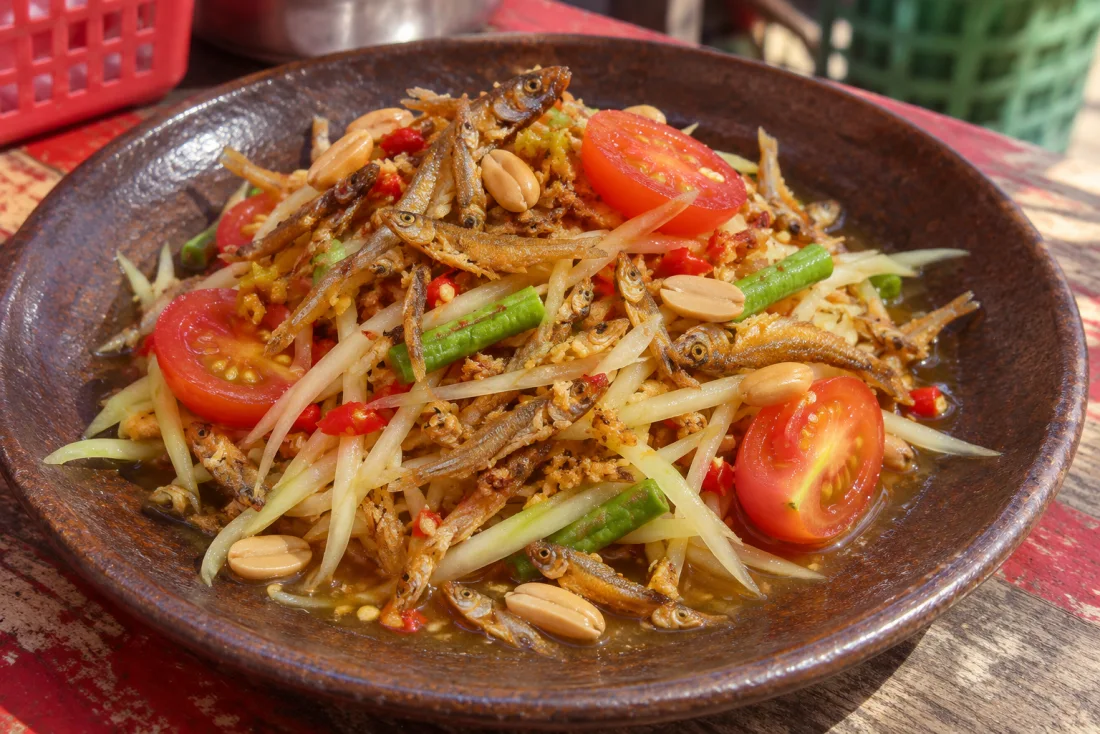

 crispy fish
Recognising the salad and fish
The papaya remains thin, pale and crisp. Small crispy fish can sit over the shreds. Another plate keeps larger fried fish pieces on the side. Both visibly pair cooked fish with fresh papaya.
Documented Thai menu choices
Thai vendors list tam Thai pla krop separately from plain som tam Thai. A fish restaurant offers boneless fried sea bass with som tam. These menu examples show different serving styles, and the fish species can vary.
The ingredients in the bowl
Papaya is used green and firm. Lime, fish sauce, sugar and chile can season the salad. Some servings add tomatoes, long beans, peanuts or dried shrimp. Small crispy fish provide a dry crunch, while larger fried fillets can remain tender inside.
Sweet-sour dressing and crisp fish
The papaya and lime are bright and refreshing. Fish sauce adds savoriness and chile adds heat. Small bits of crispy fish remain dry and crunchy. Fried fillets have a crisp surface and soft center when freshly served.
Choosing photos and reading the menu
Show the papaya and the actual fish portion. A sea bass plate looks different from a salad topped with small fish. List any sides or separate dressing. Ask which fish is used, its serving size and whether bones remain.
Allergens and shared fryers
The dish contains fish and can contain dried shrimp, peanuts or soy. Fried coating may contain wheat or egg. Ask about the dressing and shared fryers. Even fillets described as boneless can have small bones.
If you have a food allergy, tell the restaurant before ordering and ask about ingredients, sauces and shared cooking equipment.