

 fish sauce
 dried shrimp
Lemongrass at the centre of a pounded salad
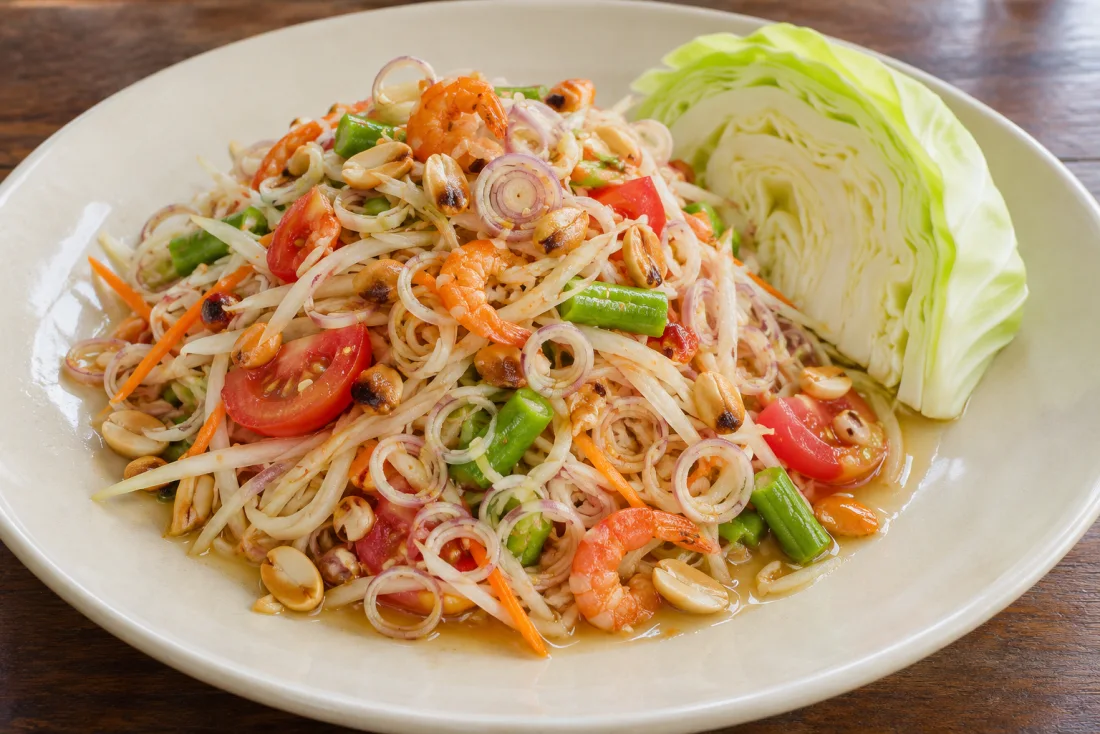
Takrai means lemongrass, and tam refers to light pounding in a mortar. Thin, pale rings of the tender stalk make up the central ingredient here, supported by a little green papaya and carrot. The rings and strands keep their shape while the mortar bruises the vegetables enough to take the dressing. Standard green papaya som tam gives the shreds a larger part. A salad labelled yam takrai may use the same herb but often tosses the cut ingredients and dressing without the same mortar technique.
A restaurant adaptation of Thai som tam
A Thai restaurant chef documented a version that used thinly sliced lemongrass with smaller amounts of green papaya and carrot and served it with grilled food. Lemongrass can also flavour soup in lengths that are stripped out. Here, the tender part is sliced finely enough to eat. This example shows that the pounded salad technique accommodates more than papaya. It does not establish an origin province or nationwide popularity for this particular plate. Serve with grilled food, sticky rice or other dishes and ask how the kitchen handles the heat and toppings.
Tender stalks, vegetables and a lime dressing
Peel the tough outer layers from lemongrass and slice the pale tender part thinly. A little carrot and green papaya keep their crunch. Long beans, small tomatoes, fresh chilli and garlic add texture and aroma. Lime, palm sugar and fish sauce give the dressing its balance. Roasted peanuts and dried shrimp can be added at the end. The vegetables should leave visible lemongrass rings throughout the salad. Fermented fish or other extra sauces depend on the individual kitchen.
Pound just enough to bruise the vegetables
Crush garlic and chilli coarsely. Add pieces of long bean and tomato before folding in the thin lemongrass, papaya and carrot. Work with the pestle and a spoon to bruise the pieces gently and move the dressing from the bottom of the mortar. Add lime, fish sauce and palm sugar, then finish with dried shrimp and peanuts. Tough outer stalks are too fibrous. Freshly plated salad keeps its texture better and washed produce should be handled separately from raw meat.
Citrusy and crunchy with a sweet-sour finish
Lemongrass gives a citrus-like aroma before lime comes through, fish sauce adds savoury salt and palm sugar rounds the acidity and chilli. Thin rings have a fine fibrous bite, while papaya and beans are crisp, tomato soft and peanuts crunchy. More dried shrimp brings a deeper seafood note. Chilli strength varies with the amount and how finely it is crushed. Sticky rice or grilled food can make the dressing easier to take a little at a time.
Allergens in peanuts, shrimp, fish sauce and shared tools
The representative recipe includes peanuts, dried shrimp and fish sauce. These introduce peanut, crustacean and fish allergens. Prepared seasonings may contain soy and wheat, while shrimp paste and fermented fish need separate confirmation if used. Picking off a visible topping does not remove ingredients in the dressing. For a plant-based preparation ask about substitutions and check shared mortar, pestle and serving utensils for cross-contact. Grilled food and dipping sauces can have additional ingredients.
If you have a food allergy, tell the restaurant before ordering and ask about ingredients, sauces and shared cooking equipment.