
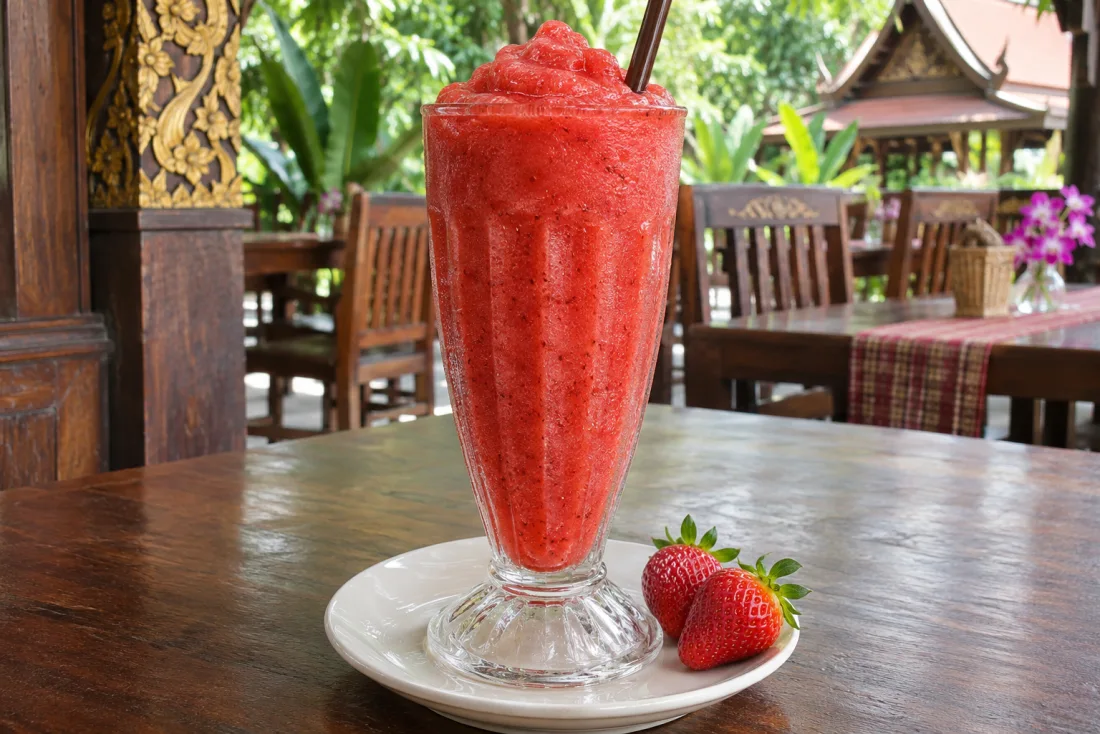

Strawberry on the menu
Thai menus use several spellings for strawberry, followed by pan for a blended drink. A fresh-fruit shop lists fresh berries and a 22-ounce cup. Others use frozen berries. Size does not identify the cultivar, farm or use of fruit sauce.
Fruit, ice and texture
Fresh berries are hulled and blended with ice. Frozen berries supply both cold and fruit pulp, so some blends need less added ice. Tiny seedlike particles can remain suspended, giving the shake more texture than filtered juice. Optional sweetener depends on the fruit and shop.
Acid, sweetness and colour
Cold arrives first, then berry tartness and ripe sweetness, with a fragrant finish. Ice lightens the colour. Concentrated sauce can make dark streaks and a sweeter first sip. Colour alone does not identify how much berry went into the cup.
Cup capacity and takeaway
Twenty-two ounces is one real menu example. Capacity counts the blended fruit, ice, liquid and air, whether the vessel is wide or tall. Takeaway cups can soften as the ice melts. A broad straw or a brief stir brings the pulp back together.
Fruit, yoghurt and milk
Fruit and ice give a refreshing berry-forward cup. Yoghurt adds cultured tang, while strawberry milk puts the dairy flavour forward. Some menus also use fruit sauce or blends of several berries. The size label applies independently of those choices.
Allergens and other bases
A fruit-and-ice base does not require milk. Ask about yoghurt, condensed milk, foams and soy or nut-based alternatives where relevant. Shared blenders and toppings may introduce contact. Packaged fruit sauce has its own label, and anyone allergic to strawberries should avoid the ingredient.
If you have a food allergy, tell the restaurant before ordering and ask about ingredients, sauces and shared cooking equipment.