

 fish sauce
Recognising the clam meat and dressing
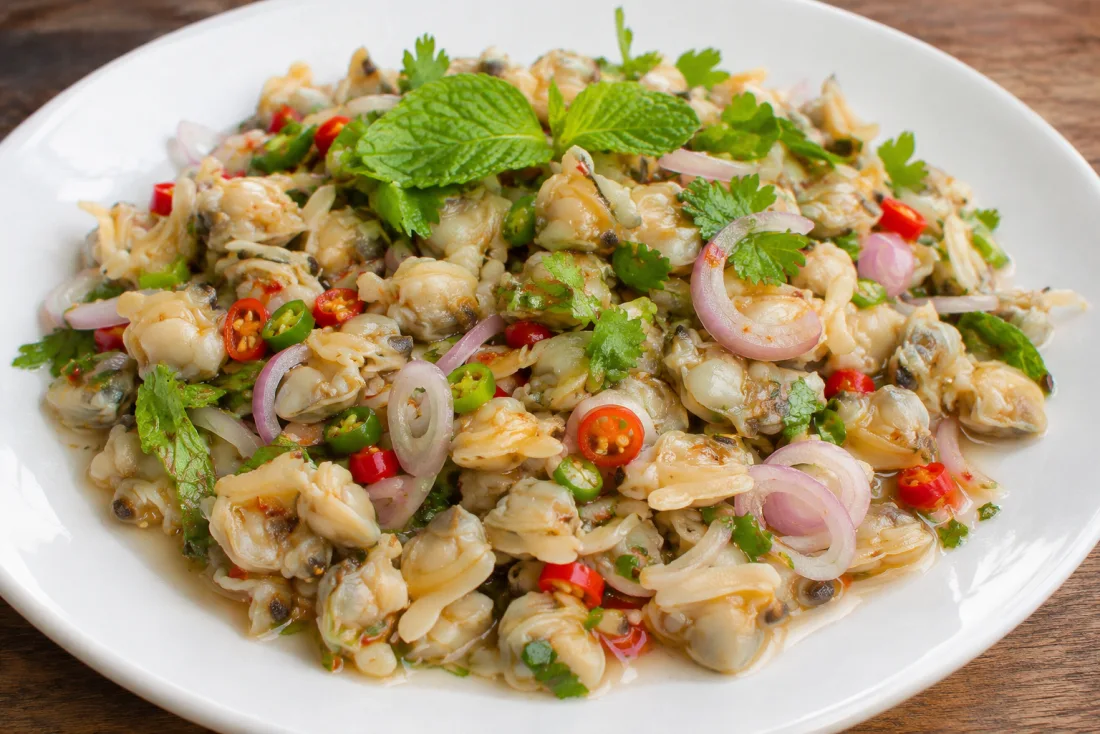
Shelled clams are small and pale, sometimes with darker edges. A light dressing can collect beneath them. Sliced shallot and chili remain visible. Crisp clam meat tends to be darker and can be topped with thin ginger, lemongrass, mint and roasted peanuts.
Reading a Thai restaurant menu
Yam is a Thai dressed salad and hoi lai denotes short-neck clams. An Ayutthaya restaurant lists the salad. A Bangkok rice-porridge shop describes its version as shell-free clam meat. A Thai cook publishes a variation with crisp canned clams and herbs. Other clam and oyster salads use different shellfish.
Two styles of dressing
Drain cooked clams before adding shallot, lime, fish sauce and chili. Add tender lemongrass or a little sweetness if the recipe calls for it. For crisp clam meat, taste its existing seasoning first. Add ginger, mint and roast peanuts close to serving when used.
Briny sweetness and herbs
Lime brightens the clam's sweetness, and fish sauce adds saltiness. Shallot and lemongrass give different kinds of crunch. Crisp clams taste more toasted and soften in the dressing. Rice and plain porridge can balance the heat.
Ordering and choosing photos
Ask which clam and method the restaurant uses, and whether the finished dish has peanuts or ginger. Smaller shell fragments can remain despite shelling. A pale poached-clam plate and a crisp clam plate with peanuts are suitable for their respective versions. Show porridge separately if the restaurant serves it with the salad.
Allergens and shared equipment
Clams contain molluscs and fish sauce contains fish. Peanuts are used in some variations. Prepared dressings or canned seafood can contain soy, wheat, shrimp and other seafood ingredients. Ask about the exact recipe, shared cookware and fryers.
If you have a food allergy, tell the restaurant before ordering and ask about ingredients, sauces and shared cooking equipment.