
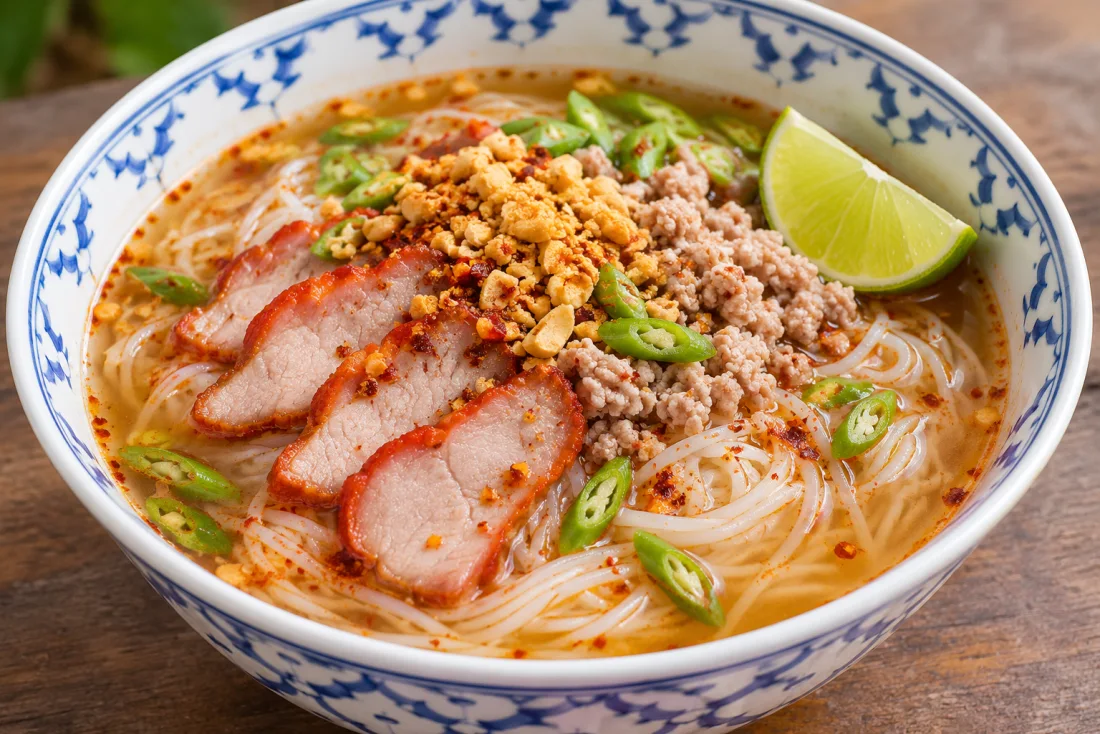

 minced pork
 fish sauce
A local noodle style from Sukhothai
The name identifies Sukhothai Province. A Thai tourism account documents a shop using family-made noodles, red barbecued pork and crispy pork rinds. Minced pork and diagonally sliced long beans occur in other local versions.
Sukhothai tom yum noodles names the tangy, spicy version. Shops serve different broth and seasoning choices, and the local name does not establish the first stall.
Noodles, pork, long beans and seasonings
Fine rice noodles and long beans can be blanched and topped with minced or sliced pork. Pork stock supplies depth. Ground roasted peanuts and chopped preserved radish add texture. Fried garlic, coriander, scallions or culantro may go on top.
One recipe seasons each bowl with fish sauce, lime, chilli, sugar and peanuts before adding stock. The dry format can use a similar mix with broth on the side.
Sour, sweet, hot and savory
A tom yum bowl can taste of bright lime, sugar, fish sauce and dried chilli. Long beans give a mild crunch, peanuts add roasted flavor and preserved radish adds a salty chew. Mince is dispersed while red pork has more of its own seasoning.
In a dry bowl the dressing clings directly to the noodles. Broth spreads the flavor out. Taste before adding chilli vinegar, and ask how the kitchen adjusts heat.
Ordering soup or dry noodles
An individual bowl can be eaten with a little broth, pork and long bean alongside noodles. A dry order can come with a small bowl of stock. Haeng means dry and nam means broth.
Table condiments may include chilli, vinegar and sugar. Try the original flavor first. Crackling and peanuts can lose crunch in the broth, so add them when ready to eat if they are served separately.
How it differs from fried noodles and boat noodles
Sukhothai pad Thai can use eggs and long beans in a stir-fry. Regular Sukhothai noodles are blanched and then seasoned in their bowl. Check whether the menu specifies soup, dry or stir-fried.
Boat noodles emphasize concentrated stock and sometimes cooked blood. Long beans, preserved radish and peanuts are more useful clues here. Tom yum in this noodle name does not specify shrimp.
Allergies in peanuts, fish sauce and stock
Roasted peanuts are common. Fish sauce can contain fish, while soy sauce and prepared stock can contain soy or wheat. Egg noodles can bring egg and wheat. Ask about seasonings and toppings individually.
Tell the kitchen what you need to avoid. Ask about dressing, shared ladles, strainers and noodle water even when omitting a topping.
If you have a food allergy, tell the restaurant before ordering and ask about ingredients, sauces and shared cooking equipment.