

 chicken
Why there is a stir-fried version of Thai suki
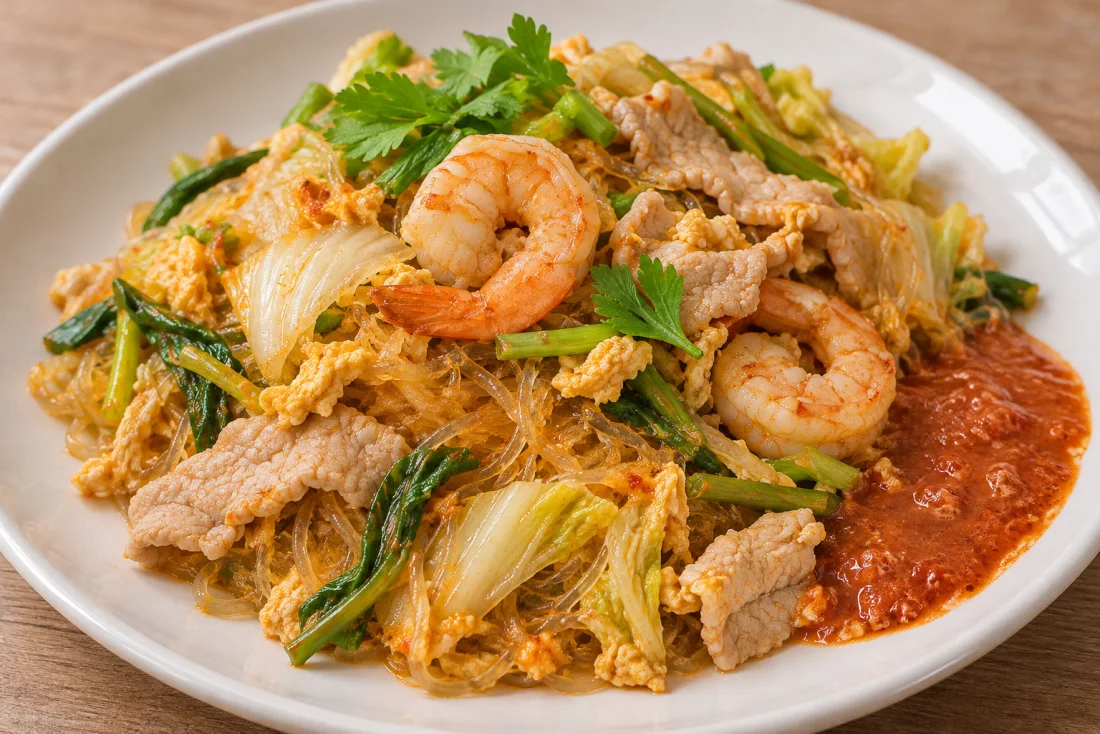
Suki takes its name from sukiyaki, and haeng means dry. Thai cooks serve versions as communal hot pot, soup or individual stir-fry. The stir-fry often has a reddish coating on the clear noodles.
Thai cooks document chicken, pork and seafood versions as a familiar street-food style. Look for suki haeng if you want the stir-fry.
Glass noodles, greens, egg and red fermented bean curd
Pailin Chongchitnant uses mung bean glass noodles, napa cabbage, water spinach, Chinese celery, eggs and chicken marinated with soy, oyster sauce and sesame oil. Her red suki sauce uses fermented red bean curd, garlic, chilli, sugar, sesame, vinegar and soy.
The noodles carry the sauce and the stems add crunch. A Pholfoodmafia variation uses shrimp, squid and egg tofu. Sauce blends vary by cook.
Stir-frying the greens and coating the noodles
Soak and drain the noodles. Cook the chicken first and set it aside. Toss the greens and add noodles and sauce. Add a small splash of water if the noodles need more time.
Return the meat and add egg, or gently fold in egg tofu in the seafood version. The cooked noodles should be well coated without a pool of broth. The stems can stay crisp as the leaves soften.
Tang, fermented savouriness and the crunch of greens
Vinegar brings acidity and sugar balances it. Fermented bean curd, soy and toasted sesame give depth. Chillies provide heat. Egg or seafood changes the flavour and texture.
Try a sauced noodle with a piece of cabbage or water spinach. Extra sauce can come on the side. Some marinades may already contain seasonings.
Soup suki, dry suki and the choice of meat
Suki nam comes in broth. Suki haeng is stir-fried. Thai suki hot pot lets diners cook the various ingredients at the table. The greens and sauce can appear in all three.
Gai is chicken, moo is pork and thale is mixed seafood. Ask about egg tofu, greens and seasonings if ordering a plant-based version.
Allergens to ask about: soy, sesame, egg and seafood
Fermented bean curd and soy sauce contain soy. Soy sauce and prepared dressing may contain wheat. Sesame and egg can come from multiple components. Oyster sauce, shrimp and squid can bring different seafood allergens.
Ask about the noodles, sauce, marinade, egg and protein. Shared woks and spoons can also matter.
If you have a food allergy, tell the restaurant before ordering and ask about ingredients, sauces and shared cooking equipment.