

 fish sauce
The name and the Isan table
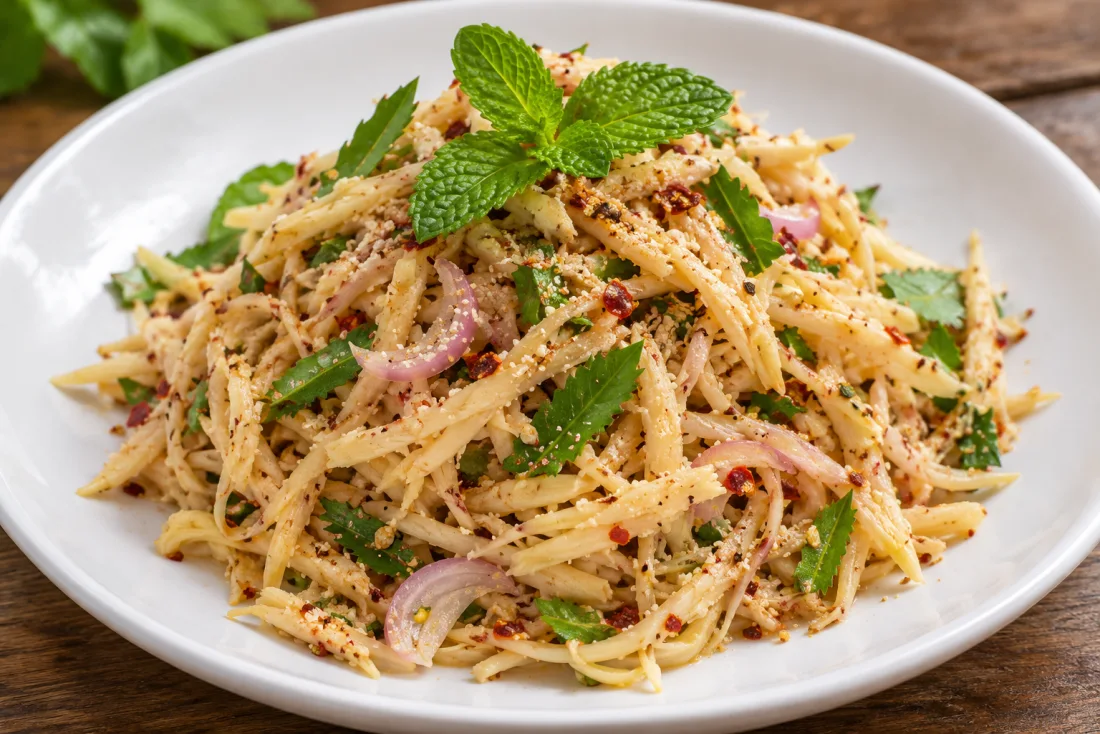
Nor mai means bamboo shoot. KRUA.CO describes this preparation as a dressed salad even though sup can look like the English word soup. A Srinakharinwirot University report records it with locally grown toasted rice in a Buri Ram community. That gives a real serving context without naming a single birthplace.
Shoots, yanang and toasted rice
Shredded bamboo shoots are the centre of the dish. Lime, fish sauce, dried chilli, shallot and toasted rice add depth. Some recipes cook the shoots in liquid from yanang leaves, which contributes a green colour and a mild herbal taste. Fermented fish seasoning is another variation.
How the shoots are cooked and dressed
The bamboo shoots are prepared and cooked before seasoning. Some cooking liquid is drained, leaving enough moisture for the dressing and toasted rice to cling. Fresh herbs can be added near the end. It may be served warm or cooler.
Tart dressing, crisp strands and roasted rice
Lime tastes bright, fish sauce is savoury and chilli builds heat. Bamboo shoots remain slightly fibrous, and toasted rice gives a roasted aroma. Fermented fish can make the finish more pungent. Try with sticky rice or cabbage to vary each bite.
Serving and telling it apart from bamboo soup
The salad has mostly strands and dressing, while bamboo shoot soup has broth as its base. Check whether the menu uses fermented fish and whether the shoots are served with sticky rice and vegetables. A takeaway box can hold a little dressing at the bottom.
Allergens, seasonings and shared tools
Fish sauce and fermented fish both involve fish. Other prepared seasonings may contain crustaceans, soy or wheat. Tell the kitchen the ingredient you need to avoid and ask about the cooking liquid, toasted rice powder, dressing and shared pots or utensils.
If you have a food allergy, tell the restaurant before ordering and ask about ingredients, sauces and shared cooking equipment.