
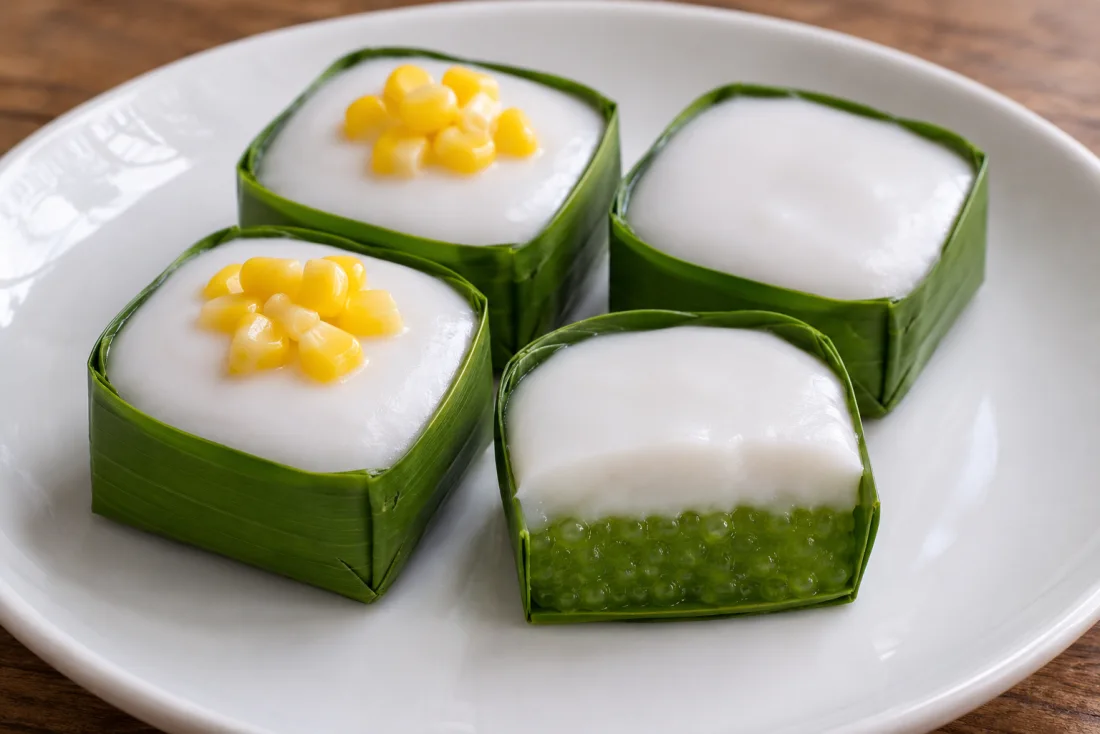

Recognising a Thai two-layer pudding in a leaf cup
A common serving has a white coconut top and a folded green leaf cup. A spoonful shows the pale, green or translucent layer below, sometimes with pieces of water chestnut or corn. Cooks can also use ceramic cups.
Thailand’s Rice Department publishes a recipe and Thai cooks document chestnut and corn versions. These sources leave the earliest place of invention open.
A sweet, yielding base and a gently salty coconut top
The Rice Department uses rice flour and tapioca starch with sugar and pandan or jasmine fragrance. Taro and corn are among the additions. Another Thai recipe uses mung bean starch for a corn base. The starch affects springiness and transparency.
Coconut cream, rice flour and salt make the top smooth and set. Water chestnut adds crunch. Corn adds gentle sweetness and taro gives a starchier bite.
Cooking the layers separately and filling the cups
Mix the starch into cool liquid before heating. Stir until the first mixture cooks into a sticky gel. Spoon it into the cups while it can still flow.
Heat and stir the coconut topping separately, then spread it over the first layer. Folded pandan makes small green cups, although other cups work. Cool the pudding until both layers hold their shape.
Salty coconut, sweet pandan and crisp pieces
The first layer on the tongue is soft coconut with a little salt. The lower layer is sweeter and can have a springy bite. Water chestnut stays crisp and corn can be juicy.
Cut down through both layers with a spoon. Their sweetness and saltiness are more balanced together. The ratio and fillings vary by cook.
Water chestnut, corn, tapioca pearls and khanom thuai
Look for haeo for water chestnut, khao phot for corn and phueak for taro. Some makers use chewy tapioca pearls. The coconut top can look similar across flavours.
Khanom thuai also has sweet and salty layers and is often steamed in a ceramic cup. Ta ko recipes here cook the mixtures in a saucepan and then spoon them into the cups. Some cooks use the same kind of cup for both.
Allergens to ask about: coconut and additional ingredients
The top contains coconut. Rice flour, mung bean starch and tapioca are possible ingredients. Water chestnut is an aquatic vegetable. Ask about prepared mixes, dairy and garnish if you need to avoid a particular ingredient.
Check the base and topping separately, as well as shared spoons and moulds. Removing the top does not undo the earlier contact between layers.
If you have a food allergy, tell the restaurant before ordering and ask about ingredients, sauces and shared cooking equipment.