

A grain-based member of the tako family
Thai tako generally pairs a sweet soft layer with lightly salted coconut topping. Versions with fully cooked black sticky rice keep the individual grains visible. Thai recipe and bakery examples show both taro coconut and red bean presentations.
Black rice, coconut and other ingredients
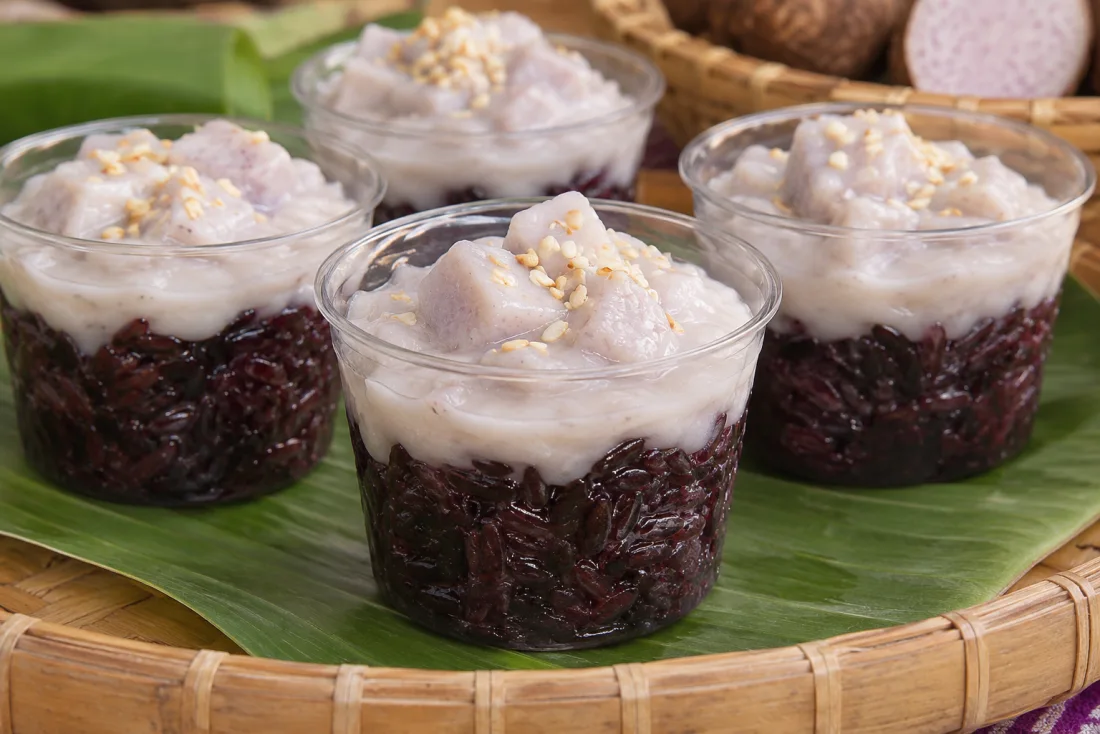
Cooked black rice stays dark and tender. A little starch may help bind the cooking liquid. Taro can be blended into the cream layer and topped with a few toasted sesame seeds. Some versions use fully cooked red beans in the rice layer instead.
Keeping the layers distinct
Warm cooked rice is portioned before it sets. The coconut layer thickens on cooking and keeps its smooth form when cool. The cream can sit on top or below the dark rice depending on the version.
Chewy grain and creamy coconut
Black rice is mildly sweet with an identifiable grain aroma. Taro is soft and earthy and red beans have small tender pieces. Salted coconut contributes a mild savoury note, while toasted sesame can contribute a roasted aroma.
A clear taro cup or a leaf-cup with red beans
A clear cup shows dark rice under pale taro cream and a little sesame. In a folded leaf cup, the red-bean and black rice layer may sit above coconut cream. Both serve as individually portioned desserts.
Allergens and added toppings
Coconut is present. Sesame may be part of the topping. Ask about red beans and any starch or seasoning blends, which may contain dairy or wheat. Ask about utensils shared with other desserts, especially if avoiding milk, sesame or peanuts.
If you have a food allergy, tell the restaurant before ordering and ask about ingredients, sauces and shared cooking equipment.