

 fish sauce
Recognizing the mushrooms and the mortar dressing
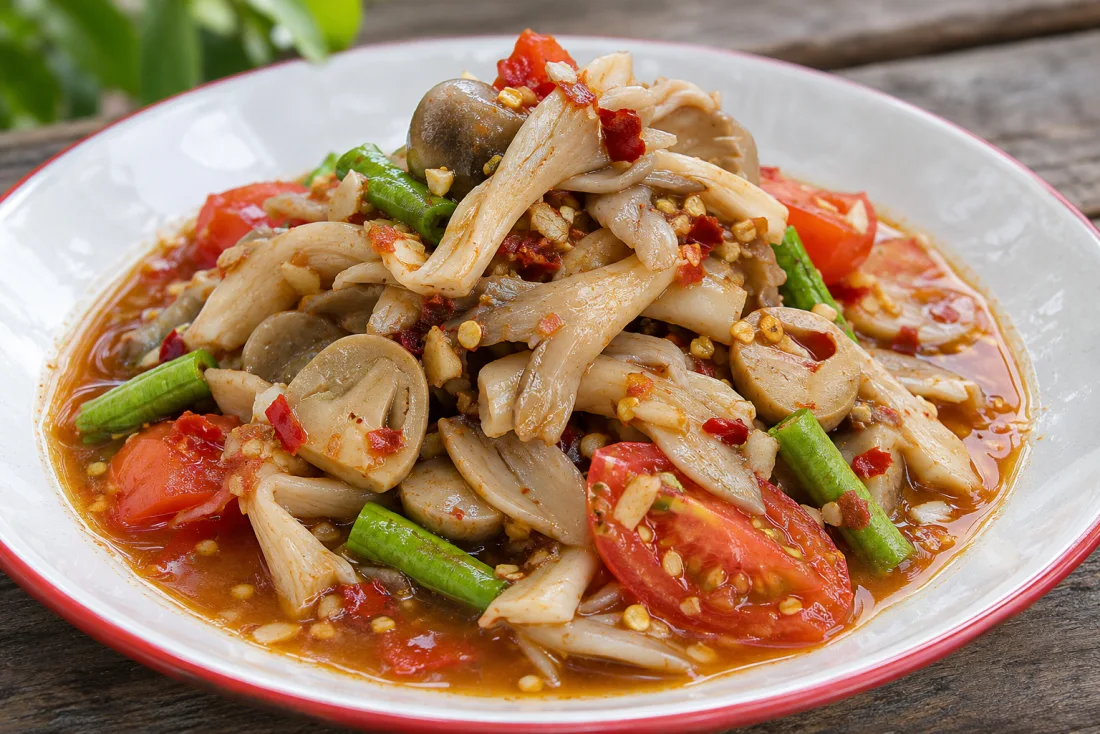
Het means mushroom. Tam refers to pounding aromatics and tossing the ingredients in a mortar. Cooked caps and slices stay visible, with long beans and tomato in some versions. Other named dishes can combine mushrooms and papaya.
How it relates to Isan-style salads
Thai cooks document Isan-style som tam with cooked mushrooms, salted crab and fermented fish, as well as mortar-tossed cooked mushrooms in local recipe collections. A mushroom-forward plate uses a related dressing while emphasizing cooked mushrooms. The title does not specify a single province or species.
Cooked mushrooms and a tart dressing
One service combines cooked mushrooms, garlic, fresh chili, long beans, tomato, lime, fish sauce and palm sugar. Bruise the aromatics and beans, drain the cooked mushrooms and fold through lightly. Some versions add toasted rice, dried shrimp or fermented fish seasoning.
Tart seasoning across springy slices
Mushroom caps hold a little juice. Thick pieces are springier. Lime and fish sauce arrive first, followed by chili and garlic. Tomato gives fresh acidity, palm sugar rounds it off and beans keep a crunchy bite.
With rice or vegetables
Share a plate with sticky rice, plain rice or fresh cucumber. Try a piece of mushroom before stirring in more dressing. Ask about papaya, crab, fish sauce and chili if several versions are on the menu.
Allergens and mushroom sourcing
Fish sauce contains fish. Dried shrimp, shrimp paste and salted crab in other versions add crustaceans. Ask about shared mortars and alternatives that may contain soy or wheat. Choose known edible, cooked mushrooms. Identify individual varieties if you have a mushroom allergy.
If you have a food allergy, tell the restaurant before ordering and ask about ingredients, sauces and shared cooking equipment.