

 cooked fermented fish dressing
 shrimp paste or crab seasoning
 pork cracklings (some versions)
From Luang Prabang to Thai menus
Tam Luang Prabang names a Luang Prabang–style salad. In Thailand, Isan and Lao restaurants may adapt the flavour with their own fermented sauce, shrimp paste or cracklings. A shortened old menu label may be unclear, so the full name is the clearest way to refer to this particular dish. The Thai shop examples use raw green papaya ribbons tossed in dressing. Sugar, salt and preserved seafood seasonings vary among Thai and Lao kitchens.
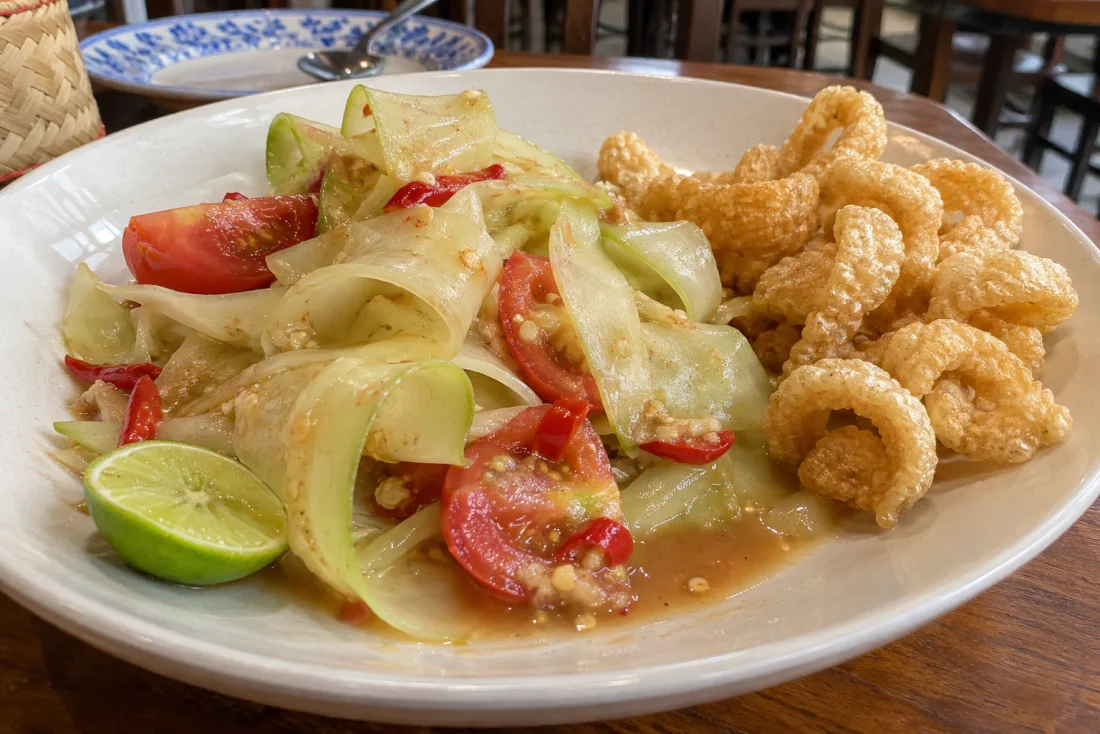
The broad papaya ribbons
Unripe papaya has pale, firm flesh. A cook can shave it into long, wide, thin strips that curl like ribbons. Some Thai restaurants chill the sliced papaya first to preserve its crunch. Tomatoes, chilli and garlic are common additions. Lime, fish sauce and cooked fermented fish dressing supply acidity and savoury flavour. Shrimp paste or concentrated crab seasoning may be added depending on the restaurant. The wide cut gives the fully dressed ribbons a firm bite.
Crunch, heat and savouriness
The papaya is crisp and juicy. Lime and tomato give a bright sour note, followed by chilli. Fermented fish and shrimp paste or crab seasoning provide a deeper savoury flavour. Some shops balance the dressing with sweetness while others lean savoury. Its colour ranges from pale tan to deep brown. The ribbons soften after dressing, and cracklings stay crisper when served separately.
Two Thai restaurant examples
One Thai restaurant style adds shrimp paste and cooked fermented fish dressing with lime, tomato, chilli and crisp pork cracklings beside the salad. Another Thai shop uses concentrated crab seasoning along with fermented fish dressing, and may also use shrimp paste. The paler papaya ribbons stay visible in the darker dressing. Whole crab is unnecessary for crab seasoning to flavour the plate. Pork cracklings may be a separate choice.
When ordering
Ask about chilli, sweetness and which fermented seasonings are in the dressing. Sticky rice, cracklings or rice noodles can accompany the salad depending on the shop. The ribbons are crispest shortly after dressing. It may be possible to ask for the dressing to be packed separately when taking it away. A photograph can show the cut and side dishes, but the colour does not identify the precise seasonings. It also works as a shared salad with plain rice or grilled meat; dressing at the bottom of the plate can taste stronger than the top ribbons.
Allergens in dressing and equipment
Fermented fish dressing and fish sauce contain fish. Shrimp paste and crab seasonings contain crustaceans. Those avoiding pork should ask about cracklings. A restaurant may use the same mortar, pestle or mixing utensils for dishes containing peanuts, dried shrimp or other seafood. Ask about the dressing itself and shared equipment when an allergen matters. Removing a visible ingredient cannot remove what is already in the dressing.
If you have a food allergy, tell the restaurant before ordering and ask about ingredients, sauces and shared cooking equipment.