

 fermented fish sauce
The name and Isan-style menus
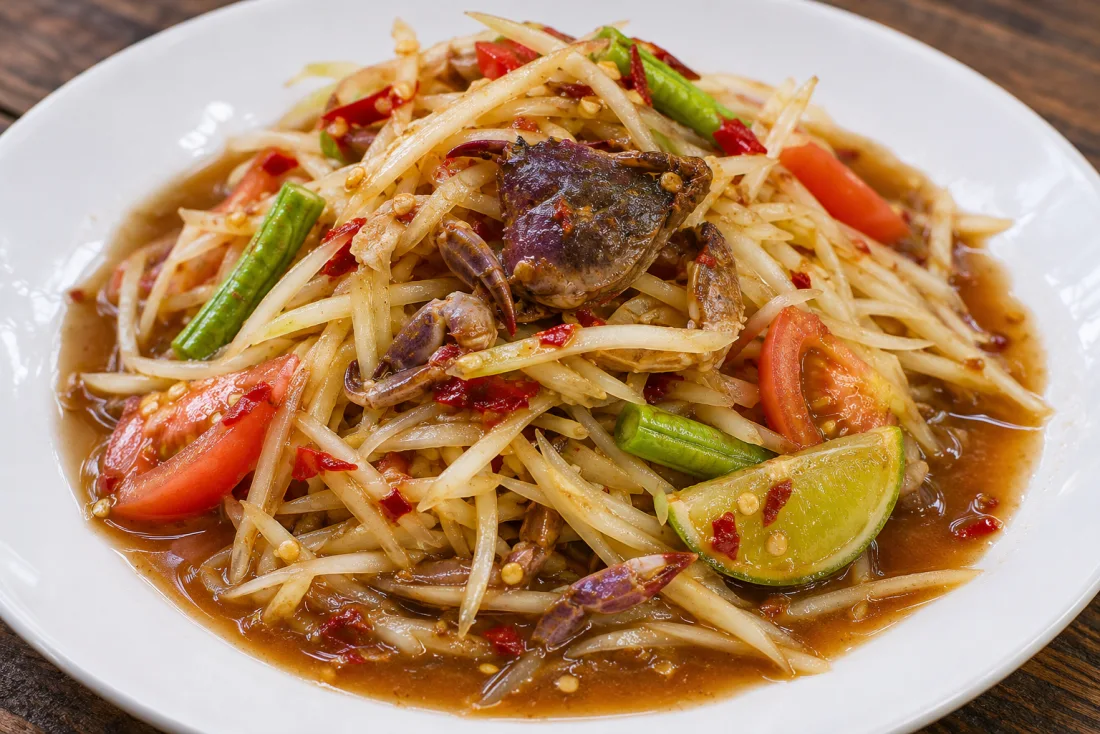
Pu means crab and pla ra is fermented fish seasoning. A Thai cultural reference describes salted-crab and fermented-fish salads separately. Somtum Der in Bangkok documents a version combining them. Check the menu for both words if you want the combined version.
The papaya, crab and fermented dressing
Unripe papaya supplies crisp strands and tomato, lime, garlic and chilli flavour the dressing. Long beans or eggplant can also appear. Salted crab contributes crustacean flavour; pla ra is a fish seasoning even when no pieces of fish are visible.
How the dressing keeps the papaya crisp
Cooks pound garlic and chilli, then add the fruit and seasonings and mix gently. The strips soften slightly and take up the dressing. The crab may be prepared separately. Ask whether it was fully cooked; salting is not the same as cooking.
How it compares with som tam Thai
Pla ra and salted crab lend a deep savoury finish. A sweeter som tam Thai often uses dried shrimp and peanuts. Both can be hot. Start with a little papaya, then adjust the amount of dressing or eat it with sticky rice.
Sides and choosing the dressing
It can come with sticky rice, grilled chicken or raw vegetables for sharing. Ask whether both crab and fermented fish are already in the dressing. If you need one omitted, check how the restaurant prepares the alternative.
Allergens, crab cooking and shared mortars
Crab is a crustacean and pla ra or fish sauce contains fish. Ask about peanuts, dried shrimp, premixed seasonings and shared mortars. CDC identifies raw or undercooked freshwater crab as a risk for paragonimiasis, including salted crab if not cooked. Ask the kitchen if the crab was thoroughly cooked.
If you have a food allergy, tell the restaurant before ordering and ask about ingredients, sauces and shared cooking equipment.