

 fish sauce
Young Coconut Flesh on a Thai Menu
The Thai name can be shortened to tam maphrao on. Here it means soft flesh scooped from inside a young coconut. A menu that specifies yot maphrao refers to the firmer palm shoot. The tender flesh is usually tossed gently.
Coconut, Chile and Additions
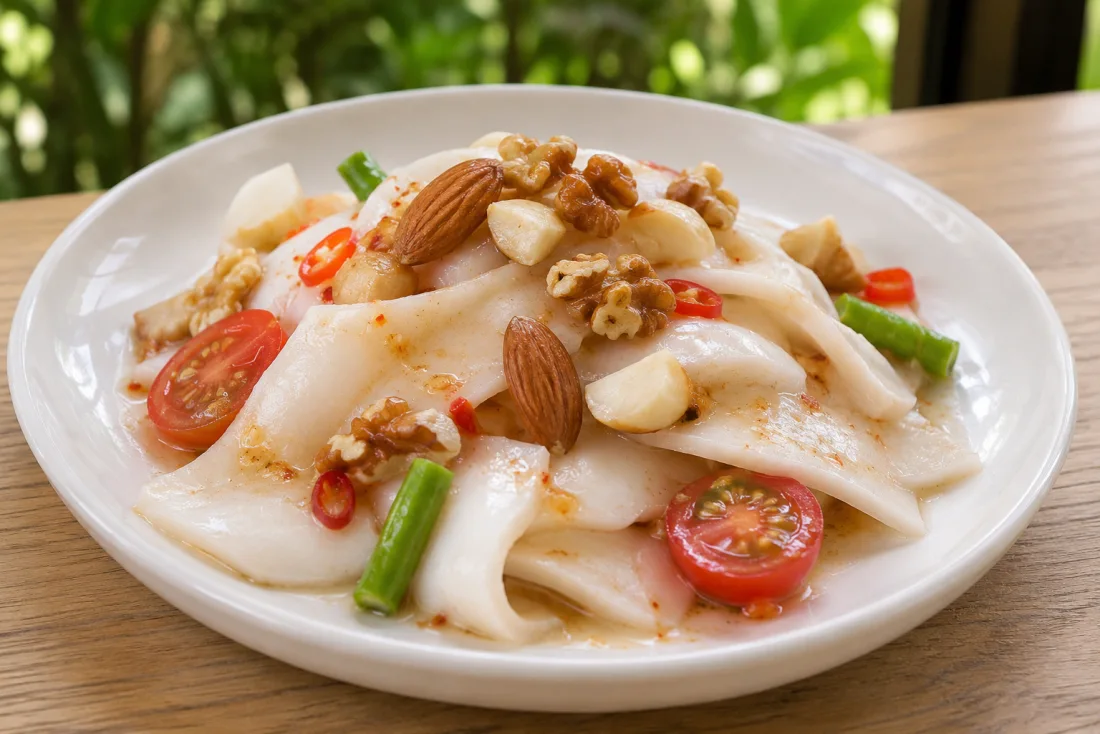
Lime and chile can season the coconut. Fish sauce can be used for a salty base. One photographed version shows beans, tomatoes, peanuts and dried shrimp. A Thai resort team describes almonds, walnuts and macadamias in its version.
Keep the Coconut Tender and the Topping Crisp
Coconut flesh can be spooned off in wide strips. Mix the dressing separately and toss the coconut without crushing it. Nuts and crisp rice vermicelli are often added at serving so they stay crunchy.
Plate or Coconut Shell
One documented presentation uses soft coconut and crunchy nuts. A Bangkok diner recorded the salad served in a coconut shell with a small nest of crisp white rice vermicelli alongside. Some nearby restaurants list shrimp options. Ask about the exact preparation.
Bright Dressing and Soft Coconut
Tender coconut gives a lightly sweet bite. Chile, lime and salt brighten it. Nuts or dried shrimp add a firmer texture, and the crisp noodles soften after contact with dressing. Coconut water can be served separately.
Allergens and Shared Equipment
Fish sauce contains fish and shrimp are crustaceans. Nut versions can contain almonds, walnuts, macadamias or cashews. Peanuts can appear separately. Check dressing, fried vermicelli and shared fryers or utensils for soy, wheat and seafood contact.
If you have a food allergy, tell the restaurant before ordering and ask about ingredients, sauces and shared cooking equipment.