
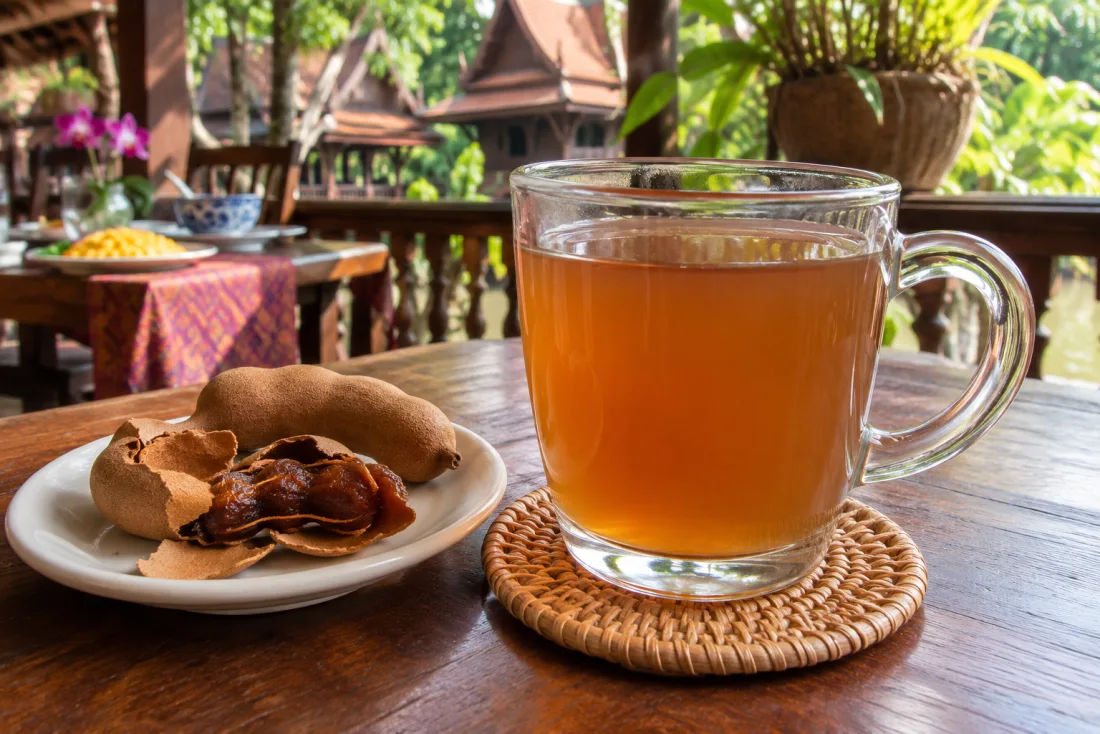

Recognizing the fruit drink
Tamarind pulp gives an amber-brown or lightly cloudy liquid after straining. The thick pod fibers and seeds are removed.
Pulp, water and sweetness
Tamarind pulp, water and optional sugar or honey form a simple version. Pulp strength and the sweetener vary. The fruit may be supplied as a paste or concentrate.
Softening and straining
Warm water softens the pulp and carries its flavor. Strain the fibers and seeds and serve the liquid warm. A separate type can include true tea leaves.
Taste
The flavor is bright and tart with a dry-fruit-like aroma and some sweetness. Sugar, salt, temperature and dilution affect the balance.
Thai hot and cold service
Thai drink recipes document iced service, and a Thai producer also suggests diluting tamarind with hot water. Ask whether a cafe can prepare the hot version and whether tea leaves or sweeteners are included.
Allergens and additions
Check tamarind, concentrates and any added milk, soy or nut drinks. Ask about shared tea tools and other flavorings when needed.
If you have a food allergy, tell the restaurant before ordering and ask about ingredients, sauces and shared cooking equipment.