

Taro on Thai café menus
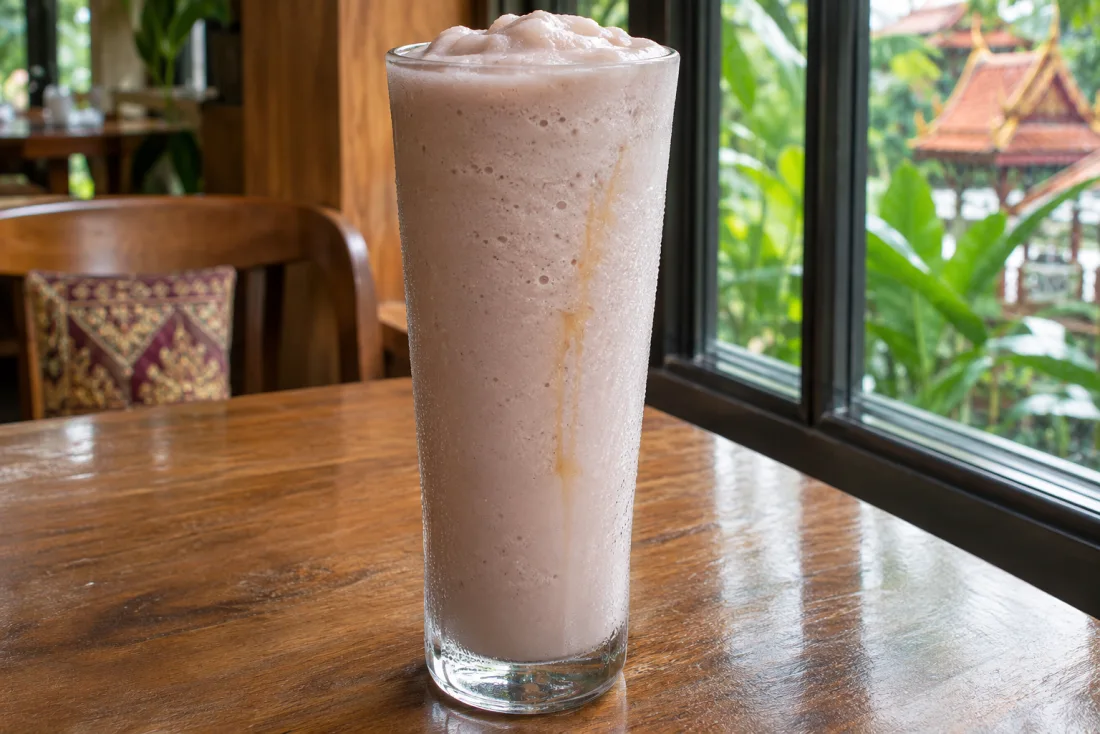
Phueak is taro, nom sot is fresh milk and pan is blended. One juice shop lists a 22-ounce taro milk with caramel. Another café offers a slush with real taro pieces. Look for the milk and preparation words if the menu also lists taro milk on ice.
Taro, fresh milk and fine ice
For a whole-taro base, thoroughly cook peeled taro before blending cooled chunks or mash with milk and ice. Some vendors instead list taro powder with milk. The two can coexist in a recipe. Small cooked pieces may add more texture.
Soft taro aroma and caramel
A cooked-taro slush may look cream, grey or pale lavender. It has a mellow aroma, dairy richness and fine ice. Caramel adds toasted sweetness and can be strongest where it is drizzled. The colour does not establish how much real taro is inside.
Twenty-two ounces and other large cups
Twenty-two ounces is one seller’s cup size. A wider glass allows a spoon, while a tall takeaway cup uses a broader straw. The nominal capacity includes ice, milk, taro and air. Stir before sharing if the ice has melted or sauce has settled.
Taro milk on ice and dessert toppings
Taro milk over ice remains pourable around individual ice cubes. A shake blends that ice into the base. Sago, pearls or chunks of taro are possible toppings. Coconut milk and other substitutes change the dairy ingredients and flavour, regardless of cup size.
Allergens and prepared bases
The representative shake contains milk. Ask about condensed milk, powdered bases, creamers and caramel sauce. Cookies and plant alternatives may introduce wheat, soy or nuts. Shared blenders and utensils can contribute contact. Avoid any ingredient you know you react to.
If you have a food allergy, tell the restaurant before ordering and ask about ingredients, sauces and shared cooking equipment.