
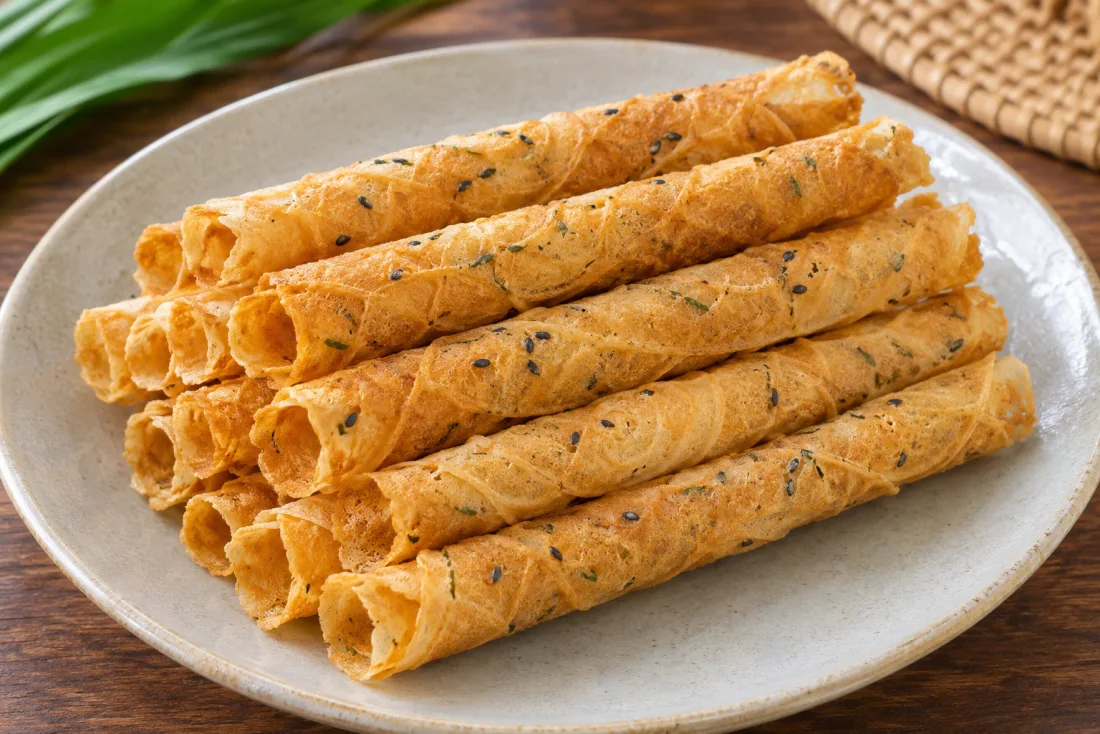

A golden wafer rolled into a tube
Thong muan describes a golden roll, and khem means salty. The hollow wafer breaks easily. Sweet and savoury rolls can look alike, so check the seasoning. There are also soft Thai rolls which have a different texture.
At Thai sweet stalls
Some stalls sell savoury rolls alongside Thai sweets. They can be served with tea or packed in small bags after cooling. Moisture softens the wafer. Documented menus and recipes do not establish a single place of origin.
Rice flour, wheat, coconut and black sesame
A representative recipe uses rice flour, wheat flour, egg, butter, coconut cream, salt, a little sugar, black sesame and coriander leaves. Some recipes use food-grade limewater for texture. Other versions may use garlic, pepper or dried herbs.
Roll thin wafers while warm
Cook a thin layer of batter in a heated wafer mould. The cooked sheet is still flexible when warm, so roll it before it cools. It hardens into a light tube. Cool fully before packing. Thickness changes the number of crisp layers in a bite.
Light crunch and toasted sesame
The first bite breaks into light flakes, followed by toasted sesame and coconut. Coriander, pepper or garlic can leave a mild savoury fragrance. The savoury wafer can still contain a little sugar. Dry rolls stay crisp when served fresh.
Wheat, egg, sesame, dairy and other allergens
The representative recipe contains wheat, egg, sesame, butter and coconut. Ask about mixed flour and shared presses even if a vendor offers a wheat-free version. Flavour mixes may add soy, nuts or other ingredients. Check both the batter and the equipment.
If you have a food allergy, tell the restaurant before ordering and ask about ingredients, sauces and shared cooking equipment.