
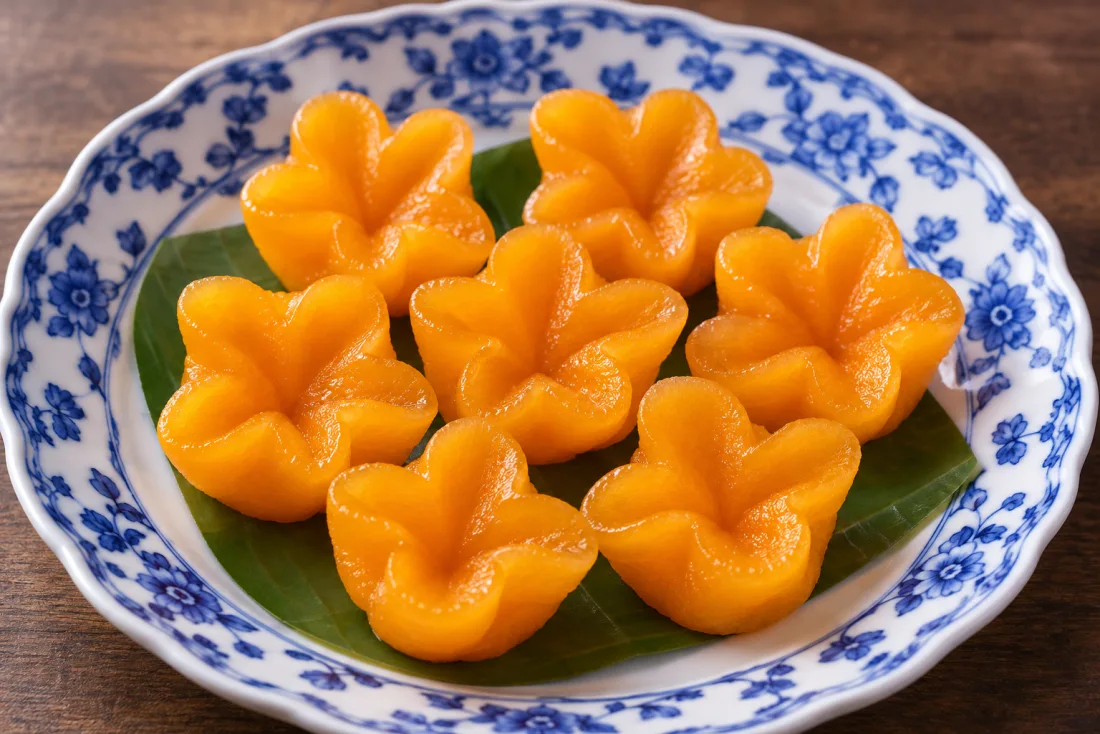

Why the golden folds carry a wish for good fortune
Thong means gold and yip suggests picking or pinching. Thai cultural descriptions connect the name with wishes for prosperity in celebrations. The upward folds make this particular golden sweet easy to recognise.
A Kasetsart University lecture discusses it in the context of Portuguese influence and Ayutthaya traditions associated with Maria Guyomar. These accounts describe cultural links, while the exact origin of the modern flower shape is less certain.
Duck yolks, sugar and a gentle fragrance
KRUA uses duck yolks, white sugar, water and pandan. The water can be scented with jasmine. Yolks bring colour and flavour. Sugar creates both sweetness and the cooking syrup. Fragrance depends on the maker.
Separating and straining the yolks creates a smoother mixture. Egg colour and whisking affect the disc. The yolk mixture needs a different consistency from the threads made for foi thong.
Poaching a disc and pinching it into a flower
Spoon the yolk onto settled syrup, let each disc take shape and heat it through. Some cooks transfer the pieces to a lighter syrup so they stay soft while they are handled.
Pinch the disc in several places and place it in a little mould or cup to hold the folds while it cools. Published recipes show five or six folds. Each piece starts as a single cooked disc.
Glossy syrup, pronounced yolk and thin petals
The surface shines with syrup. The yolk tastes rich, while the thin edges feel different from the thicker folded centre. The amount of air beaten into the yolks changes the texture.
Try a petal and then the middle. At celebrations the flowers can share a plate with egg-yolk drops and golden threads. Tea between bites leaves the flavours easier to distinguish.
Telling golden flowers, drops and threads apart
Thong yip is a folded flower. Thong yot is shaped as a drop. Foi thong is drizzled through a small opening and gathered as threads. All can be golden and sweet, yet their shapes are distinct.
Assortment menus may use broad English names for the sweets. Look for the folds and the Thai name. Makers vary the height of the flower and the sweetness of the syrup.
Allergens to ask about: egg and shared platters
The main ingredient is egg yolk. Ask whether the shop uses duck eggs, chicken eggs or both if that matters to you. The reference recipes can be made without dairy or wheat. Garnishes and other sweets on the same platter can add other ingredients.
Name the ingredient you need to avoid and ask about utensils, cups, syrup and trays. Moving the flower off a shared plate cannot undo earlier contact.
If you have a food allergy, tell the restaurant before ordering and ask about ingredients, sauces and shared cooking equipment.