

Reading the Thai carton
Thai stores may shorten the name to apple or show both apple and grape. Look for the full fruit description and 200 mL volume on the individual carton. A picture of an apple doesn't establish that it is a single-fruit juice.
The two fruit components
Thai retail lists roughly 85 percent reconstituted apple juice and 15 percent reconstituted grape juice, plus small amounts of vitamins. Apple leads the aroma. Grape rounds out the sweetness and finish. Reconstitution of concentrates differs from squeezing an apple behind the counter.
Colour and flavour
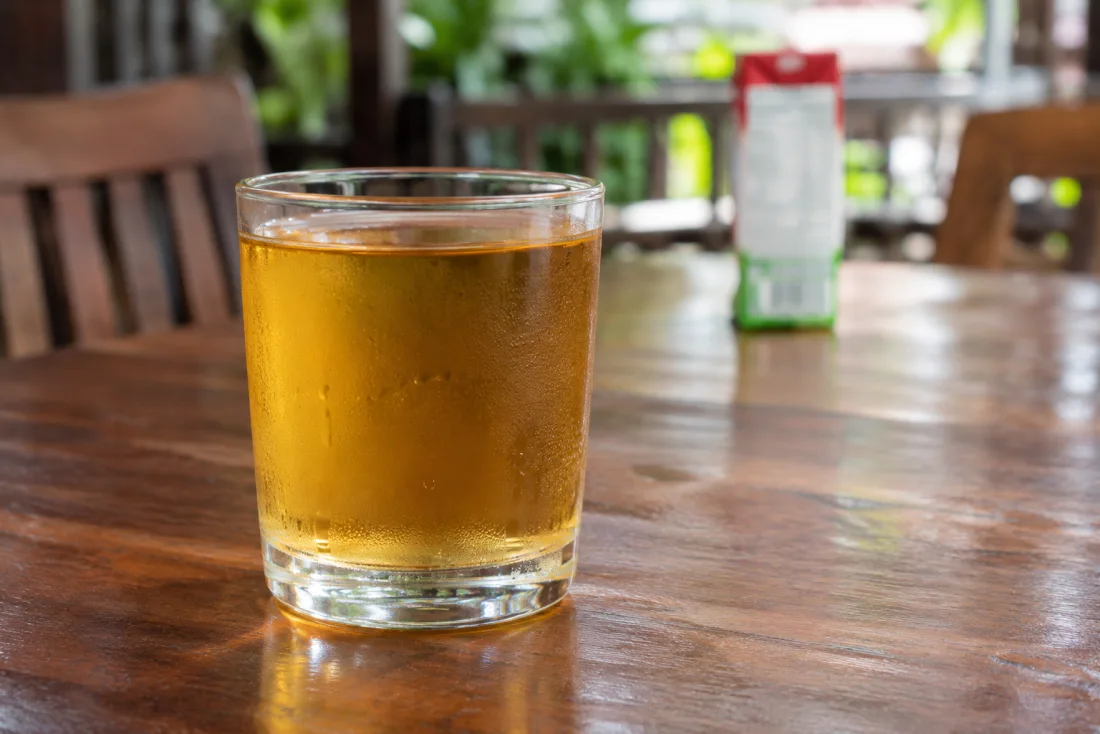
It pours pale gold to amber, without carbonation or pieces of apple. The familiar apple aroma leads into sweetness, a little acidity and a soft grape finish. Cold juice retains its original profile until melting ice starts to dilute it. Pale colour does not rule out grape juice.
Understanding the juice percentage and sugar
Thai retail lists no added sugar for the featured carton, which still contains naturally occurring sugars from the fruits. Read grams per serving and the labelled serving size before comparing cartons of different volumes or recipes.
Serving the juice with food
A small aseptic carton suits snack trays and takeaway food. A shop may pour the carton over ice or prepare a mixed beverage with syrup or soda. The glass size can include ice. Follow the handling and storage instructions printed on the carton.
Allergies and added fruit
Apple and grape are both explicit ingredients. Anyone sensitive to either should read the exact carton. Milk-based toppings or a shared blender can introduce additional ingredients. A sealed carton makes it easier to assess what is being served.
If you have a food allergy, tell the restaurant before ordering and ask about ingredients, sauces and shared cooking equipment.