

Reading the orange variety
Tipco lists several orange and citrus juices. This Thai 200 mL carton is the tangerine or som khiao wan product. It should be distinguished by name from the Valencia and other orange lines.
Not from concentrate and 100 percent
The maker describes this juice as not from concentrate and lists pulp and sacs, with no added sugar, flavour or colour. It is still a packaged, processed juice. Naturally occurring sugar remains. Compare label serving size and sugars between products.
What pulp adds
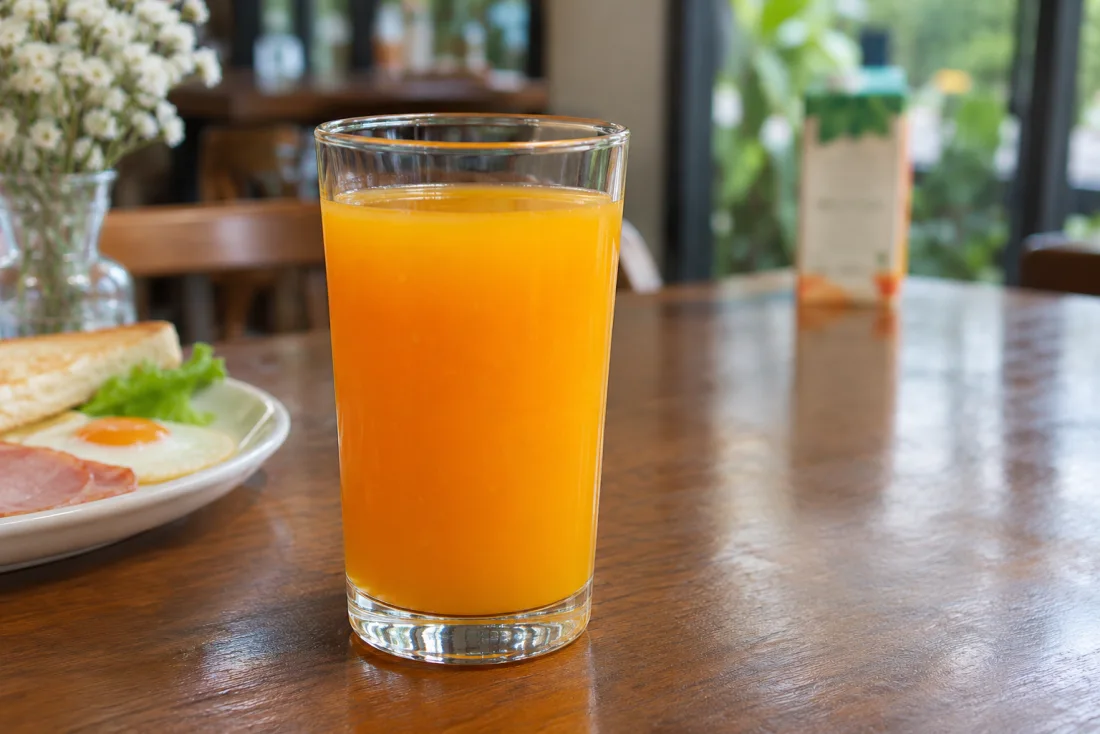
The juice pours orange and slightly cloudy, with fine pulp, recognizable tangerine aroma and a sweet-tart finish. Try it chilled before adding ice if you want to see its original texture. Dilution softens the flavour. Pulp and lack of fizz help distinguish it from orange soda.
Serving it at a Thai restaurant
A sealed 200 mL carton is convenient with breakfast, snack trays and takeaway rice dishes. Restaurants may also offer an empty glass or ice. The glass fill level includes ice and does not specify how much juice was poured. Follow carton storage instructions before and after opening.
Carton, fresh press and soda
This is a finished carton even though the juice is not from concentrate. Street-fresh juice can vary with fruit and shop practices. The similarly coloured orange soda is identified by carbonation and flavouring. A menu can make this easier by naming the citrus, juice category and format.
Citrus allergies
Tangerine juice and pulp matter for a customer with citrus allergy. Read the specific carton and ask about extra fruit, milk toppings or equipment used for other drinks. A sealed carton preserves a direct view of the product information.
If you have a food allergy, tell the restaurant before ordering and ask about ingredients, sauces and shared cooking equipment.