
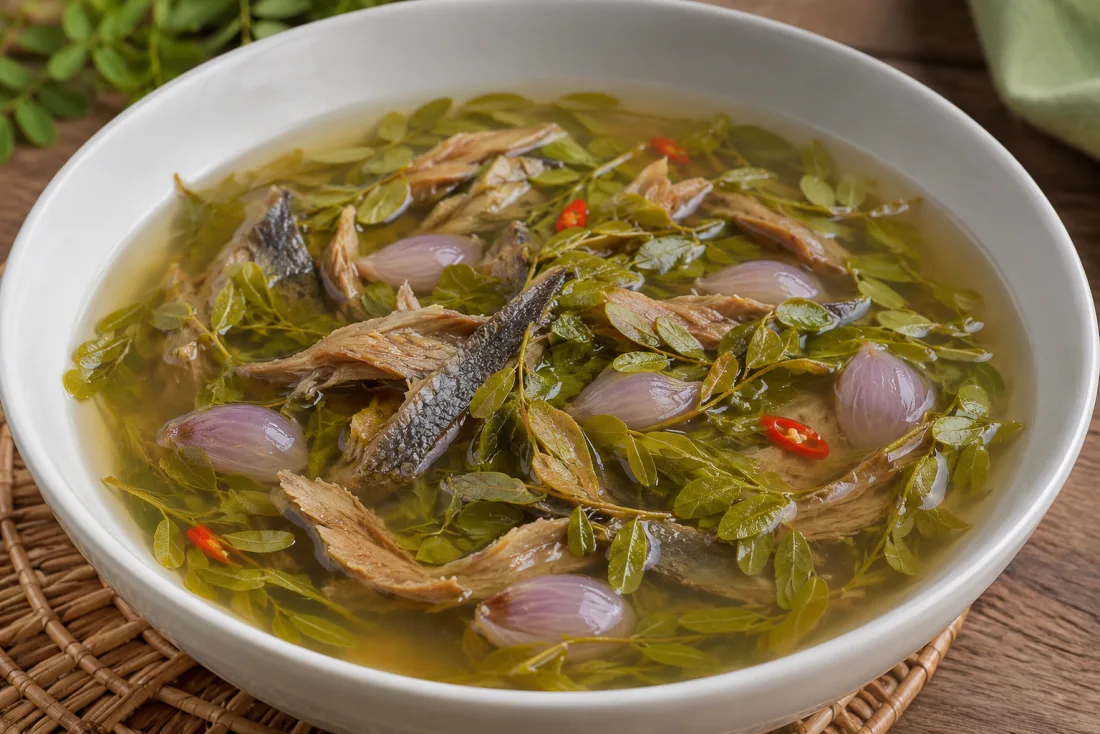

 dried fish
Fish, young leaves and shallots
The soup is usually clear enough to reveal softened dried fish and small leaves or blossoms. Shallots soften in the broth. A kitchen may add red chili, and the fish can be cut in different shapes.
One preparation recorded in Thailand
Tamrap Ahan lists dried fish with shallots and tamarind leaves or blossoms, and suggests other sour fruits and leaves. It allows water or stock. Other Thai versions use toasted dried fish and charred aromatics, sometimes with tamarind pulp. The old recipe does not name an originating province.
Fish, shallots and the souring ingredients
Soften pieces of dried fish in the broth. Shallots add sweetness and fish sauce seasons. Young tamarind leaves and its blossoms give tartness and a light plant aroma. Tamarind pulp, unripe mango or madan give a different sour character. Ask what goes into any stock.
Savory, sour and sometimes smoky
Dried fish provides deeper savoriness than plain stock. Young leaves are lightly tart and the cooked shallot softens their edge. Toasted fish or charred chili gives a smoky note in other versions. More time in the broth softens both fish and leaves.
Serve beside steamed rice
Try a small bowl with fish and leaves alongside rice. Ask how the soup is soured. A tom yum commonly emphasizes lime and aromatics, while this recorded tom khlong emphasizes dried fish and tamarind.
Allergens, broth and fish bones
Dried fish and fish sauce contain fish. Removing pieces will not separate the fish from the broth. Ask about shrimp paste, stock flavorings and shared utensils. Dried fish may contain fine bones and can make the broth salty.
If you have a food allergy, tell the restaurant before ordering and ask about ingredients, sauces and shared cooking equipment.