

 shrimp paste
 fish sauce
What the name identifies
Tom yum is a Thai family of hot, sour and aromatic soups. Hoi malaeng phu means mussels. This historical example focuses on mussels and a light cooking liquid. A restaurant’s modern version may differ.
Mussels and seafood seasoning
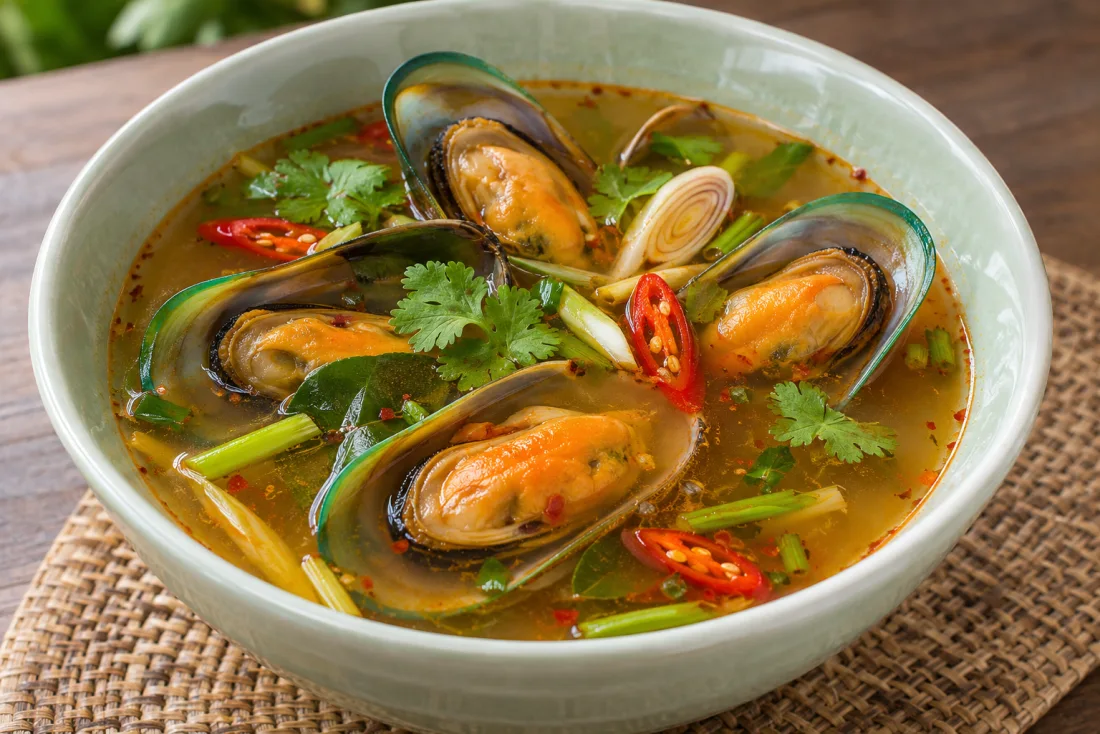
The archived recipe uses mussels, water or bone broth, garlic, shrimp paste, fresh bird’s eye or yellow chili, lime, fish sauce, spring onion and coriander. Lemongrass, galangal or makrut leaves may appear in other versions.
Lime, chili and marine savoriness
Lime brings brightness and fish sauce and shrimp paste contribute savory saltiness. Mussels have a lightly sweet, yielding bite. Chopped chili and green herbs add different types of fragrance.
Clear broth and shell presentation
Mussels are cooked in the hot broth. Pounded garlic, shrimp paste and chili season the liquid, which is finished with lime and fish sauce. Restaurants serve shelled mussels or keep shells attached. Brown or red broth color does not determine heat or ingredients.
Serving and creamy alternatives
Some tom yum recipes add roasted chili paste and evaporated milk or other enrichments. This example is clear and gives a more direct lime finish. It is suited to white rice and other shared dishes.
Allergens beyond the visible mussels
Mussels are mollusks, shrimp paste contains crustaceans and fish sauce contains fish. Ask restaurants about shared tools, bone broth, dairy in creamy versions and additional sauces. Removing the mussels does not remove other seafood ingredients or residue from cooking.
If you have a food allergy, tell the restaurant before ordering and ask about ingredients, sauces and shared cooking equipment.