

 pork leg
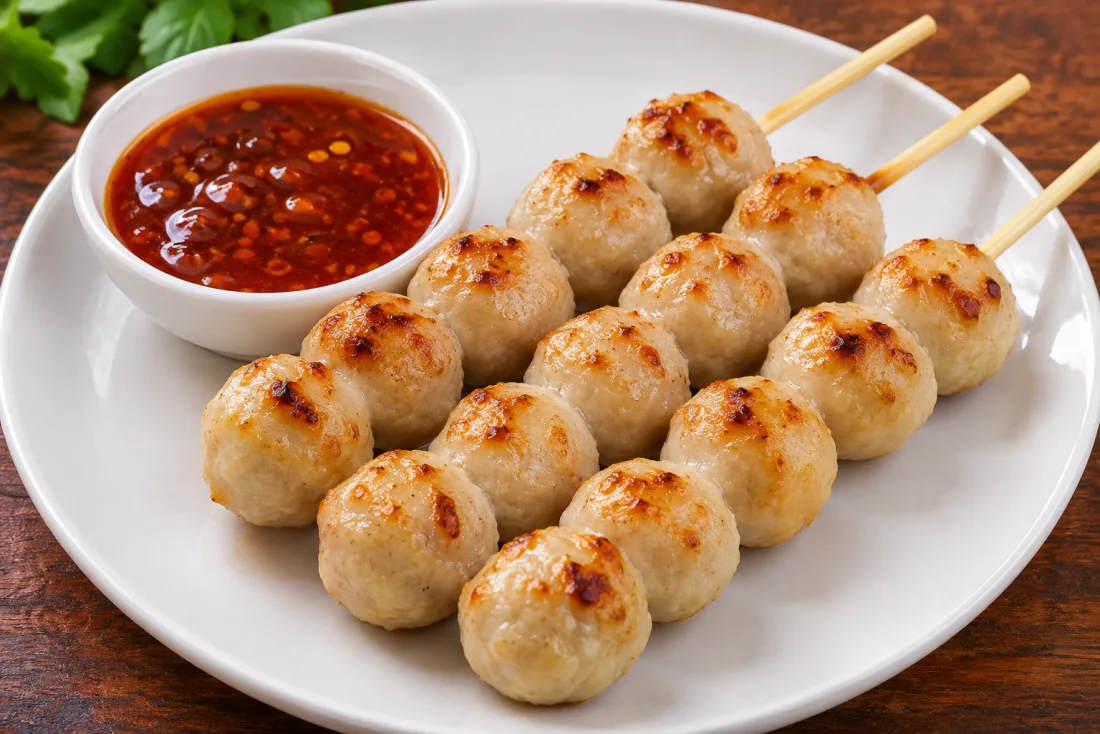
Meatball skewers at a Thai street stall
Luk chin means meatball and ping means grilled. Pork and beef skewers can sit alongside other choices. The vendor may sell individual skewers or a set with raw vegetables and a packet of sauce.
What gives the meatballs their spring
One Thai recipe uses pork leg, salt, pepper and wheat flour, mixed into a fine paste. Some versions add pieces of tendon. A dried chilli, garlic, pickled garlic and tamarind dip gives a different texture and can be prepared separately.
Poaching first and grilling after
The balls can be poached until cooked, drained, skewered and scored. Charcoal or a grill pan browns their surface without changing the tender centre much. Sauce can be brushed over or served on the side. Fried meatballs develop a more even crust.
Smoke, bounce and a sweet-tart dip
The outside smells toasted and the centre can be smooth and springy. Tamarind and sugar round out dried chilli. With less sauce, the pepper and savour of the meatball are easier to taste. Cucumber or cabbage brings a crisp contrast.
Meat choices and ways of serving
Pork, beef, tendon and fish versions may look alike. Skewers can be served on a plate or packed with a small bag of sweet tamarind or brighter lime and chilli sauce. When comparing meats, ask the stall to identify each skewer.
Allergens in meatballs and sauces
Wheat flour can be in the meatball itself. Other products may contain egg or soy. Fish balls contain fish and some sauces add fish, crustaceans or molluscs. Ask about the label, sauce and shared grill or tongs. Serving the dip separately cannot remove ingredients from the meatball.
If you have a food allergy, tell the restaurant before ordering and ask about ingredients, sauces and shared cooking equipment.