

 pork
 fish sauce
An Isan hot and sour soup
Tom refers to boiling or simmering, saap describes an intensely flavorful taste, and moo means pork. The name points to a hot and sour soup associated with Isan, northeastern Thailand. Thai cooks describe it as a familiar soup in Isan restaurants and record both pork-piece and pork-cartilage recipes. That documents a regional context without identifying one province as the birthplace.
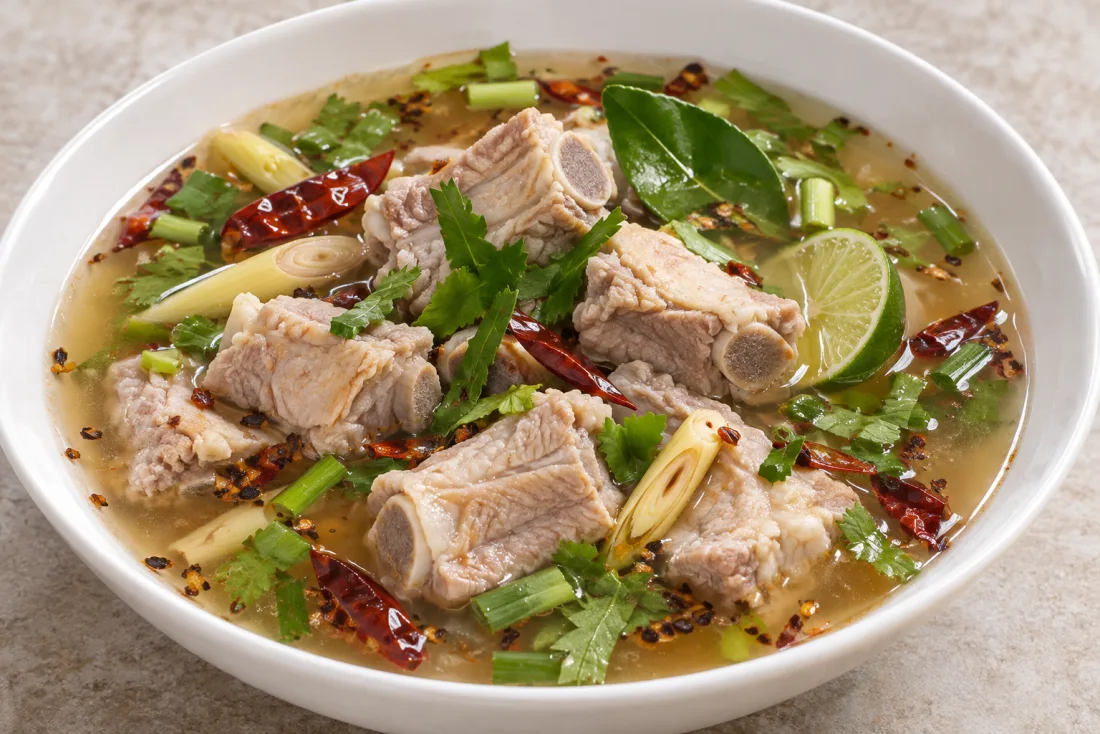
A menu may say tom saap kraduk on to indicate pork ribs with cartilage. Tom saap moo by itself can mean pork pieces, ribs or whichever cut the kitchen uses. The description can tell you whether to expect boneless meat or pieces to eat around the bone.
Pork, broth aromatics and the final seasoning
Pork pieces or ribs with cartilage can cook in the broth. Lemongrass, galangal, makrut lime leaves and shallots contribute aroma. Some cooks toast or pound the aromatics before adding them. Stiff pieces of lemongrass and galangal can be left in the bowl once they have flavored the soup.
Once the pork is tender, fish sauce, lime or tamarind and dried chilli can season the broth. One recipe adds small tomatoes, king oyster mushroom, culantro, Thai sweet basil and toasted ground rice. Cooks can change the vegetables. The cartilage version may use pounded herbs and pickled garlic for a deeper flavor.
How the acidity, heat and toasted rice come through
Lime gives a bright acidity, while tamarind adds fruitiness and a rounder sourness. Hot pork broth has a meat aroma, fish sauce adds savory salt, and dried chilli brings lingering heat. Toasted rice gives a roasted scent and small grains. Culantro and scallion can add fresh notes.
Boneless pork pieces are easy to scoop when tender. Ribs combine meat, bone and sometimes crunchy cartilage. The broth may look clear or somewhat cloudy depending on the toasted rice and other ingredients. Pale broth can still be spicy. Ask whether the chilli can be adjusted if you prefer a particular level.
Serving it with meat, broth and rice
A bowl can come with steamed rice or be served at a shared table with other Isan dishes and sticky rice. Sip some broth first to gauge its flavor. Ribs can be lifted out before eating the meat, while vegetables and herbs vary by kitchen.
Alternate broth and rice when it arrives with grilled meat or green papaya salad. Check whether the portion is individual or for sharing. If the whole pot has already been seasoned, the kitchen may have limited ability to change the heat. Chilli added at service is easier to adjust.
Distinguishing tom yum and other sour pork soups
Tom saap and tom yum can share lemongrass, galangal, makrut lime leaves and lime juice. Those aromatics alone cannot identify the soup. Moo means pork, and toasted rice, dried chilli and culantro are clues to tom saap. Goong in tom yum goong means shrimp. Serving styles and other seasonings vary.
Thailand’s eastern Trat Province also has a sour pork soup flavored with chamuang leaves. It gets its acidity from a different ingredient from Isan recipes seasoned with lime and toasted rice. If the menu lists cartilage, pork pieces and a cloudy broth, ask about the cuts and seasonings to choose a texture you prefer.
Allergies in fish sauce, stock and shared pots
Fish sauce usually contains fish. Stock powders and prepared seasonings can also contain soy, wheat, crustaceans or other ingredients. Ask about the actual recipe and how the cook makes a cloudy broth before assuming it contains milk. Pork in the name does not identify every ingredient in the stock.
Tell the restaurant what you need to avoid, then ask about the broth, final seasonings and shared pots or ladles. Removing a garnish or a piece of meat cannot take ingredients out once they have cooked in the soup. The kitchen should confirm whether it can prepare a separate portion.
If you have a food allergy, tell the restaurant before ordering and ask about ingredients, sauces and shared cooking equipment.