

 chicken
 fish sauce
Place in Thai cooking and regional context
This style of chicken soup appears in Thai home cooking and on Thai menus abroad. Thai SELECT calls it coconut milk soup with chicken and includes galangal and lemongrass in its base. A menu may simply call it Thai coconut chicken soup. The Thai name or transliteration tells you to look for galangal as a defining aromatic.
It belongs in the wider Thai tradition of making soups with fresh aromatics. The UNESCO material specifically associates the much-compared Tom Yum Goong with riverside communities in Thailand’s Central Plains. That evidence concerns Tom Yum Goong and does not establish a birthplace for Tom Kha Gai. Recipe records and menus tell us how the latter soup is prepared and served today.
What the broth, chicken and aromatics contribute
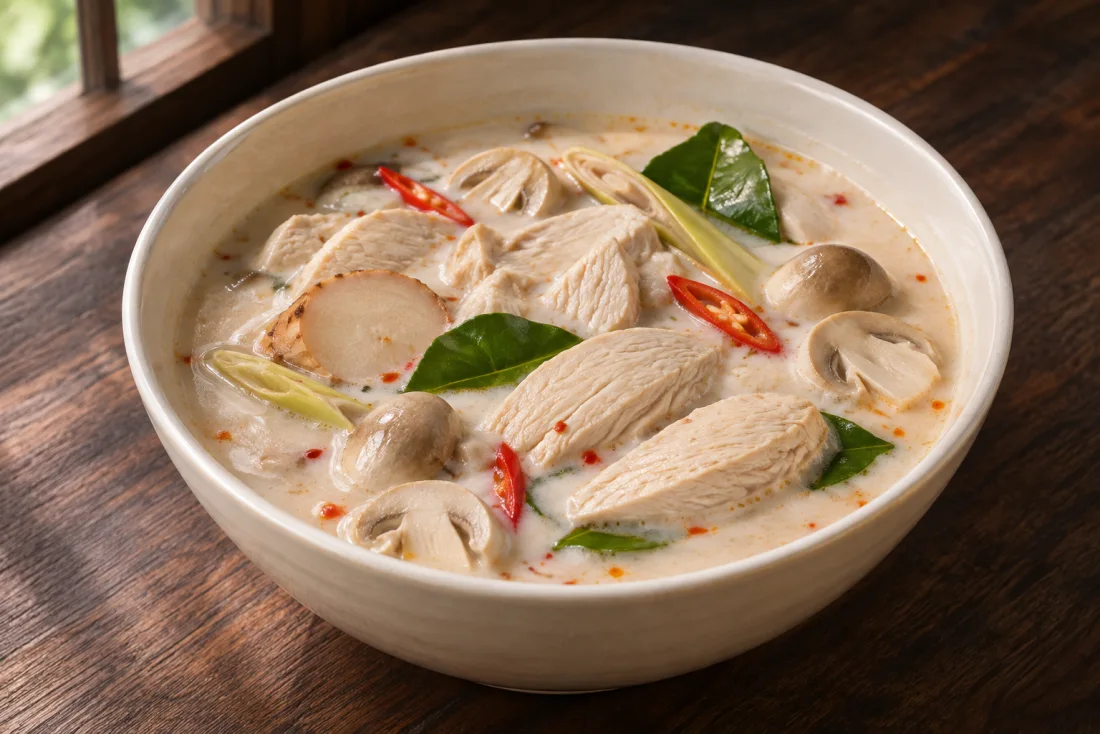
Coconut milk gives the broth its richness and smooth texture. Chicken and mushrooms provide substantial bites in the bowl. Galangal adds a distinctive pungent aroma, while lemongrass and makrut lime leaves add citrus notes. Galangal resembles ordinary ginger, but its aroma differs. It is named in the dish, so using a different rhizome changes the result.
Fish sauce contributes saltiness and fermented savoriness, and lime juice supplies acidity. Chilli can be cooked into the soup or added later. With coconut, galangal, lime, fish sauce and chilli each playing a different role, a pale broth can still taste distinctly hot and sour.
How the soup is made and eaten
In the Thai SELECT example, lemongrass and galangal first cook in coconut milk to flavor the broth, followed by chicken and mushrooms. Fish sauce seasons the soup, and lime juice goes in later. One recipe published by the Royal Thai Embassy in Austria adds lime off the heat. The order lets you taste the infused aromatics alongside the bright acidity added at the end.
Try a piece of chicken or mushroom with some broth, then taste the broth on its own. Large pieces of lemongrass, galangal and leaves are there to infuse the soup and can be set aside. The cut of chicken, choice of mushroom and richness of the coconut milk all change the texture. A menu photo may show the components, and the final bowl depends on the kitchen’s recipe.
How it differs from Tom Yum Goong
The two soups can share galangal, lemongrass, makrut lime leaves and chilli, along with a salty and sour balance from fish sauce and lime. Goong names the prawn in Tom Yum Goong; gai names the chicken in Tom Kha Gai. Coconut milk is a characteristic base for Tom Kha Gai, where you can taste how the coconut and galangal interact.
Start with the name and main ingredient, then look at the broth. Clear Tom Yum Goong looks quite different from pale coconut chicken soup. Richer tom yum recipes may also use coconut milk, as the Thai SELECT example does. Color, thickness and heat vary between recipes, so any one of these alone can be misleading.
Where diners encounter it
It can be ordered by itself, or eaten with plain rice and other dishes. Taste the broth first to notice the coconut and lime, then try the chicken with rice. Thai foreign ministry records document the soup at a cooking program for students in Los Angeles and at Thai food festivals involving the consulate-general in Kolkata. It is often used to introduce the combination of Thai aromatics and coconut milk.
Food allergies: coconut, milk, fish sauce and shared equipment
The example recipe uses coconut milk and fish sauce. Coconut milk comes from coconut, a different ingredient from dairy milk. A coconut allergy makes the broth relevant. If you have a milk allergy, ask the kitchen whether its stock, seasoning paste or additions contain milk ingredients. If you are allergic to fish, specifically ask about fish sauce and other fish-based seasonings. Visible chicken and mushrooms tell you very little about those ingredients.
If you have a crustacean, legume or other food allergy, ask staff to check the actual labels for the stock, fish sauce, seasoning paste and other additions. Ask about shared pots, ladles and work surfaces. State the specific food before ordering. Lifting an ingredient out of the soup cannot rule out cross-contact that has already occurred. For a packaged product, check the full ingredients and allergen information on that package.
If you have a food allergy, tell the restaurant before ordering and ask about ingredients, sauces and shared cooking equipment.