

 prawn
 fish sauce
The prawn version of a central Thai soup
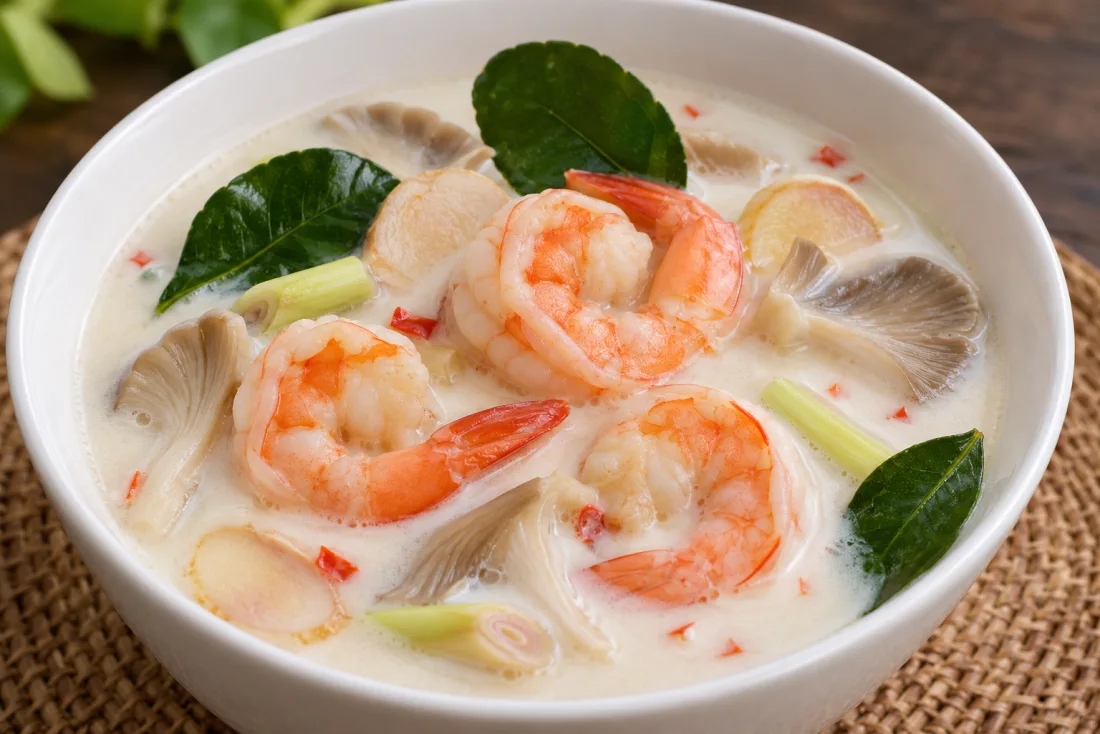
Tom means boil, kha is galangal and kung means prawn. The coconut soup family is associated with central Thai cooking and includes the familiar chicken version. Prawn gives it a sweeter seafood flavor and firmer bite. On a restaurant menu the name identifies the soup and protein. The size, species and preparation of the prawns vary.
What prawn, galangal and coconut milk contribute
Water or stock lightens the coconut milk. Bruised lemongrass, torn makrut leaves and sliced galangal perfume the liquid. Galangal has a woody, citrus-like aroma distinct from common ginger and turmeric. A published recipe uses tiger prawns and tender coconut shoot. Mushrooms occur in the wider family. Fish sauce, lime, fresh chili and optional cilantro round out the bowl.
Rich coconut, lime and lingering chili
Coconut milk feels silky, galangal and lime leaf are aromatic, and lime juice supplies a brighter acidity. Fish sauce joins the coconut to the prawn savor, and some cooks balance the seasoning with sugar. A pale soup can be hot. Chili quantity and crushing change the heat, while coconut milk proportion changes body.
A hot soup with rice
Serve as a shared soup with plain rice, greens or eggs, or order a smaller bowl. Spoon broth and prawn over rice and divide the solid ingredients when sharing. Tough galangal rounds, lemongrass stems and leaves can be put aside. Ask if the prawns come peeled and whether the chili level can be changed for a fresh batch.
Related soups on the menu
Tom yum kung can be clear or enriched with roasted chili paste and evaporated milk. Tom kha kung takes its aroma and body from galangal and coconut. Tom kha gai denotes chicken in the same soup family. Ask what stock is used, since a recipe displaying prawns can start with pork-flavored or chicken stock.
Allergens and the stock
Prawns are crustaceans and fish sauce is a source of fish. The broth itself can contain both even if the prawns are removed. Declare coconut allergy and ask if dairy or compound stock is used. Packaged stocks and seasonings may also add soy, wheat or milk. Ask about pots, ladles, strainers and surfaces shared with fish, crustaceans and mollusks.
If you have a food allergy, tell the restaurant before ordering and ask about ingredients, sauces and shared cooking equipment.