

 pork cartilage
 fish sauce
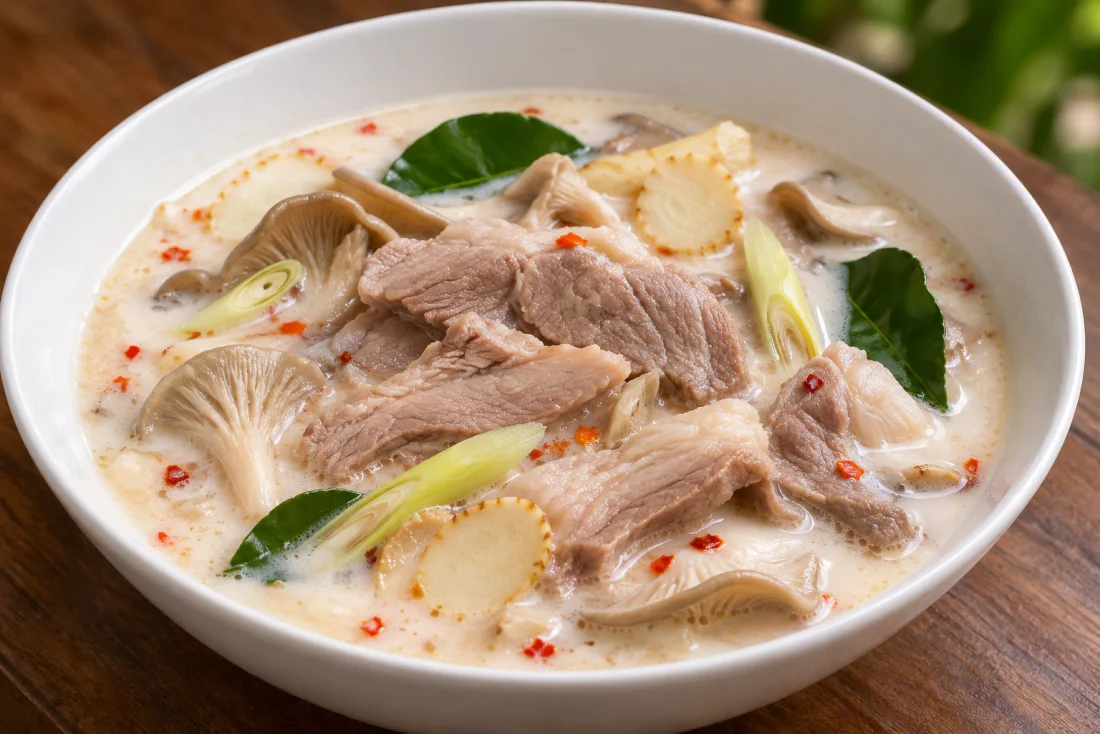
The soup names galangal and can use different cuts of pork
The name identifies galangal and pork. Thai home versions include pork bone broth with coconut added late and quick sliced pork with cabbage. This entry focuses on coconut milk and lime; a related pork galangal soup can have a clear broth.
Cooking the pork, herbs and coconut in stages
One recipe simmers pork cartilage with coriander root, then adds coconut milk to the stock and infuses it with galangal, lemongrass and makrut lime leaves. Onion, shimeji or tomatoes can go in before the pork returns. Fish sauce and chili season it and lime goes in off the heat. Thin pork needs less cooking than bones.
Coconut, galangal and lime
Galangal has a distinctive sharp scent, and lemongrass and makrut leaves add fragrance. Fresh lime brings acidity. Coconut smooths the broth and fish sauce brings salt. Slow-cooked pork around cartilage can be tender, with some bite at the cartilage.
Serving the broth with rice
Taste the soup and then eat the pork and mushrooms with rice. Divide solids and broth, leave woody aromatics aside and check for bones. Ask whether spice or lime can be adjusted when served.
Comparing tom yum, other sour pork soups and chicken tom kha
Tom yum often shares lemongrass, galangal and lime leaves, but has a different sour and spicy balance. Tom kha moo here is coconut-based and centered on galangal. Chicken tom kha uses chicken, and some related pork galangal soups use clear broth.
Allergens in fish sauce, seasonings and coconut
Fish sauce contains fish. Light soy or compound pork seasoning may contain soy or wheat. Check coconut and additional sauces or shared pans used for seafood. Removing herbs or pieces cannot remove allergens in the broth. Bones and woody herbs are separate considerations.
If you have a food allergy, tell the restaurant before ordering and ask about ingredients, sauces and shared cooking equipment.