
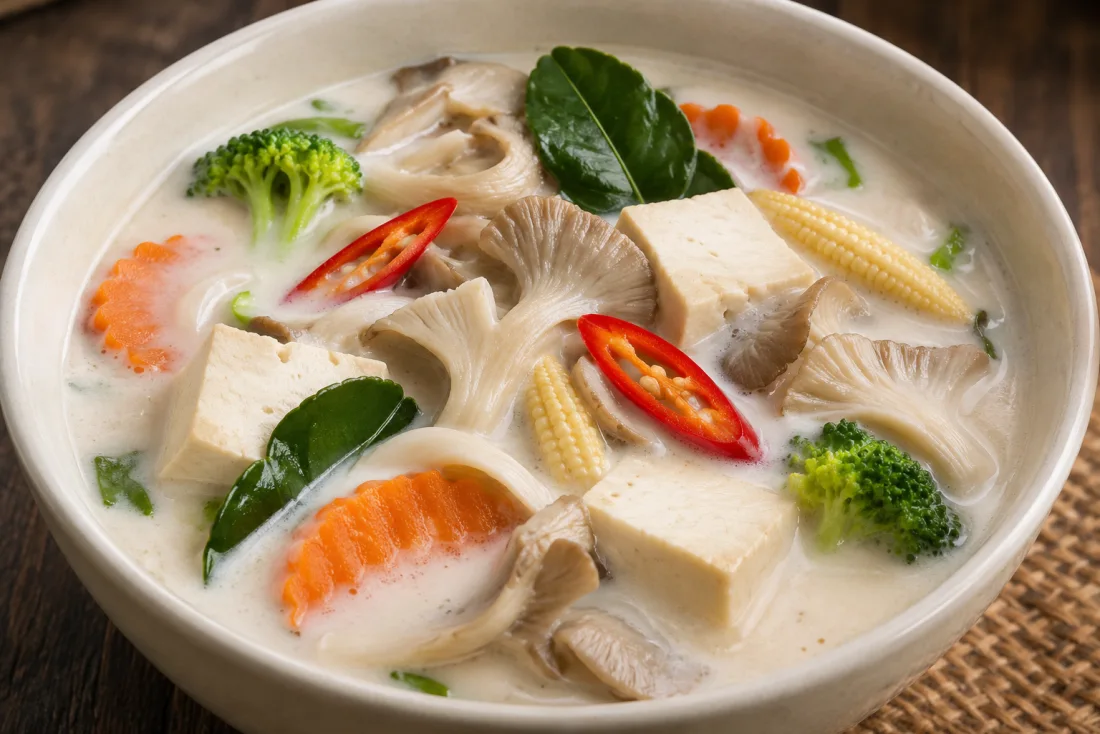

Vegetable tom kha on a Thai menu
The Thai name uses kha for galangal and phak for vegetables. A bowl is often ivory coloured, dotted with bite-size greens and sometimes visible slices of galangal. Bangkok restaurant versions use a mixture of vegetables and tofu, while some kitchens in Ko Samui list a plant-based option. Serve it with rice or on its own.
Coconut, galangal, vegetables and tofu
Coconut milk gives the broth body, and water or vegetable stock can lighten it. Lemongrass and makrut lime leaves add bright citrus aromas to earthy, peppery galangal. Mushrooms, cabbage, tomatoes and young coconut shoots offer different textures. Tofu absorbs the broth when it is included.
Infusing the broth and finishing with acid
Bruise or lightly toast the aromatics to release their fragrance. Simmer them in the coconut base and cook firmer vegetables before tender leaves. A gentle simmer helps keep the soup smooth. Tamarind can provide rounded acidity as it cooks, and late-added lime keeps its fresh fragrance. Leave woody stalks and galangal slices to one side.
The range of texture, acidity and heat
Coconut richness gives way to herbal galangal and a clean or gently fruity sour finish. A bruised chilli can add an immediate, noticeable heat. Crisp vegetables, chewy mushrooms and soft tofu make each spoonful a little different. With plain rice, a sharply tart broth can balance the mild grains.
Mushroom versions and a complete meal
Ask which vegetables and tofu are used. A jay mushroom version may add young coconut shoots, tamarind and lime. A small bowl pairs with rice and a dry stir-fry. Coconut milk gives vegetable tom kha a rounder mouthfeel than a clear tom yum with similar aromatics. When sharing, taste a little broth before dividing the mushrooms and tofu.
Allergens and plant-based seasoning
Tofu and light soy sauce contain soy, and some soy sauces contain wheat. Ask whether the stock is vegetable based and whether fish sauce, shrimp paste or oyster sauce was used. They can introduce fish, crustaceans or molluscs. Ask about dairy or coconut if relevant, and about a separate pot and utensils if cross-contact matters.
If you have a food allergy, tell the restaurant before ordering and ask about ingredients, sauces and shared cooking equipment.