
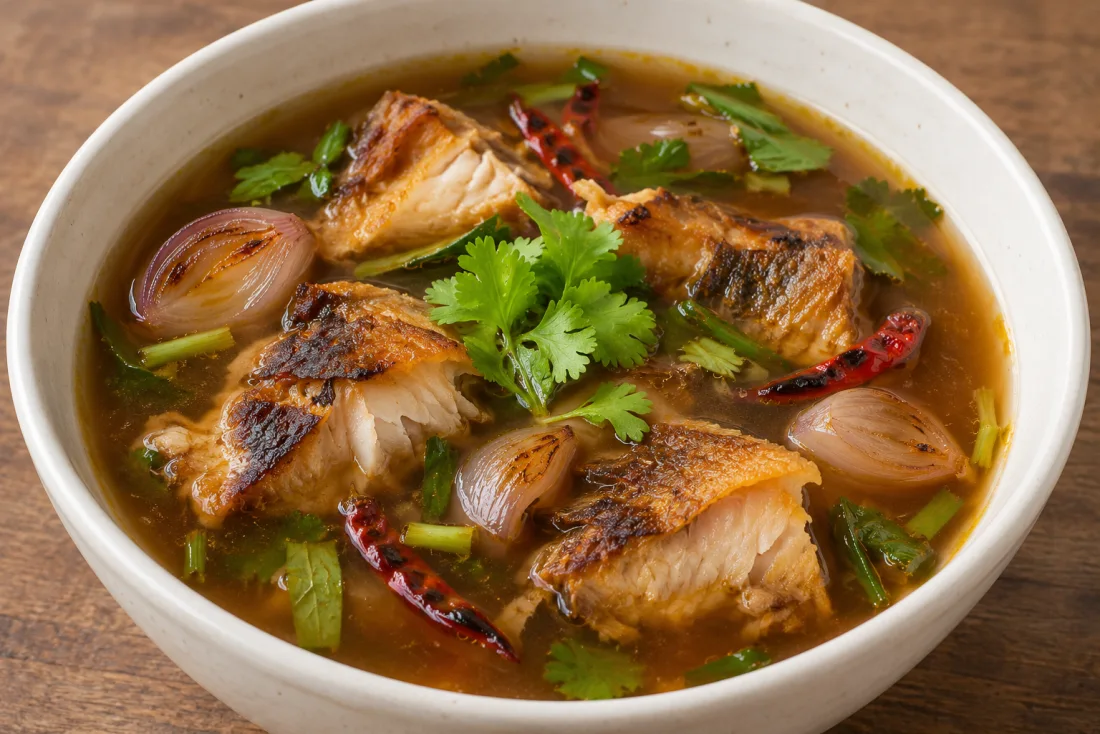

 smoked dried fish
A central Thai smoked fish soup
Pla means fish. Tom kloong also appears as tom klong or tom kloang. Pla krop points to fish dried or cooked until crisp before simmering. Fieldwork in Amphawa, Samut Songkhram documents a dried fish version among central Thai soups.
Dried fish, toasted herbs and tamarind
One method reheats smoked dried fish over a grill and toasts shallot, lemongrass, galangal and makrut lime leaves. The fish softens in water or chicken stock and flavors it. Tamarind, fish sauce and roasted dried chili season the broth. A documented Amphawa version includes garlic and shrimp paste. Other recipes add tomato, mushrooms or fresh herbs.
Rounded acidity, smoke and heat
Tamarind contributes a fruity sourness. Smoked fish and toasted chili add warmer notes, and fish sauce brings a salty savor. Dried fish after simmering can still be chewier than fresh fish. Exact heat depends on the quantity and handling of the chili.
How it fits a shared meal
Serve hot with rice, greens or eggs, and spoon enough fish into each portion. Watch for small fish bones and set aside tough aromatic stems and leaves. Ask how the chili is used and whether the broth is cooked to order.
Comparing fish soups
Fish tom yum can share the aromatics while using fresh fish and lime. Tom som often emphasizes sweet-sour broth and ginger. An old documented tom kloong variation uses several proteins, shrimp stock and gourami, while another uses smoked dried fish and water or chicken stock.
Allergens in broth and seasonings
Both fish and fish sauce contribute fish allergens to the liquid. Shrimp paste or shrimp stock adds a crustacean allergen. Clarify any mollusk allergy separately and ask about prepared soup bases that may contain soy or wheat. Grills, utensils, pots and ladles may be shared.
If you have a food allergy, tell the restaurant before ordering and ask about ingredients, sauces and shared cooking equipment.