
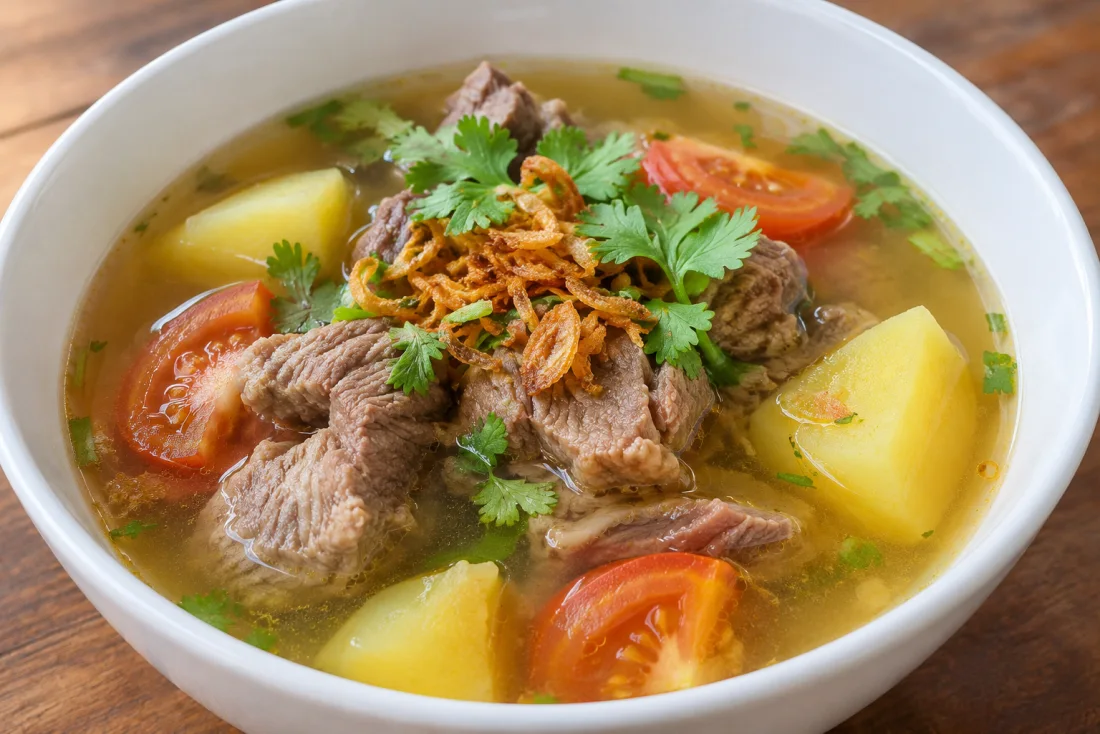

 beef shank
A clear soup with pieces of beef
Tom means to boil, sup means soup and neua refers here to beef. A bowl generally shows amber or pale brown broth with pieces or slices of beef, softened tomato and onion, and fresh herbs. Fried shallot is an identifiable topping, and some cooks add potato. The soup can be sour and spicy, but its Thai name is distinct from tom saep neua, the name generally used for a Northeastern Thai sour-spicy beef soup. Check how the meat, tomatoes and fried shallot are used when choosing from a menu.
On Thai Muslim tables
Thai Muslim-style cooks share individual recipes for slow-simmered beef soup, and a Southern Thai local authority records a similar beef soup in a rice meal. It can come with fragrant spiced rice, plain rice or as an individual soup. The record supports several local versions without fixing its origin to one restaurant or province. Sourness may come from lime or a local sour fruit. A cuisine name by itself does not establish halal certification, so diners who require it can ask about sourcing and preparation.
Beef shank, tomato, onion and fried shallot
Beef shank and other cuts with connective tissue can hold their shape and soften slowly. Oxtail is another possible cut if expressly named. Garlic, pepper and coriander root can scent the stock, with cinnamon or star anise in some recipes. Soft tomato and onion add savoury sweetness and acidity. Potato is optional. Fresh coriander, scallion or celery leaves can go on top with fried shallots. Salt, fish sauce, soy seasonings or sour fruit vary with the kitchen.
Slow simmer first, season the individual bowl last
Start beef in water and skim the surface as the broth comes to a boil. Simmer with the aromatics until the meat becomes tender. Add potato, onion and tomato later so they do not disintegrate. A whole shank can be sliced across the grain to serve. Add fresh lime, chilli and herbs to suit the serving. Fried shallots retain more fragrance and texture when scattered over the hot soup just before it reaches the table.
Savoury beef, bright tomato and sweet fried shallot
Beef brings the broth's body, cooked onion brings mild sweetness and tomato adds brightness. The shank can be soft with a faint spring from its connective tissue. Fried shallot tastes toasty and sweet, and it softens after soaking. Lime brings a fresher acidity and bird's-eye chilli can make the soup sharply hot. Soft potato gives one version a more substantial body, while an onion-forward bowl tastes more lightly sweet. The amount of chilli and fat depends on the cook.
Allergens in seasonings, stock and toppings
Fish sauce contains fish. Shrimp paste and oyster sauce, if used, can introduce crustacean and mollusc ingredients respectively. Soy sauce contains soy and may contain wheat. Prepared stock and fried shallot toppings may also contain these, and coated shallots may contain wheat. Ask separately about celery if needed. Check both the soup base and toppings, as well as shared pots or frying equipment. Removing toppings cannot eliminate ingredients already dissolved in the soup.
If you have a food allergy, tell the restaurant before ordering and ask about ingredients, sauces and shared cooking equipment.