

 pork ribs
 fish sauce
The Isan table
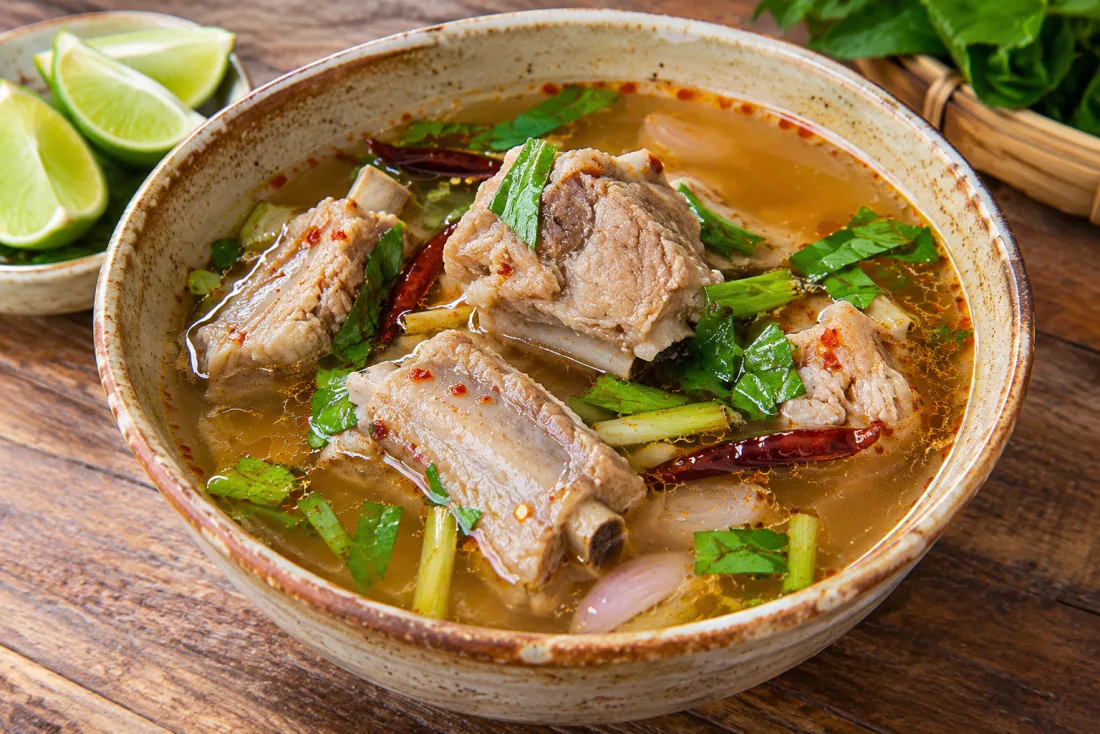
Saep is a familiar expression of lively, appetising flavour in Isan. Tom saep can have different proteins, and a menu naming pork ribs or cartilage helps identify what the bowl contains. Diners may share it with sticky rice, grilled meat and green papaya salad, or have it with steamed rice.
Pork and aromatics
Slow simmering softens the meat around short rib bones. Small cartilage cuts remain slightly springy when tender. Galangal, lemongrass, shallots, makrut lime leaves and coriander root give the light broth its aroma. Some cooks toast and pound the aromatics, while others leave larger pieces in the pot. Woody stalks and thick slices may remain in the bowl for flavour.
The sour and smoky finish
Fish sauce supplies savoury saltiness, lime gives a brisk sour finish, and crumbled roasted chillies bring heat. Toasted rice powder adds a nutty grain aroma and a little texture. Fresh culantro, spring onion or Thai basil may appear at the end. Red flecks can be seen in a light broth, so colour is an unreliable guide to how hot it tastes.
Ribs and other variations
Short ribs offer fork-tender meat around a firm bone. Cartilage-style bowls use smaller pieces with a softer but springy middle. A version with young tamarind leaves gives a gentler leafy sourness. Other cooks use a little pickled garlic, sugar or shallot to round the seasoning. The exact balance of sourness and heat changes from stall to stall.
How it fits on a menu
Lime and toasted rice are useful clues when distinguishing pork tom saep from other Thai hot-and-sour soups. Compared with a dill-heavy gaeng om, the bowl normally has fewer vegetables and a brighter sour profile. Sticky rice works well with the pork, while steamed rice catches the broth. Ask the shop which cut it serves if the distinction matters.
Allergens and ingredients to check
Fish sauce makes fish a relevant allergen. Stock powders and other sauces may add soy, wheat or more fish. The toasted rice itself gets its nutty character from browning, and ingredients in prepared seasonings vary. Ask about shared utensils and pots if cross-contact matters. Meat served on the bone may contain small fragments. Separate suitable portions when serving children.
If you have a food allergy, tell the restaurant before ordering and ask about ingredients, sauces and shared cooking equipment.