
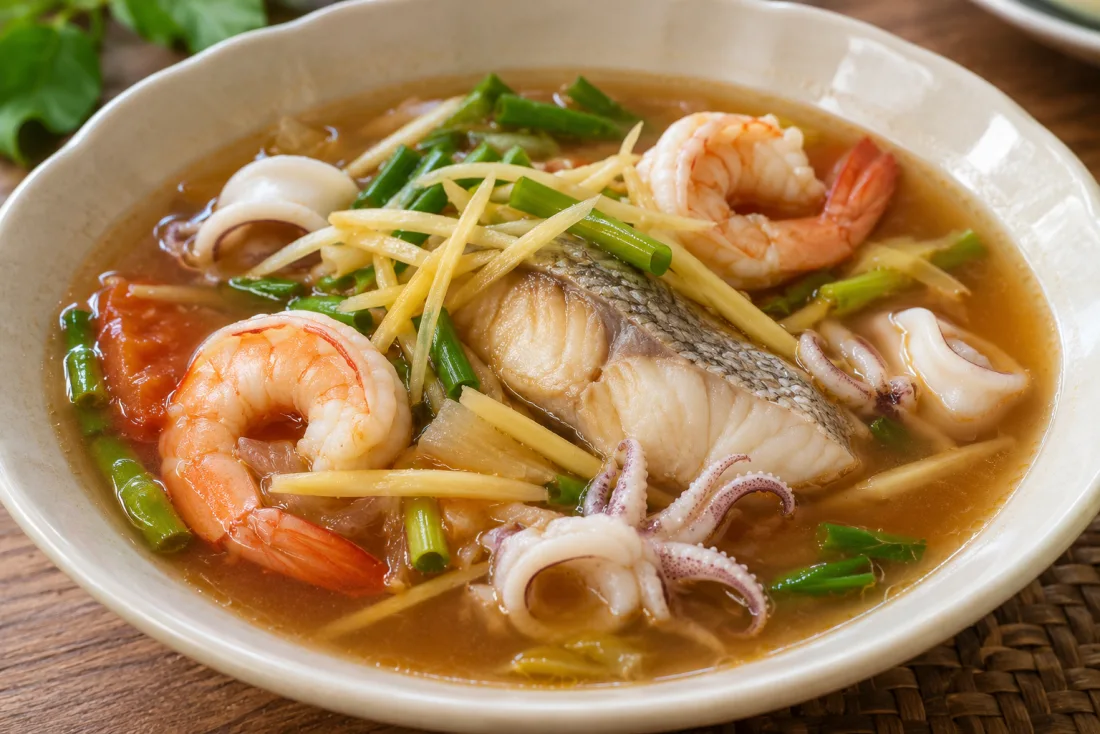

Seafood in the name and the souring ingredients
A Thai coastal restaurant lists seafood, tamarind juice and local herbs. The word talay does not specify each species. Shrimp, squid, fish or shellfish depend on the kitchen. A central Thai preparation uses tamarind and ginger.
Cooking the tamarind, ginger and seafood
A central-style base can include pepper, shallots, coriander root and shrimp paste, seasoned with tamarind, fish sauce and palm sugar. Add ginger and cook the seafood until done. Different restaurants may use different local herbs and stock.
Tamarind tartness, ginger and seafood savor
Tamarind has a fruity acidity while ginger brings warmth and sugar can round the broth. Shrimp stays springy, squid is chewable and fish can flake. Fish sauce or stock adds savor. Chili can vary by kitchen.
Serving with rice and sharing seafood
Portion shells, bones and seafood separately as needed before adding broth. Serve with rice and ask about serving size and seasoning. Set aside coarse pieces of herbs.
Tom yum, sour curry and ginger-tamarind soup
Tom yum often emphasizes lime, lemongrass and galangal. Sour curry can use tamarind but with another curry paste. A ginger-focused tom som has a different fragrance. Ask what the kitchen uses.
Allergens in seafood and the base
Shrimp and crab are crustaceans, squid and many shellfish are mollusks, and fish sauce or stock contains fish. Shrimp paste can be present without visible shrimp. Check sauces and shared tools. Removing pieces does not remove contact.
If you have a food allergy, tell the restaurant before ordering and ask about ingredients, sauces and shared cooking equipment.