

 chicken
 fish sauce
Chicken tom yum in Thai home cooking
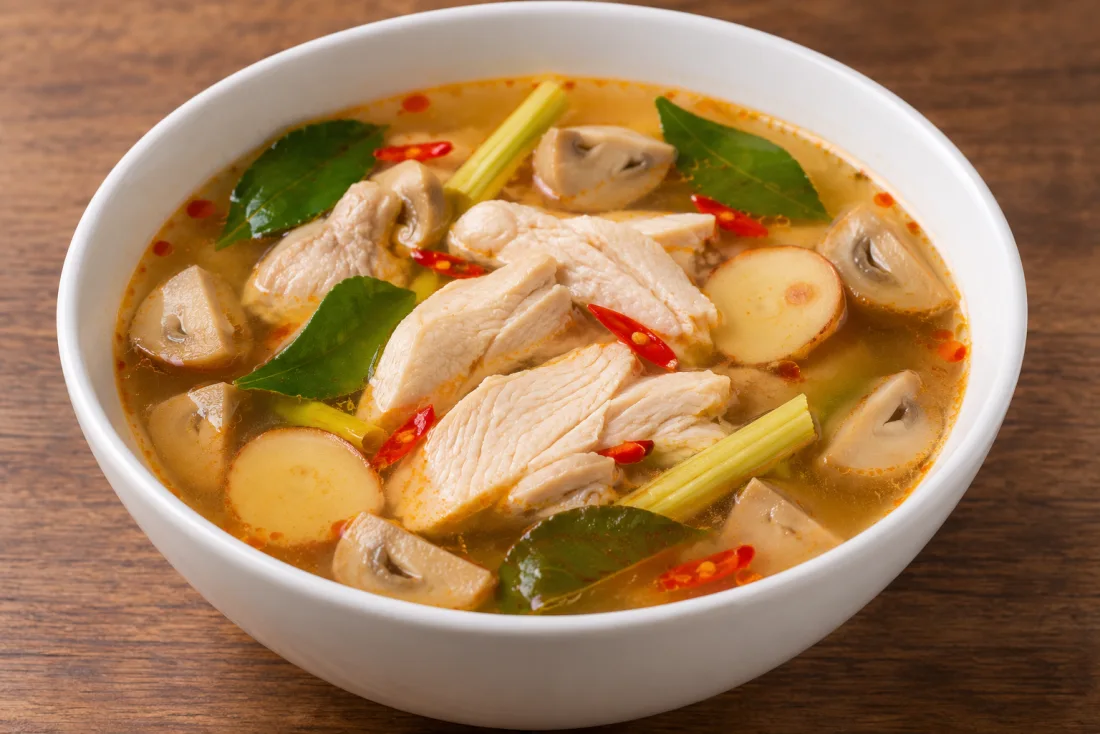
Gai means chicken. Clear chicken tom yum is documented in central Thai cooking and can be made from everyday cuts such as thigh or wing. The dish name names a soup family and protein. Restaurants may offer it as one of several tom yum options.
Chicken and the herbs that flavor the broth
Thigh pieces can go into stock, while simmered wings can make a broth on their own. Galangal, lemongrass, makrut lime leaves and shallot perfume it. Published recipes use lime alone or with tamarind. Fish sauce and fresh or dried chili are common, with mushrooms, tomatoes and fresh greens as options.
Bright, hot and savory even when clear
Lime tastes bright, tamarind adds a rounder fruitiness and chili can have a fresh or toasted aroma. Chicken richness depends on the cut and the stock. Clear pale or lightly red broth can be quite hot. Thigh meat, wing skin and mushrooms all have different textures.
Eating chicken tom yum with rice
Serve hot on its own or alongside rice, greens and egg dishes. Distribute broth and chicken when sharing. Set aside tough lemongrass, lime leaves and galangal and watch for wing bones. Nam sai means clear broth. Ask whether it can be made to order with fewer chilies.
Tom kha, tom saap and other chicken soups
Tom kha gai generally has coconut and galangal at the center. Rich tom yum can use roasted chili paste and evaporated milk. Tom saap has versions with toasted rice and roasted dried chili. Chicken meatballs can have a different mix of ingredients, such as prawn and egg white.
Allergens beyond the chicken
Fish sauce contains fish. Creamy broth and prepared pastes can add milk or crustaceans, and chicken meatballs can include shrimp or egg. Declare coconut allergy if it applies. Ask about soy, wheat and packaged stock and about shared pots, strainers and ladles.
If you have a food allergy, tell the restaurant before ordering and ask about ingredients, sauces and shared cooking equipment.