

 prawn
 fish sauce
Where it comes from
UNESCO connects the dish with riverside communities in the Central Plains of Thailand. The combination of local river prawns and nearby aromatics helps explain the dish’s culinary setting and the emphasis some restaurants place on river prawns.
A bowl served elsewhere may use a different species. The regional account describes where the practice developed and was passed down, while the prawns in a particular bowl depend on the kitchen and what is available.
What goes into the soup
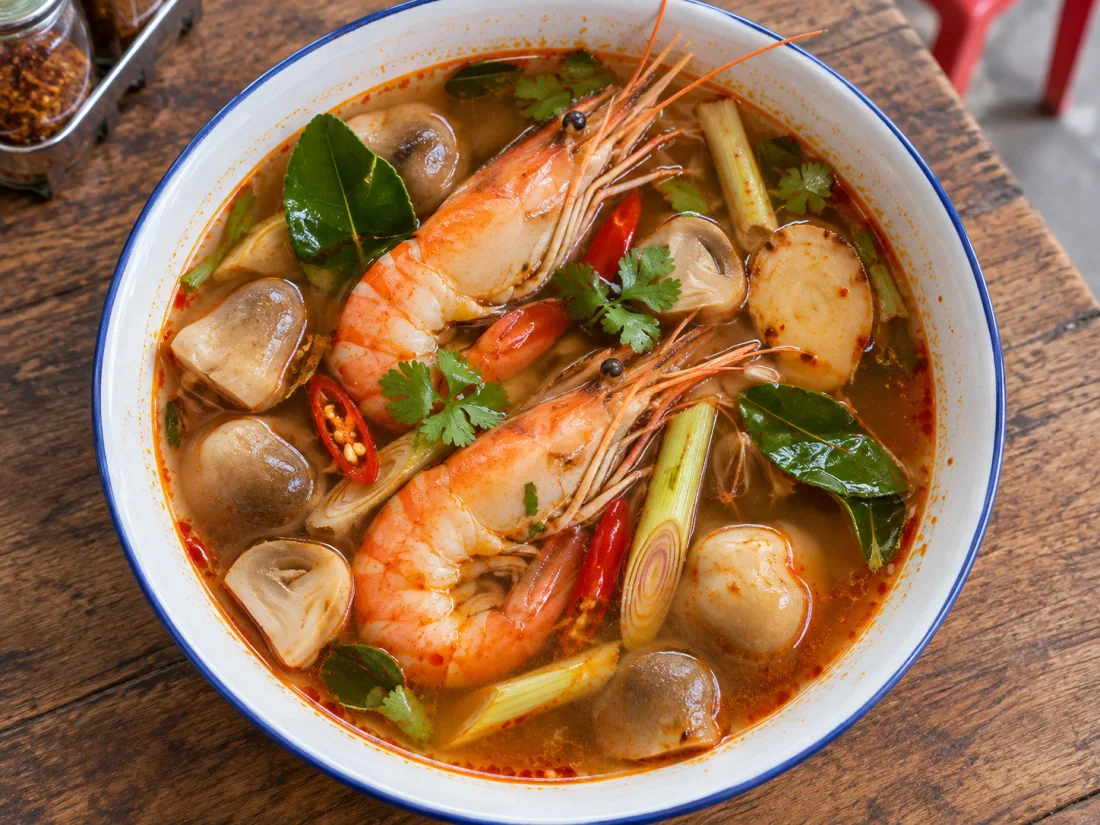
Lemongrass contributes a fresh citrus aroma, galangal adds a sharper fragrance, and makrut lime leaves add their own scent. Lime juice brings acidity, fish sauce seasons the broth, and fresh chillies or chilli paste contribute heat. Prawns give the soup its seafood sweetness. Straw mushrooms, shallots and coriander appear in some versions.
Thailand’s Department of Agricultural Extension lists fresh chilli or chilli paste, and evaporated milk or coconut milk, among the options in one reference recipe. The size and preparation of the prawns, choice of mushrooms and use of dairy vary by restaurant.
How the sourness, heat and herbs taste together
You may notice lime and lemongrass first, followed by the savouriness of fish sauce and the taste of the prawns. Chilli heat can linger after you swallow. A bowl with a higher proportion of lime may taste brighter, while chilli paste, evaporated milk or coconut milk can give another version a fuller body.
Two bowls using the same prawns can taste quite different when the balance moves from fresh lime toward chilli paste and seafood richness. Treat any spice scale as specific to the restaurant that uses it.
Clear and richer versions
Nam sai (น้ำใส) is the clear version, with a lighter broth through which you can usually see the prawns and herbs. Nam khon (น้ำข้น) is the richer version and can look cloudy or orange. Chilli paste, fat from prawn heads and sometimes evaporated milk or coconut milk can affect how it looks. Its colour cannot tell you whether it contains dairy or how hot it is.
A menu that says only tom yum may offer fish or mixed seafood. Goong specifies prawns. The menu may also distinguish a single serving from a larger pot for sharing.
Why you see it on Thai menus
Tom Yum Goong and Tom Yum Kung are two romanised spellings you may see on a menu. Both refer to the same Thai name. The ingredients and broth description tell you more about the bowl than the spelling alone.
UNESCO inscribed the culinary knowledge and practices associated with Tomyum Kung on the Representative List of the Intangible Cultural Heritage of Humanity in 2024. The inscription recognises cultural significance and transmission. It does not measure sales or establish a ranking of dishes.
How to eat it
Start with a small spoonful of broth to notice the lime and aromatics, then take a bite with prawns, mushrooms or plain rice. The tough pieces of lemongrass and thick slices of galangal are there to perfume the broth and can be set aside. Whole shell-on prawns usually need peeling. If the soup comes in a shared pot, serve it into individual bowls and taste before adding chilli.
Food allergens and what to ask
Prawns are crustaceans and are usually central to this soup. Fish sauce is typically fish-based. Ask about fish and crustaceans separately. Chilli pastes and premixed seasonings can contain several ingredients, and some richer broths use evaporated milk or other dairy. Some kitchens use coconut milk. A photo, the colour of the soup or removing the prawns cannot establish that the soup is suitable for someone with an allergy.
Tell the restaurant what you need to avoid before ordering. Ask about the broth, fish sauce, chilli paste and other prepared seasonings, as well as shared pots, ladles and surfaces used for seafood. A version with a different main ingredient may still use the same broth and seasonings.
If you have a food allergy, tell the restaurant before ordering and ask about ingredients, sauces and shared cooking equipment.