

 shrimp
 fish sauce
What kati tells you about this tom yum
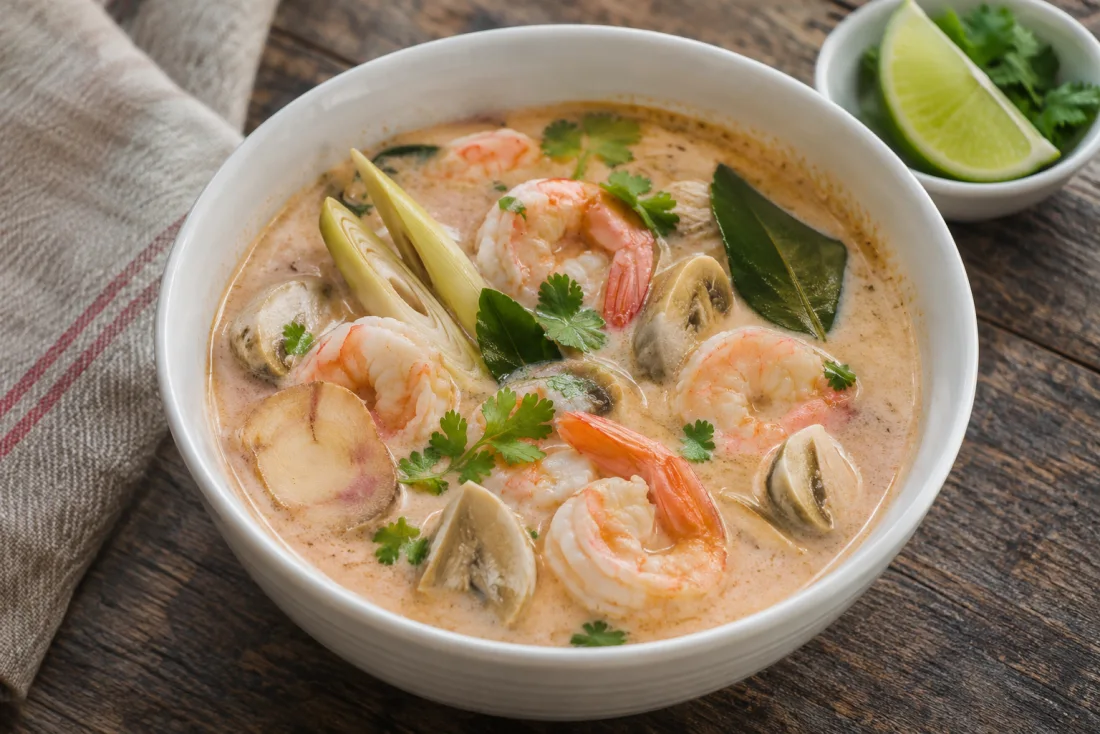
Tom yum kati identifies a tom yum made with coconut milk. A menu can name the shrimp version explicitly as tom yum kung nam khon sai kati. Lemongrass, galangal and makrut lime leaves flavor the liquid, while lime and chillies add acidity and heat. The version pictured has shrimp and mushrooms. A kitchen may make coconut tom yum with another protein. Nam khon alone means a richer broth, which could also use dairy. Tom kha gai has overlapping herbs but identifies a galangal and chicken soup, so use the full menu name to distinguish them.
How it relates to clear Thai tom yum
Tom yum kung is served in both clear and richer styles. Thai SELECT includes a clear preparation and points to coconut cream or cream as additions for a richer broth. A documented home cook uses coconut milk in place of evaporated milk. These examples explain why texture and coconut aroma vary without establishing a single province of origin for this variation. The soup can come as a portion or a shared bowl with rice. For lower heat, ask whether the shop can reduce chillies and whether its broth already contains chili paste.
Shrimp, coconut milk, mushrooms and herbs
A representative recipe uses shrimp, mushrooms, fish sauce, chillies, lemongrass, galangal, makrut lime leaves and lime juice. Coconut milk or coconut cream gives this version opacity and body. Some cooks use water, while others start with stock or flavor it with shrimp shells. Straw mushrooms are one option. Roasted chili paste can add an orange tint, a mild sweetness and a toasted aroma. Shrimp heads and chillies also affect color. Bruised lemongrass stalks and older leaves flavor the liquid, and can be left in the bowl if too tough to chew.
Build an aromatic broth, then cook the shrimp
Heat the broth with bruised lemongrass and sliced galangal to release their fragrance. Simmer the mushrooms and cook the shrimp through. Keep utensils that contact raw shrimp away from ready-to-eat ingredients. The US FDA describes cooked shrimp as firm, pearly and opaque. Add coconut milk at the seasoning stage and keep the simmer gentle. A long vigorous boil can cause separation. Some cooks add lime juice just before serving, which keeps its fresh fragrance prominent. Add any fresh garnishes when the soup is served.
Bright acidity with a coconut finish
Lime acidity and the savory edge of fish sauce arrive first, followed by chili heat. Lemongrass has a citrus aroma and galangal brings a sharper herbal note. Shrimp are springy and mildly sweet. Mushrooms carry some of the broth into each bite. If included, roasted chili paste adds sweetness and depth. Clear tom yum gives a direct impression of lime and herbs, while coconut tom yum leaves a longer coconut aroma. Taste before adding the lime wedge. Alternate spoonfuls with steamed rice if served alongside.
Allergens in shrimp, sauces and the milk choice
Shrimp is a crustacean allergen. Fish sauce contains fish. If squid, oyster or clams are added, identify those molluscs separately. Roasted chili paste and stock can also supply fish or crustacean ingredients. Pure coconut milk is made from coconut and matters to people who avoid coconut. Some restaurant preparations use evaporated milk or another dairy ingredient alongside coconut milk. Ask about the paste, stock, shrimp, fish sauce and milk separately. Removing visible shrimp leaves shrimp ingredients in the broth. Discuss contact through shared implements with the kitchen.
If you have a food allergy, tell the restaurant before ordering and ask about ingredients, sauces and shared cooking equipment.