

 prawn
 fish sauce
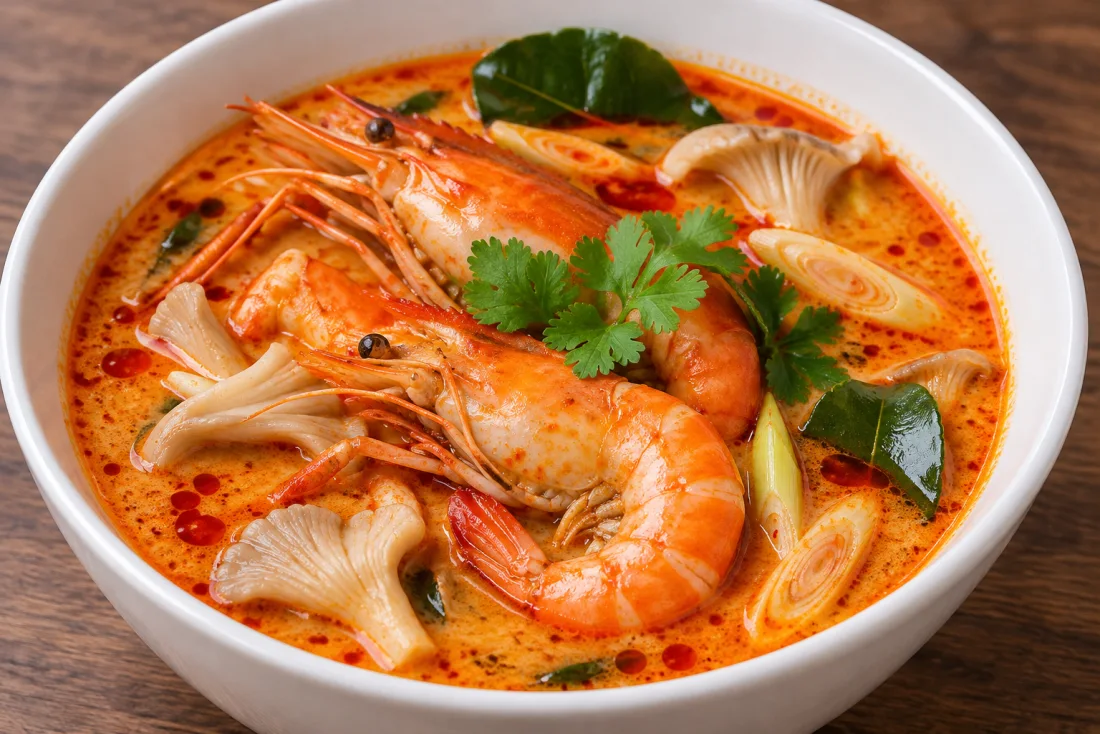
The richer version in the tom yum family
Nam khon describes a richer soup. UNESCO links tomyum kung as a whole with Thailand’s Central Plains waterways. Thailand Foundation describes clear and creamy variations, including recipes with evaporated milk or coconut milk. The broader heritage does not date the creamy variation.
What adds body and colour
Prawns, lemongrass, galangal and makrut lime leaves give the soup its familiar flavour. Roasted chilli paste can add redness and a rounded toasted taste. Evaporated milk gives dairy richness; Thai SELECT uses coconut milk in its example. Some kitchens add mushrooms.
How the creamy broth comes together
The herbs infuse the broth before prawns and other ingredients are added. Roasted chilli paste dissolves, and milk or coconut milk makes the broth opaque. Lime often goes in near the end. Prawn heads or shells can also flavour stock even when strained out.
Does creaminess make it mild?
A smooth mouthfeel can coexist with strong lime and chilli. Actual heat depends on fresh chillies and the roasted paste. Try the broth and then pair it with a little rice. Prawns and mushrooms contribute a separate texture.
Servings and other coconut soups
The richer tom yum can be served in an individual bowl or as a table soup. Tom kha gai is a different coconut soup based on galangal and chicken. A tom yum menu that says talay may contain mixed seafood. Ask which creamy ingredient the kitchen uses.
Allergens, milk and roasted chilli paste
Prawns are crustaceans, and fish sauce contains fish. Evaporated milk contains dairy; coconut milk contains coconut. Chilli pastes and soup bases can also contain shrimp, fish or soy. Ask about the ingredients and equipment shared with other soups.
If you have a food allergy, tell the restaurant before ordering and ask about ingredients, sauces and shared cooking equipment.