

 pork
 fish sauce
Tom yum with pork on a Thai menu
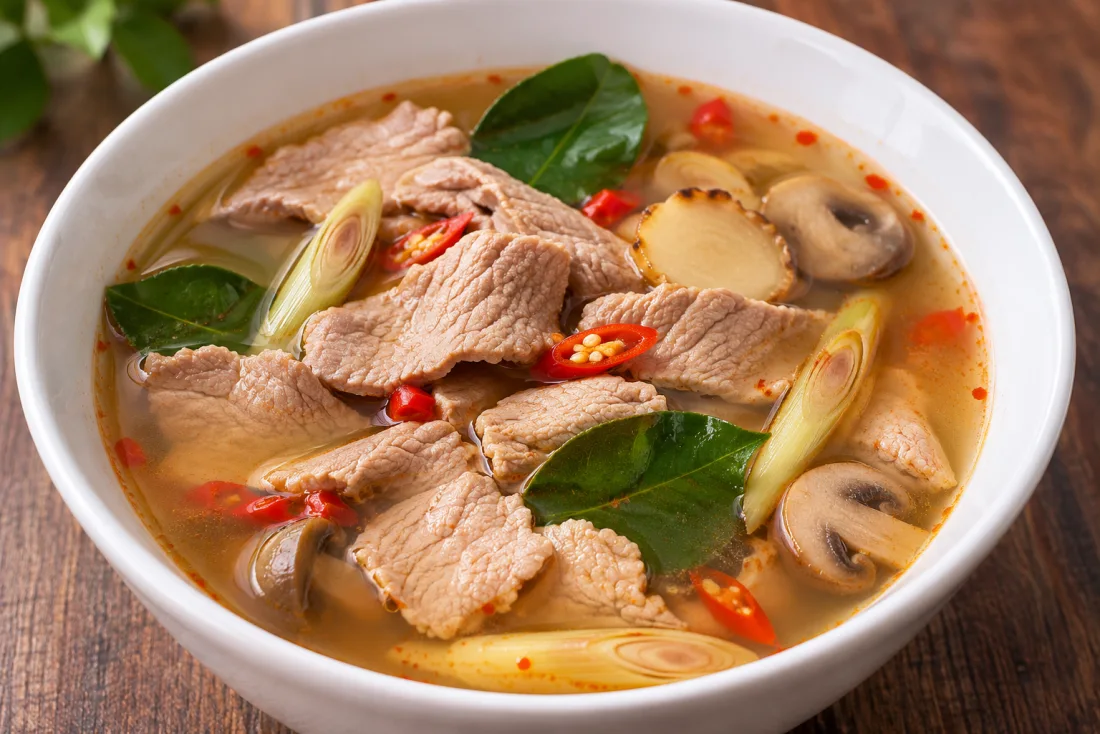
Moo means pork. The soup can use thin slices, minced pork or ribs. A clear bowl shows the herbs and pale meat, while a restaurant version may add egg tofu to a richer broth. Rice can be served separately.
Pork, galangal, lemongrass and lime
Use pork stock or water with galangal, lemongrass and makrut lime leaves. Fish sauce gives savour, while lime and chilli add tartness and heat. Mushrooms and tomato vary by cook. Roasted chilli paste and evaporated milk may enrich some versions.
Infusing the broth before seasoning
Infuse the aromatics and cook the pork through. Add vegetables near the end. Season with fish sauce and add lime and chilli near serving. Leave the woody lemongrass and galangal on the side as you eat.
Fresh citrus, chilli and the sweetness of pork
The first taste is often fresh lime and herbs with lingering chilli heat. Thin pork slices keep the broth light, while ribs give a fuller taste. Roasted chilli paste can add sweet and toasty notes. Rice balances the sourness.
Clear soup, rich soup and tom yum noodles
Nam sai means clear broth and nam khon denotes a fuller soup. Tom yum egg noodles have their own garnishes and seasoning, often including peanuts. Tom kha with pork usually features a coconut and galangal-rich broth.
Allergens in fish sauce, paste and toppings
Fish sauce contains fish. Roasted chilli paste may add crustaceans or further fish. Rich versions can contain dairy and egg tofu may contain egg and soy. Ask about wheat, molluscs and shared pots or ladles when relevant. Clear broth can still contain seafood ingredients.
If you have a food allergy, tell the restaurant before ordering and ask about ingredients, sauces and shared cooking equipment.