
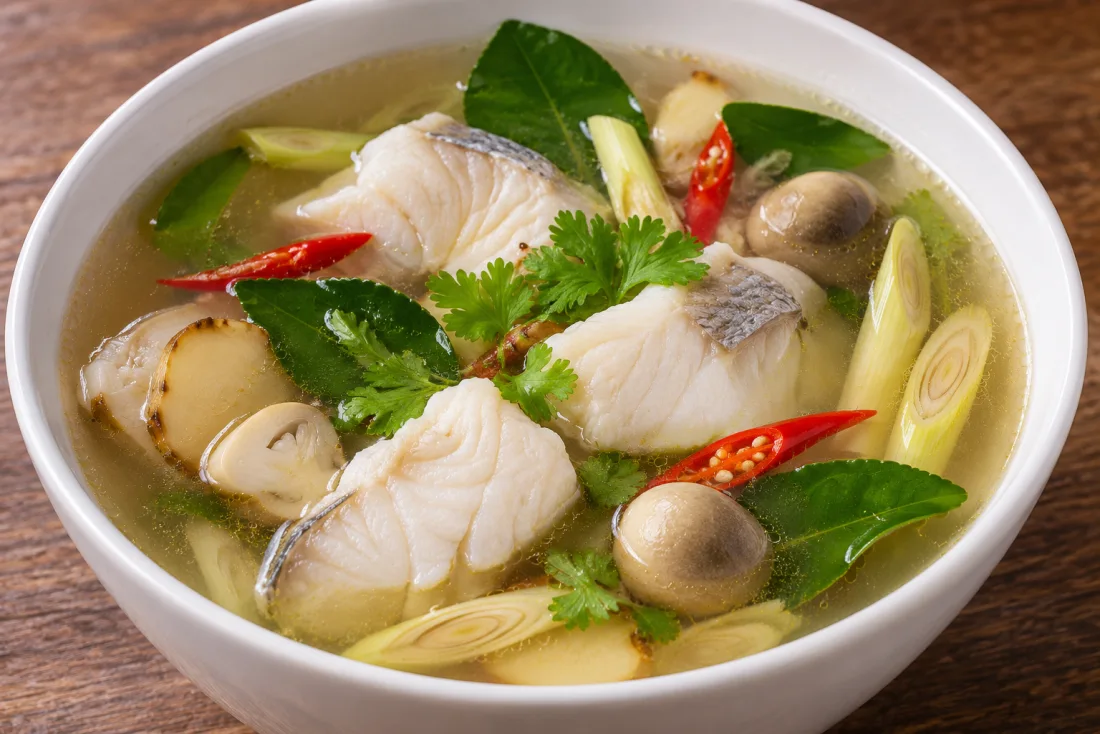

 fish
The fish version of tom yum
Pla means fish. Thai cooks make the soup with both saltwater and freshwater fish, including sea bass and snakehead. The menu may name a fish more precisely. It is a familiar variation in Thailand, and the generic name describes the soup and protein.
Fresh fish, broth and aromatic herbs
One cook builds broth from fish bones, shallots and cilantro roots. Other versions start with water or pork stock. Galangal, lemongrass, makrut lime leaves, fish sauce, chili and lime season the cooked fish. Some recipes add tamarind, mushrooms, tomato or even a little rice for body.
Fish savor, lime and toasted chili
A fish stock tastes different from clear water or pork broth. Lime is bright, tamarind is fruity and toasted dried chilies add a roasted aroma. Fish species and cuts change the texture. Creamy versions can taste fuller because of evaporated milk and roasted chili paste.
Sharing the soup and checking for bones
Serve hot with rice and vegetables. Spoon the fish and mushroom into each bowl with the liquid. Look for bones in fish steaks or heads and ask if fillets are deboned. Set aside tough aromatic leaves and stems, and ask whether a lower-heat portion can be made.
Other sour fish soups and menu terms
Tom kloong often uses smoked dried fish. Central tom som can emphasize tamarind, ginger and palm sugar. Fish tom yum frequently uses galangal and citrusy herbs. Nam sai describes clear broth, while nam khon is richer and can include milk or chili paste.
Fish allergens and enriched broth
Fish meat, fish bone stock and fish sauce contain fish. Shrimp paste or chili paste made with shrimp adds crustaceans, and evaporated milk adds dairy. Ask about soy, wheat and shared knives, boards, pots and ladles. Specify separately if fish, crustaceans or mollusks must be avoided.
If you have a food allergy, tell the restaurant before ordering and ask about ingredients, sauces and shared cooking equipment.