
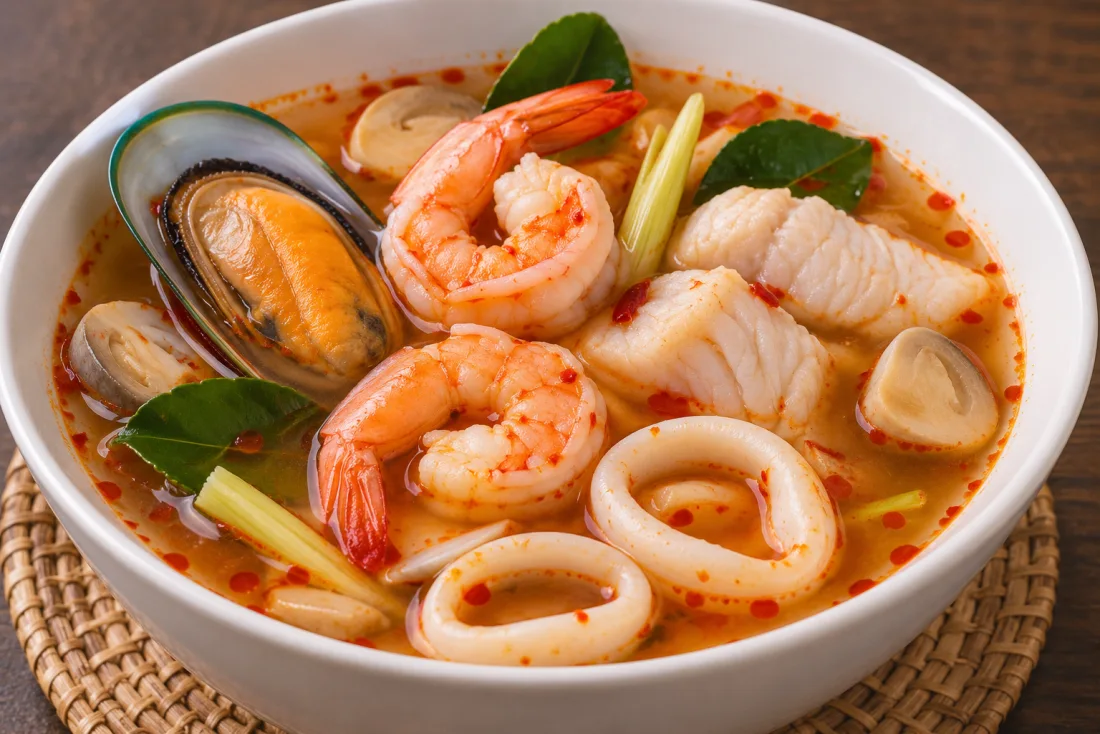

 prawn
 squid
 fish
Where mixed seafood fits in the tom yum family
Tom refers to boiling and talay refers to the sea or seafood. Tom yum talay generally describes hot and sour broth with a mix of seafood. Shrimp, squid, fish and shellfish are examples, with the mix varying by shop and supply.
Thai restaurants and cookbooks describe several versions. Tom yum goong shares aromatics such as lemongrass, while goong specifically names prawns or shrimp. UNESCO inscribed Thailand’s Tomyum Kung in 2024. That entry is for the prawn soup.
Seafood, aromatics, lime and fish sauce
Lemongrass, galangal and makrut lime leaves can first scent the broth. A cook can use stock or let the seafood and aromatics flavor it. Shrimp, squid, fish and shellfish differ in preparation and texture. Acid, chilli and other seasonings can go in when the seafood is cooked.
Lime gives acidity, fish sauce brings savory salt and fresh or dried chilli contributes heat. Mushrooms, tomatoes and coriander vary. Richer soup can use roasted chilli paste and evaporated milk, and some cooks use coconut milk. Tough pieces of lemongrass and galangal can stay in the bowl.
Seafood sweetness, citrus fragrance and heat
Lemongrass and makrut lime leaves give the first aroma, with lime acidity and fish sauce underneath. Clear broth lets you taste bright acidity along with sweet shrimp, tender fish or springy squid. A richer broth has more body, and roasted chilli paste may add sweetness and toasted notes.
Heat depends on how much fresh chilli, dried chilli or prepared paste the cook uses. Both a pale and a creamy broth can be hot. Ask whether the broth is already seasoned or if fresh chillies can be adjusted at serving.
Individual bowls and shared hot pots
Tom yum talay can come in a small bowl or a larger bowl or hot pot for the table. Steamed rice can take up some seasoned broth. Fish and shellfish may have bones or shells, so move a piece to an individual bowl before eating it. Portion sizes vary.
Try a spoon of broth, then a piece of seafood to compare textures and the balance of sour and hot. If it comes in a simmering pot, spoon out a serving to enjoy the seafood while still tender. Ask what seafood and rice are included.
Clear soup, richer soup and prawn tom yum
Nam sai usually means clear broth, while nam khon describes a richer style. Clear broth brings out the herbs and seafood. Richer soup may use roasted chilli paste, evaporated milk or other ingredients. Ask about dairy or coconut rather than relying on color.
Goong means prawn or shrimp, pla means fish and talay often means a seafood mixture. Tom yum seafood also appears as a noodle dish or hot pot. If the menu says only Tom Yum, ask which seafood is included and what goes into the broth.
Allergies in seafood, stock and chilli paste
Shrimp and crab are crustaceans, while squid and shellfish such as clams are mollusks. Fish and fish sauce both matter for fish allergy. Roasted chilli paste and prepared broth can use shrimp or fish. A richer soup may contain evaporated milk or other dairy. A clear broth can still contain seafood that is not visible.
Ask about seafood, stock, prepared pastes and shared ladles. Shared pots or cooking different seafood in the same stock can cause cross-contact. Removing a shrimp from the bowl leaves the ingredients already in the broth. The kitchen can say whether a separate preparation is possible.
If you have a food allergy, tell the restaurant before ordering and ask about ingredients, sauces and shared cooking equipment.