
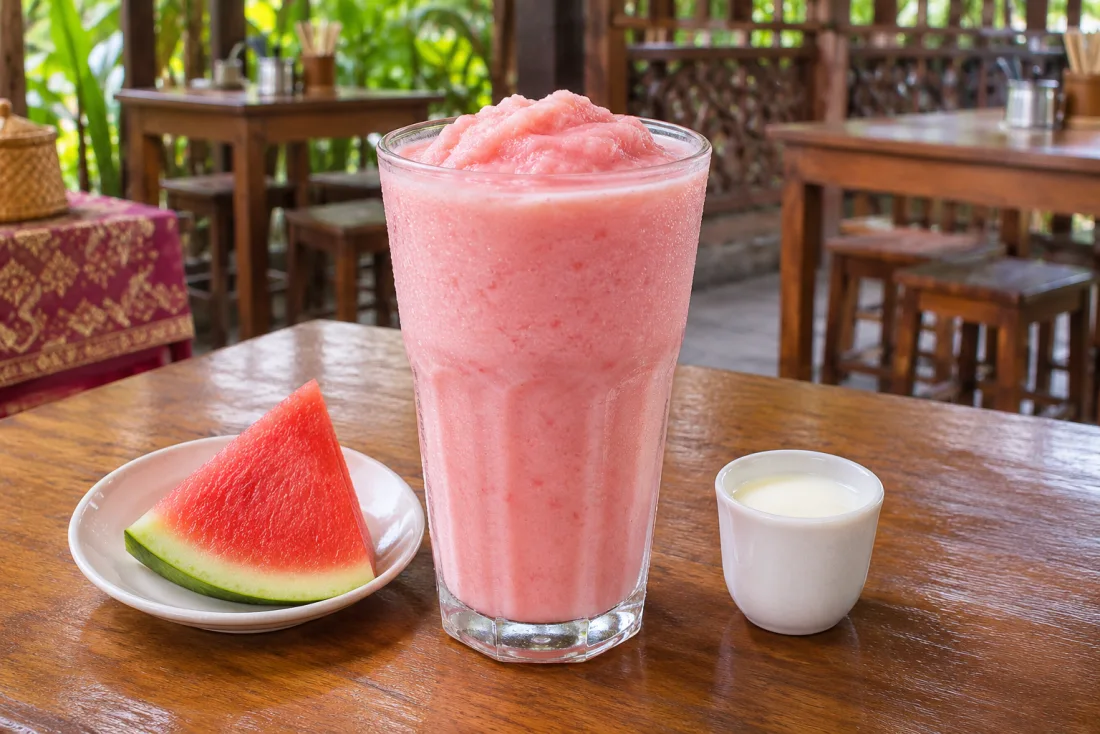

Reading fresh milk on the menu
Taengmo pan nom sot identifies watermelon blended with fresh milk. One Thai fruit shop lists that version separately from watermelon yoghurt. A local original recipe uses ripe fruit, milk and ice. A regular portion is shop-specific.
Preparing a juicy fruit
Remove the rind and hard seeds. Chill the fruit and blend it with milk before adding some ice. Frozen fruit can reduce the need for extra ice. Milk lightens the red flesh to pink. A pale streak can simply be extra milk.
Juicy flavour and dairy finish
The drink is cool, juicy and mildly creamy. The colour depends on the fruit and milk proportions. Optional sweetener or a little salt changes the balance. Ice melt softens the flavour, and the ripe fruit can taste quite sweet on its own.
Serving a standard portion
A short glass or a medium lidded cup can serve the blend. Fine ice makes it thicker than milk poured over cubes. Stir gently if foam and fruit pulp separate. A small wedge is optional, and the shop determines capacity.
Yoghurt, fruit and coconut variants
Yoghurt gives cultured acidity. A Krabi venue mixes it with watermelon, orange juice and honey. A plain fruit shake brings the watermelon forward, and coconut milk has a different aroma from dairy. A pourable fruit milk can have whole cubes.
Allergens and contact
The representative drink uses cow’s milk. Condensed milk, cream and yoghurt also contain dairy. Coconut, soy and nut replacements require their own checks. Ask about shared tools if relevant, and avoid watermelon if you react to it.
If you have a food allergy, tell the restaurant before ordering and ask about ingredients, sauces and shared cooking equipment.