

Why the menu says large
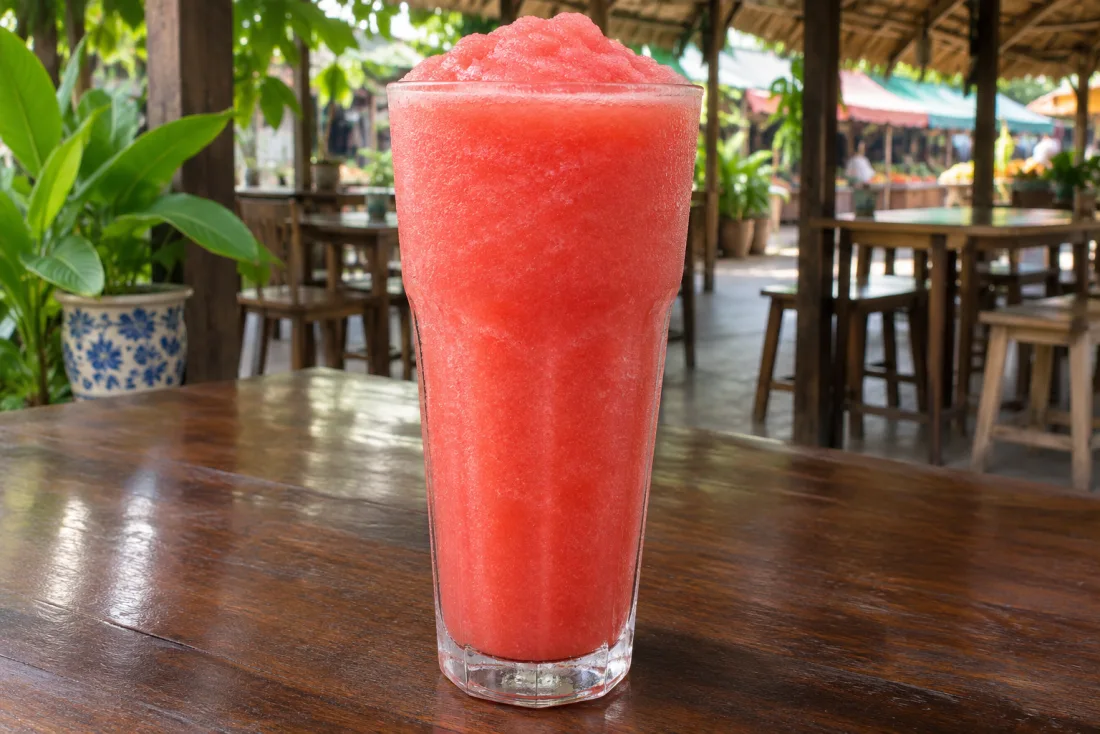
Thai vendors list a 22 oz watermelon blend as one large example. The cup size includes fruit, blended ice and aeration. Read the restaurant measure and do not equate it with that volume of pure juice.
Red flesh, ice and sweetness
Peeled seedless watermelon is blended with ice. A shop may add syrup depending on ripeness and formula. Watermelon’s high water content keeps the base pourable. Frozen fruit can make a thicker version.
Colour and texture
The drink is coral red or pink with fine ice and natural watermelon aroma. A little foam may come from blending rather than added carbonation. It can separate as it melts, and a garnish is distinct from what goes into the blender.
Serving a blended drink
The ice is part of the finished shake, unlike ice served separately with juice. A spoon or wide straw can help with the texture. Larger cups do not establish how much fruit a shop used.
Juice, dairy and fruit combinations
Juice is more fluid than an ice blend. Some versions blend frozen fruit without added ice. Other shops add citrus, extra fruit or dairy, which changes the ingredients and appearance.
Allergens and the blender
Check for fruit or syrup sensitivities and dairy additions. Shared blenders and knives can lead to contact with dairy, soy or nuts. Watermelon still has naturally occurring sugar if syrup is omitted.
If you have a food allergy, tell the restaurant before ordering and ask about ingredients, sauces and shared cooking equipment.