
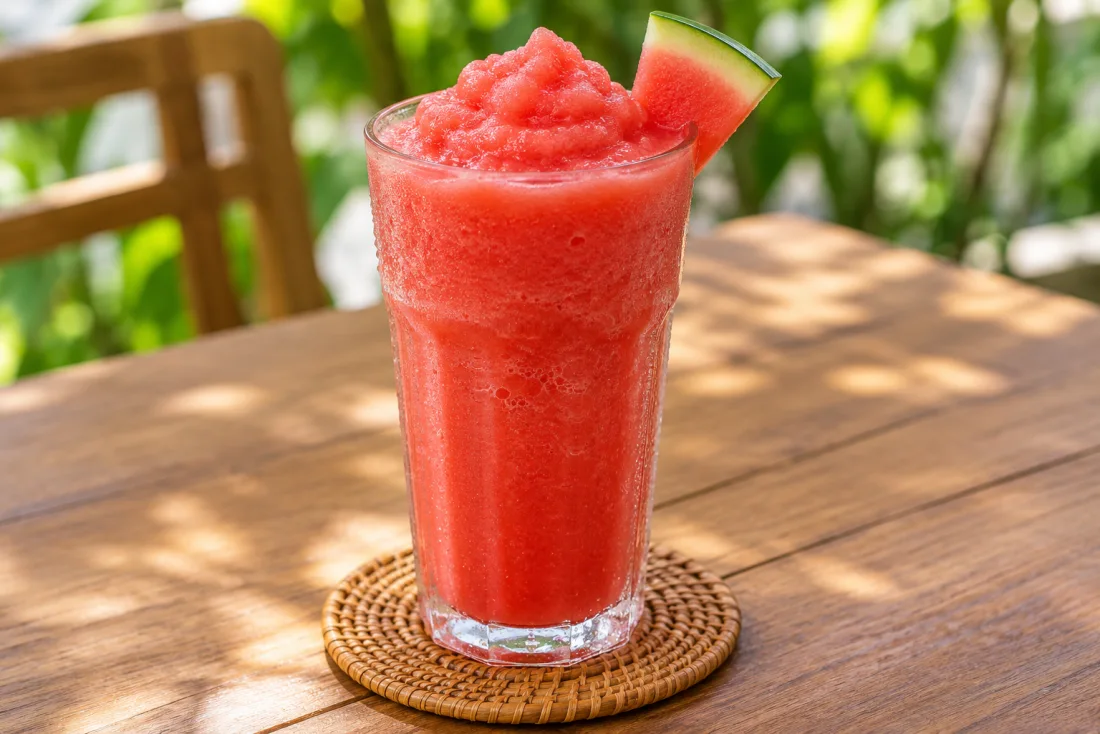

Watermelon shakes at Thai drink stalls
Taeng mo means watermelon and pan means blended. Red fruit yields a pink or red slush, while other cultivars may have a different colour. Thai stalls can add pieces of fruit to the finished cup.
Water-rich fruit and fine ice
Ripe watermelon provides liquid and sweetness. Ice adds a fine, cold texture. Syrup, lime, salt and red flavoured syrup may be added by recipe. Ask what gives a cup its sweetness and colour.
Removing seeds and blending
Cut and deseed the fruit, then blend it with ice. Frozen fruit can make a cold blend with less extra ice. Blending breaks large ice pieces and can trap a little air. Stir if fruit and water separate while it sits.
Clean fruit sweetness and an icy texture
A sip first feels cold, then fresh and lightly sweet as the ice melts. Lime adds brightness and a little salt changes the finish. Extra syrup can cover the lighter fruit notes. The drink can accompany spicy snacks.
Juice, shake and mixed versions
Juice is usually thinner, while the shake retains ice and blended pulp. The English word shake does not by itself specify dairy. Ask about yoghurt, milk, other fruit, syrup and pieces before ordering.
Allergens in extras and shared equipment
Watermelon and ice need no milk, soy, wheat or nuts. Milk or yoghurt adds dairy, and prepared syrups or creamers can add other ingredients. Ask about shared blender jars and measures. Removing a garnish leaves the fruit already in the blend.
If you have a food allergy, tell the restaurant before ordering and ask about ingredients, sauces and shared cooking equipment.