

 shrimp
 fish sauce
Recognizing glass noodles and the broth
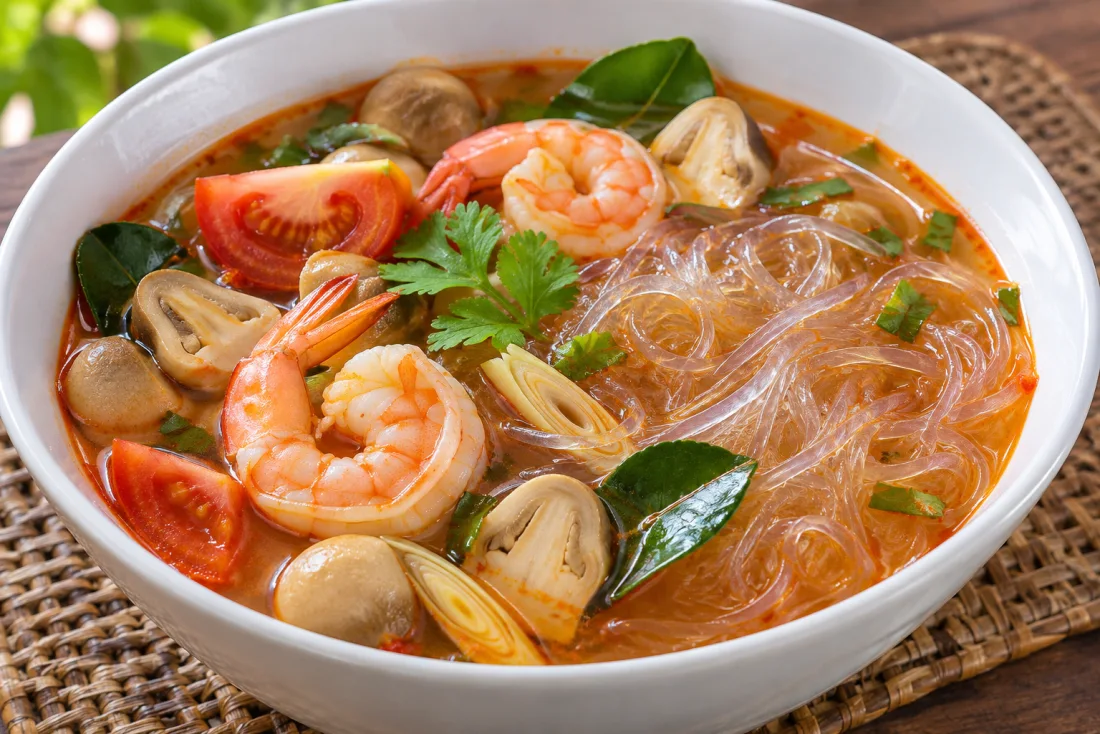
Woon sen are slender, translucent noodles. A clear tom yum can be bright orange from chili oil, while a richer broth can include chili paste or dairy. Prawns, mushrooms and sometimes slices of pork are visible in different versions.
How Thai shops serve it
Thai recipes document glass noodles in prawn tom yum, including versions made with young coconut water and a shared hotpot. Shops also offer pork or seafood variants. Ask which protein and broth the menu means.
Glass noodles, mushrooms and aromatics
One bowl uses glass noodles, cooked prawns, mushrooms, lemongrass, galangal, makrut lime leaves, lime, fish sauce and chili. Glass noodles can contain mung bean or mixed starches. Dairy or coconut milk can enrich other broths.
Lime, aromatics and springy noodles
Lime tastes bright, followed by fish sauce, cooked shrimp and chili. Tender shrimp and mushrooms contrast with the springy noodles. Coconut water can add a little sweetness. Noodles continue to absorb broth if they stand.
Serving one bowl or a shared pot
Pick up a small portion of noodles and spoon up broth. In a shared hotpot divide the noodles between bowls first. Set hard aromatics aside and ask about spice level. Pack broth and noodles separately if preferred.
Allergens and broth
Shrimp and shrimp paste contain crustaceans. Fish sauce contains fish. Pork toppings can share the same stock. Ask about dairy, soy, wheat, peanuts and shared strainers, especially if the restaurant uses prepared seasonings.
If you have a food allergy, tell the restaurant before ordering and ask about ingredients, sauces and shared cooking equipment.