
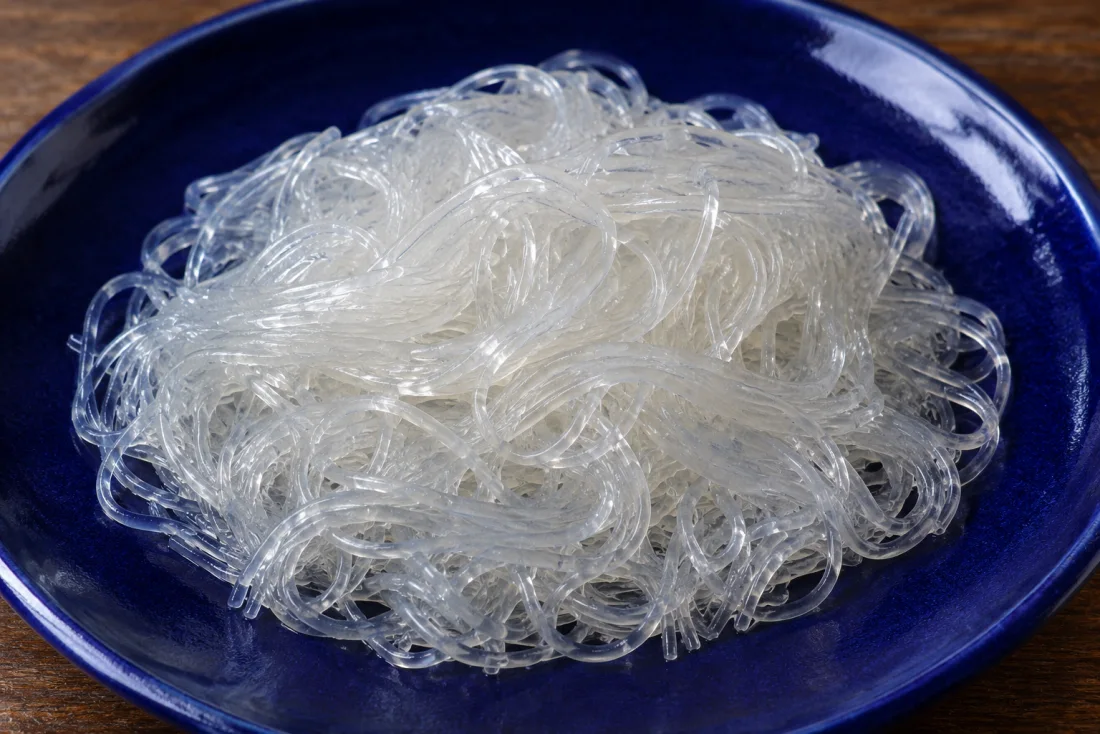

Recognizing glass noodles
Dry threads are stiff and pale gray or partly translucent. Cooking reveals the clear strands. White rice vermicelli looks much more opaque. Glass noodles can also mean other starch noodles in neighboring cuisines.
Ingredients and formats
Thai suppliers make dry and fresh varieties. Mung bean starch is characteristic. Blends may use pea or potato starch, changing the firmness and how long the threads hold their shape.
Salad, claypot and soup
A lime-dressed glass noodle salad combines blanched noodles with herbs and optional meat or seafood. Claypot noodles take in the cooking liquid. Clear soup and egg stir-fries are further uses.
Texture and flavor
Plain cooked noodles are gently elastic and mild. Their slender surfaces carry lime, fish sauce, garlic or aromatics readily. Soup softens them over time.
A versatile Thai pantry ingredient
Thai stalls may offer glass noodles as one choice. At home, dried strands are easy to portion. The full dish name identifies whether they are a salad, a claypot with shrimp or a soup.
Allergens and starches
Read the ingredient label if allergic to mung bean and check any seasoning packet separately. Dishes can contain fish, soy, wheat, egg, crustaceans or molluscs. Check shared equipment and the actual sauce.
If you have a food allergy, tell the restaurant before ordering and ask about ingredients, sauces and shared cooking equipment.