

Ya Dong on Thai menus
Ya dong often denotes a spirit infusion. Recipes differ by place and venue. A Phuket restaurant offers several named preparations and identifies local white rum in two. The category does not imply a fixed spirit or herb list.
Two aromatic examples
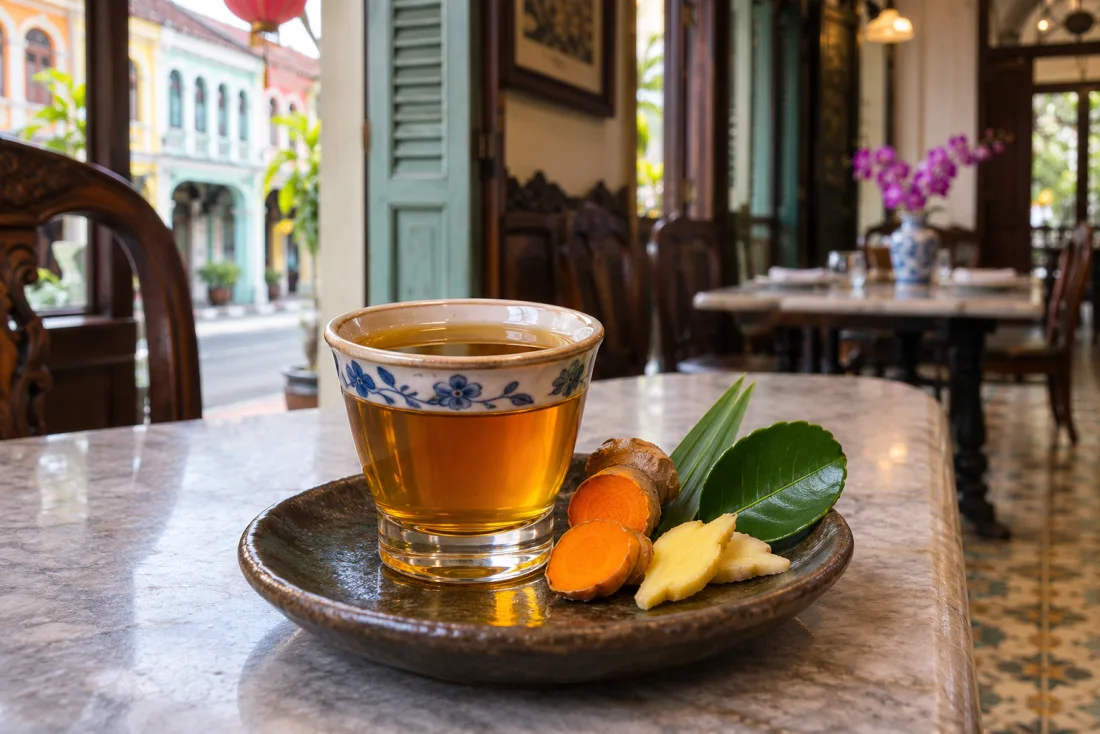
The root-style example uses pandan, turmeric, ginger and makrut leaves with rum. Its greener counterpart uses holy basil, Thai sweet basil, mint and pandan. The two basils have different aromas. Other venue recipes can use different herbs.
Golden roots and green herbs
Turmeric can give a clear golden colour, and ginger brings warmth. Basil and mint give a greener, cooler profile. A little soda opens the aroma and makes the texture lighter. Colour does not indicate alcohol content.
Neat, long or as a flight
The Phuket menu serves small neat pours, longer soda drinks over crushed ice and flights. Preserved mango, salted plum and candied tamarind can come as sides. A garnish gives a hint about the recipe without listing every ingredient.
White spirit and herbal tea
A clear spirit can supply a base. Rum and vodka are other possibilities. Herbal tea steeps plants in water. A soda highball using a herbal spirit remains alcoholic. Ask which base the restaurant selects.
Allergens and alcohol
The reference uses alcoholic rum. Check the exact roots and herbs if you avoid them. The base needs no dairy or egg, but mixers, garnishes and shared tools can change the ingredients. Ask for a separately identified alcohol-free drink if required.
If you have a food allergy, tell the restaurant before ordering and ask about ingredients, sauces and shared cooking equipment.