
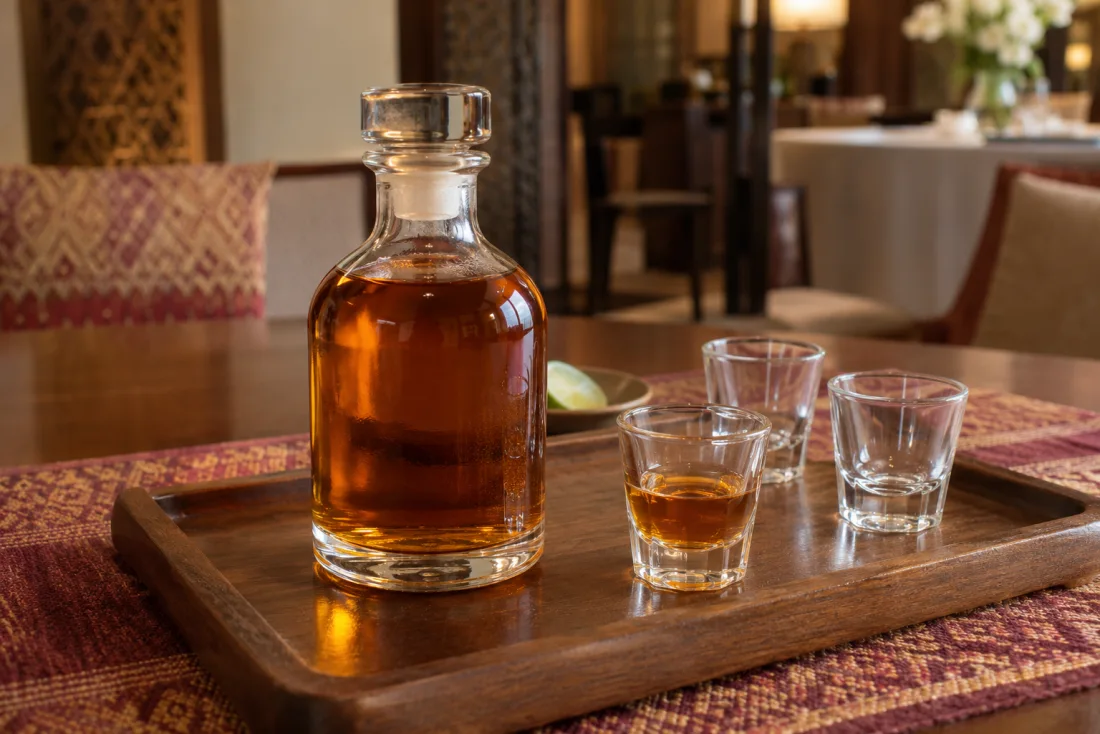

Recognising the bottle and small glasses
A small glass bottle and separate tasting glasses may arrive together. The color can be clear gold or amber. A tray may include sour fruit or a small seasoning dish. Ask whether a bottle is a shared serving or a house pouring vessel, and check the actual amount listed.
Thai roadside and restaurant service
A firsthand Bangkok account describes a bottle with a small glass, sour mango and chili salt. Grand Hyatt Doha’s Thai Isaan menu shows ya dong in a bottle with small glasses. Phuket bars also document straight, soda and tasting-set service. These are examples of different settings.
Spirit and botanical aromas
Ya dong takes flavor from botanicals steeped in a distilled spirit. Thai styles can use a clear spirit, and some bars list Thai rum. Baan Talay describes different blends with ginger and turmeric, or basil, mint and pandan. Ask which plants were used in the serving.
Color, taste and accompaniments
Infusions can be golden or reddish brown. A recipe may taste leafy, spicy, slightly bitter or sweet. Sour mango gives a contrast to a warm sip, and chili salt adds a salty bite. A soda version tastes lighter but still contains the spirit.
Reading a bottle-service menu
List the actual spirit, portion and number of glasses. A finished image can show the bottle and small glasses on a tray or beside sour fruit. Use a plain vessel when the producer and packaging are unspecified. Show accompaniments only when the venue serves them.
Allergens and alcohol
Ask which botanicals, spirits and side foods are included. Check dips and seasoning if sensitive to their ingredients. Shared bar tools may contact other foods. Both examples contain alcohol. Ask the seller about the actual alcohol strength and serving size.
If you have a food allergy, tell the restaurant before ordering and ask about ingredients, sauces and shared cooking equipment.