
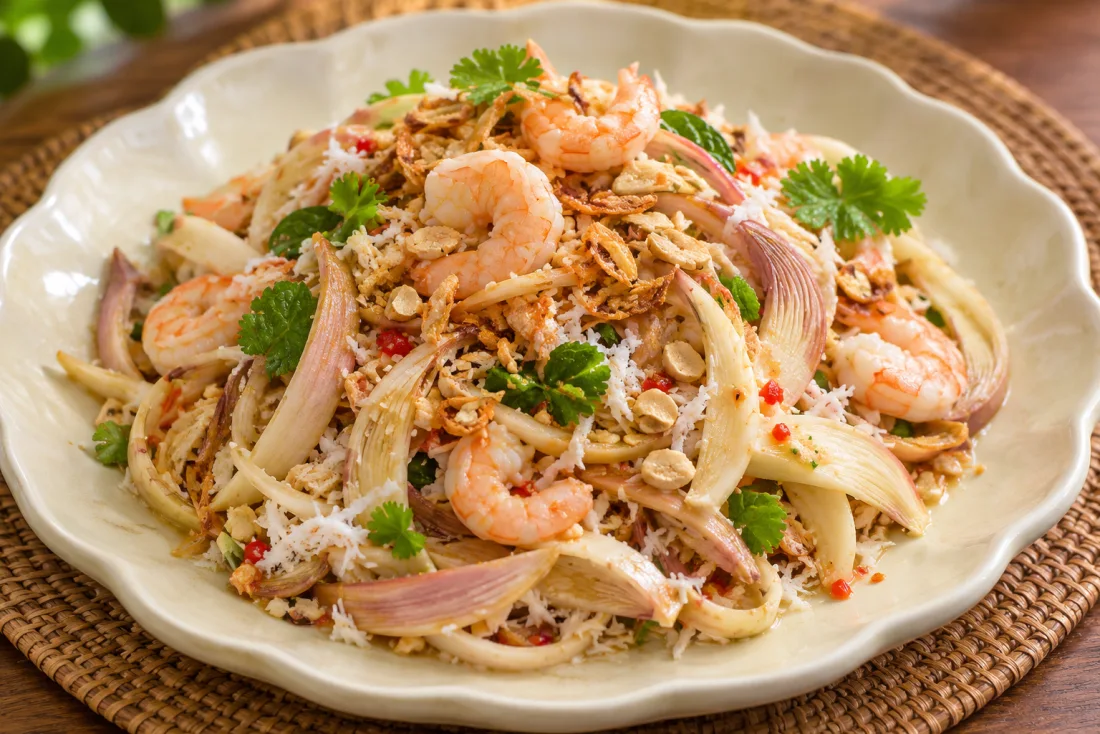

 shrimp
Which part of the banana plant is used
Hua plee means banana blossom. Purple outer bracts surround the paler, tender layers used for the salad. Cooks can tear or thinly slice them lengthwise. The dressing clings to the fibers. A cleaned outer bract can serve as a decorative boat.
A shared dish in Thai kitchens
One Thai studio recipe uses blanched prawns and hand-torn blossom. Another combines fresh blossom with cooked shrimp and minced pork, while a chef adds roasted coconut and peanuts. These examples show current Thai preparations. Availability and serving size vary, and it can be shared with rice or other dishes.
Blossom, coconut cream and chili jam
Typical versions include blossom, cooked shrimp, fish sauce, lime, sugar, fresh chili, roasted chili jam and coconut cream. Roasted coconut, fried shallot, garlic and peanuts can provide crunch. Some cooks add cooked minced pork or mint. Garnish and dressing recipes vary.
Preserve the blossom and cook the seafood
Peel tough outer layers and slice or tear the tender part. Clean lightly acidulated water can slow browning. Some kitchens use raw tender blossom and some blanch it. Cook shrimp and pork through before tossing in a clean bowl. Add crisp garnishes just before serving.
Crisp blossom and a mellow coconut finish
The blossom is crisp with a mild astringency in some parts. Coconut cream makes the dressing feel smoother. Shrimp is springy, and fried shallots, peanuts and coconut can add dry crunch. Lime helps brighten the salty sweet seasoning. Ask about chili before the salad is mixed.
Allergens in the dressing
Shrimp is a crustacean and fish sauce contains fish. Chili jam may contain shrimp paste or dried shrimp. Peanut, egg, soy or wheat can be present in garnishes or seasonings. Ask separately about coconut, prepared chili jam and shared utensils, and state the particular allergen you need to avoid.
If you have a food allergy, tell the restaurant before ordering and ask about ingredients, sauces and shared cooking equipment.