

 minced pork
 fish sauce
Name and Place at the Table
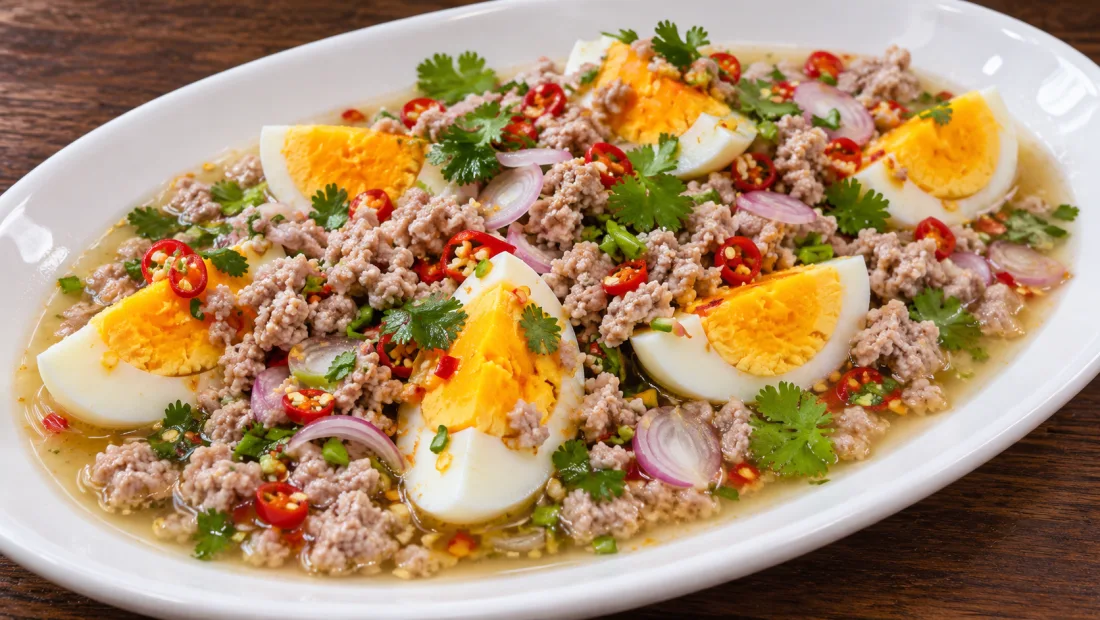
Yam means a Thai dressed salad, khai tom means boiled egg, and moo sap means minced pork. The dish can be served as a home-style side with rice or as one of several dishes at a shared meal. Published Thai home and cooking-studio recipes show chicken eggs cut into quarters and larger duck eggs with a similar dressing. The name identifies the shared composition of eggs, pork, and dressing.
Boiled Eggs, Pork, and Dressing
Chicken eggs, fully cooked loose pork mince, lime, fish sauce, sugar, chilies, and sliced shallots form a representative version. A spoonful of liquid from cooking the pork can carry its savory flavor through the dressing. One duck-egg version adds cherry tomatoes for juiciness and color. Leaner pork gives the dressing a lighter finish while a slightly fattier mince adds a rounder mouthfeel. The quantity of sugar, shallots, and tomato varies.
Cooking and Serving
Peeled boiled eggs can be halved or quartered, keeping an arc of egg white around the yolk. Pork is cooked through in a little liquid and broken into fine pieces. The lime, fish sauce, sugar, chili, and shallot make a dressing for the pork and eggs. The pork and dressing can be spooned over neatly arranged egg wedges or gently tossed with the cut eggs. A pool of dressing at the bottom can be spooned onto rice.
Flavor, Texture, and Heat
Lime generally comes first, followed by fish-sauce salinity and the warmth of fresh chili. Sugar softens the edge of the sourness. Shallots are crisp and slightly pungent, while pork cooked in a little liquid stays soft. Boiled chicken egg gives smooth white and fine-textured yolk. The duck-egg version can have a more substantial bite, with cherry tomatoes bringing another juicy note. Heat depends on the particular chilies and the amount used.
Recognizing Versions and Pairings
The words khai tom indicate wedges or halves of boiled egg, and moo sap indicates loose minced pork in or beside the dressing. In one common style the wedges stand around a central heap of pork and shallots. A duck-egg and tomato version can use larger cuts. Serve the dish with steamed rice, or share it alongside a clear soup and stir-fried greens. The wedge count depends on how each egg was cut and is different from the number of whole eggs served.
Allergens and Ordering
Chicken and duck eggs are egg allergens, and fish sauce contains fish. Soy or wheat can be present in stock powders and prepared seasonings. Restaurant versions that add dried shrimp, shrimp paste, or a shrimp-containing chili relish also raise crustacean concerns. Ask about the exact sauce, whether the eggs are chicken or duck, how firmly the yolk is cooked, and whether the dressing bowl or serving spoons are shared with other seafood salads.
If you have a food allergy, tell the restaurant before ordering and ask about ingredients, sauces and shared cooking equipment.