

 dried shrimp in some versions
A Myanmar Dish Served in Thailand
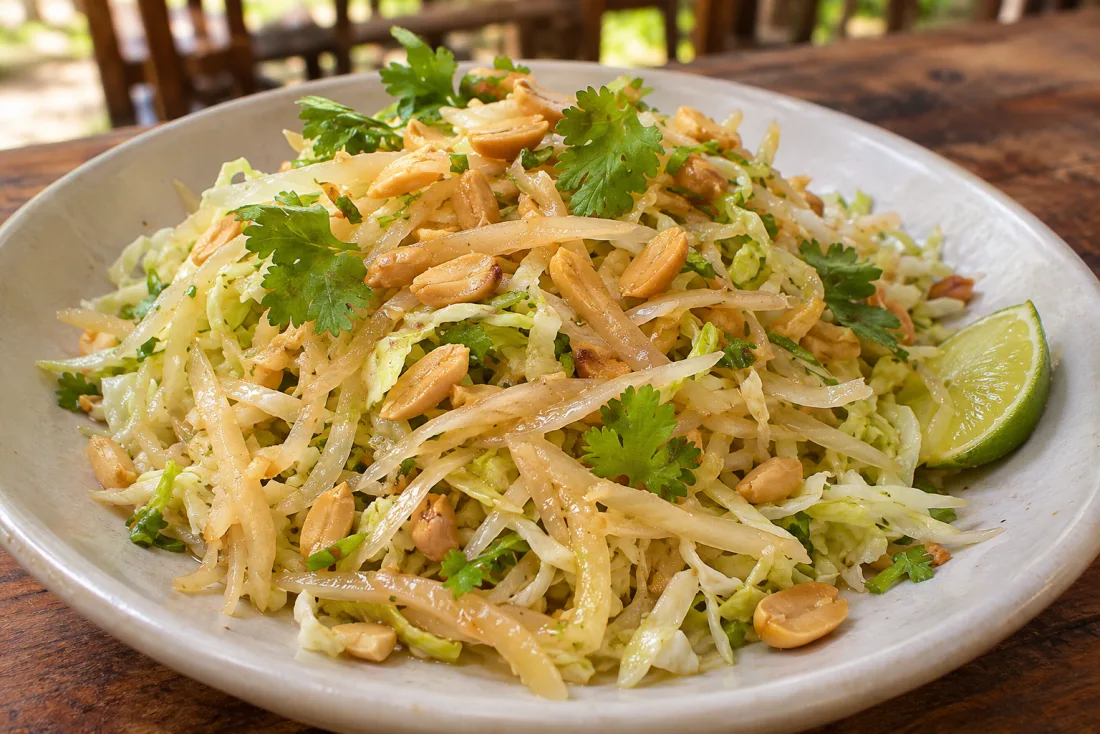
Gyin thoke is a Burmese mixed salad, translated in menus as ginger salad or pickled ginger salad. The Burmese tea garden in Mae Sot, near the Myanmar border, lists a version with pickled ginger, grated cabbage, peanuts, coriander and lime. A Burmese restaurant in Bangkok also lists ginger salad. These are examples of Myanmar food served in Thailand. They do not give the dish a Thai origin or establish how widely it appears on Thai restaurant menus.
Warm Ginger and Crunch
The fine strands of pickled ginger give a lasting warm bite and a gentle tang. Lime adds clear acidity and cabbage or coriander can make the mix feel fresher. Peanuts, roasted legumes and fried garlic contribute crispness. Dried shrimp can add salty seafood flavor, and fried coconut makes some versions richer. The dressing lightly coats the ingredients. Some servings have more nuts and legumes and others show more crisp strands of vegetables. Ginger warmth and fresh chili heat are distinct sensations.
What Gets Tossed Together
Pickled ginger is the defining ingredient. It is often finely cut and naturally pale, from ivory to light ginger yellow. In the Mae Sot menu, shredded cabbage, peanuts and coriander go into the bowl with lime. A separate Myanmar country report describes pickled ginger with fried coconut, peanut, chickpea, lablab bean, sesame, peanut oil and lime, with dried prawn, tomato and green chili listed for serving. That is an example rather than a fixed list for every kitchen.
A Light Version and a Crunchier Bowl
The first illustration follows the simpler Mae Sot combination with ginger, cabbage, peanuts and coriander. The second follows a Burmese restaurant menu with fried garlic, sesame, coconut, split yellow peas and dried shrimp. That menu also offers a variant without shrimp. Fried or toasted additions keep their texture when mixed with the cool ginger. Neither example has rice as its main ingredient. Ask about fried legumes and shrimp if you prefer the lighter version.
Serving and Identifying It
A small plate can be shared alongside other dishes. A spoonful with some ginger, vegetables and a few nuts gives a balanced bite. Rice can be ordered separately. Tea leaf salad is another Burmese dish found on some of the same menus, and its central ingredient is pickled tea leaf. Look for ginger salad or salat khing and ask whether the kitchen uses pickled or fresh ginger. Different versions may use different legumes and dressing. Mae Sot menus can place ginger and tea leaf salads alongside each other in the salad section. With ginger salad, compare the flex of the pickled ginger with the firmer shredded cabbage and the brightness of the lime. A simpler version foregrounds the ginger, while versions with fried legumes bring more contrasting textures.
Allergens and Dietary Details
Peanuts are common in the documented versions, and peanut oil can appear in the dressing. Some preparations contain sesame, legumes such as chickpeas or split peas, coconut or dried shrimp. Shrimp is a crustacean and should be discussed separately from fish if that matters to you. An ingredient list without shrimp does not guarantee that the kitchen uses a separate bowl or utensils. Check the actual dressing, including oils and any shrimp-based ingredients, and ask about cross-contact.
If you have a food allergy, tell the restaurant before ordering and ask about ingredients, sauces and shared cooking equipment.