

 dried shrimp
 fish sauce
Recognizing young ginger and the toppings
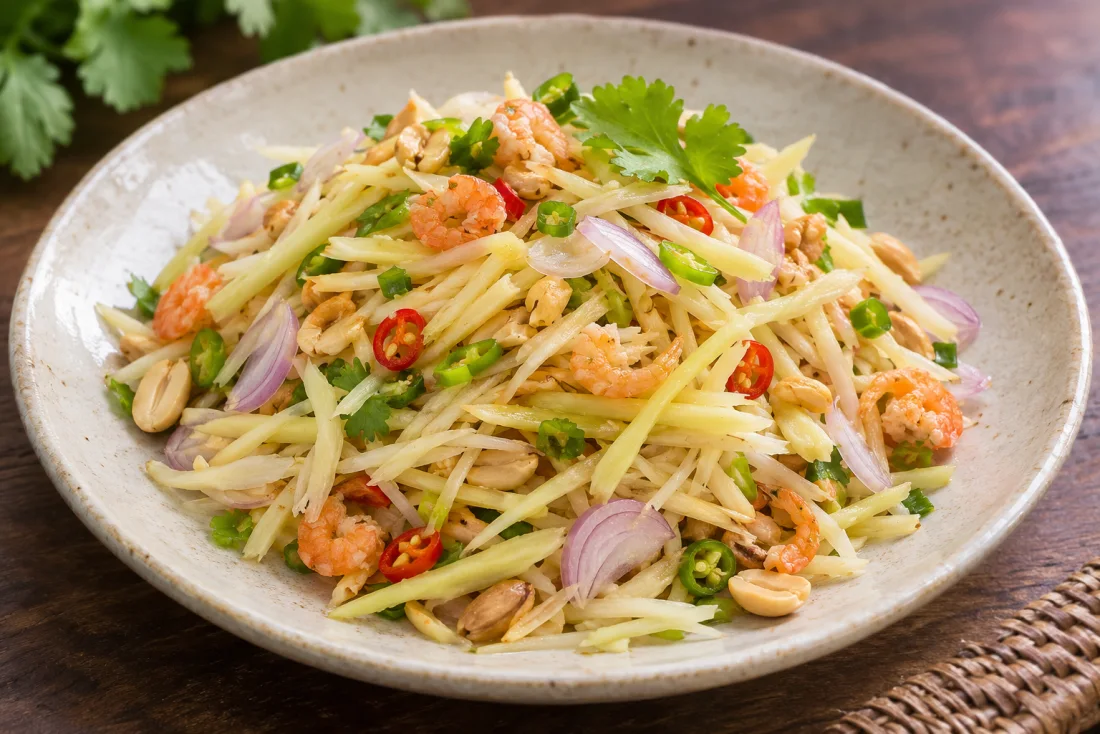
Khing is ginger and yam is a seasoned tossed salad. Pale thin shreds are young ginger. Shallot is pink-purple, dried shrimp is orange, and peanuts can be whole or crushed. Nam khing, by contrast, is a ginger drink.
A small side on a Thai porridge table
Thai recipes pair young ginger with dried shrimp, peanuts and sometimes toasted coconut. Other recipes make a dried-shrimp salad with fresh or pickled ginger. This version emphasizes the fresh ginger. The shared seasoning suits plain rice or porridge.
Ginger, dried shrimp and the dressing
Slice young ginger and shallot thinly. Prepare dried shrimp to suit its salt and texture and add toasted peanuts. Lime, fish sauce, palm sugar and fresh chili make the dressing. Some cooks add coconut or pickled ginger. Add peanuts near serving to keep some crunch.
Lime, ginger and toasted peanuts
Lime comes first, then the sharp aroma of ginger. Dried shrimp brings savory chew and peanuts crispness. Palm sugar rounds the acid. A little plain porridge catches the dressing and softens the sharper flavors.
How to eat it and read a nearby title
Take a small amount alongside rice or porridge. Pickled ginger may be offered separately. A menu headed dried-shrimp salad with young ginger may give the shrimp a greater share. Herbs such as cilantro or mint depend on the kitchen.
Allergens and shared tools
This version contains peanuts, crustacean shrimp and fish from fish sauce. Small pieces remain mixed through the dressing. Ask about shared bowls, utensils and any soy, wheat or coconut in additions. Fish sauce and dried shrimp contribute salt.
If you have a food allergy, tell the restaurant before ordering and ask about ingredients, sauces and shared cooking equipment.