

 fish sauce
What the name describes
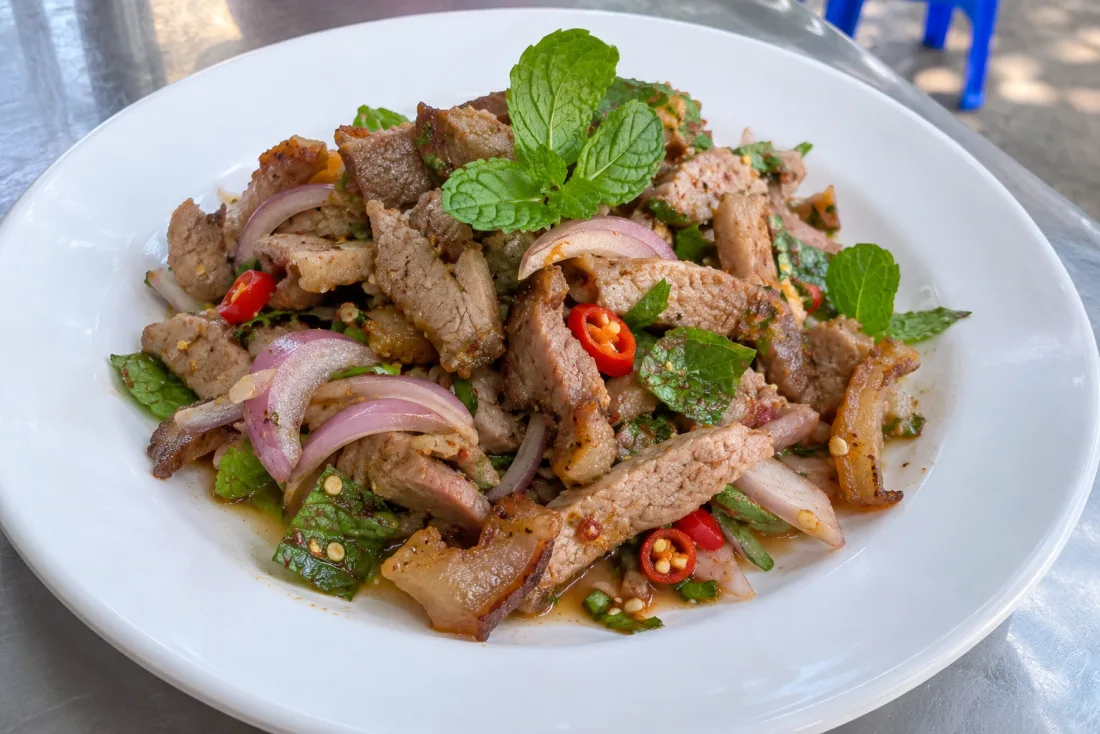
Yum is a mixed salad with its dressing. Mu pa means wild boar on the menu. The related phla format can emphasise fresh aromatics. These dishes are served mixed with a smaller amount of dressing than a soup, and the specific cut and presence of skin depend on the kitchen.
Restaurant and household examples
A Lat Krabang restaurant lists wild boar yum, and a separate Bangkok restaurant lists wild boar phla. A home cook documents cooked wild boar with salak and fresh herbs. This shows actual use without locating the invention or measuring popularity across Thailand.
Ingredients in a documented version
In the salak variation, cooked boar is dressed with lime, fish sauce, chilli and a little palm sugar. It also uses shallot, mint, culantro, lemongrass, makrut lime leaves and salak. The fruit contributes its own aromatic sourness. These ingredients belong to that version and should be confirmed with the restaurant.
Flavour and texture
Texture depends on the cut and cooking. Thin lean slices can be firm and skin portions can be bouncy. Grilled slices may have toasted notes. Lime, fish sauce and chilli provide sour, savoury and hot notes. Mint and other herbs brighten the finish. Salak can add a slightly astringent fruit acidity.
Serving and nearby salads
A plain yum can have cooked boar, shallots and herbs on a shallow plate. Salak phla can show pale orange fruit segments and thin lemongrass. Rice may be served separately. Grilled pork neck has a different cut and texture, and ground toasted rice may distinguish some Isan styles.
Allergens and fully cooked meat
Fish sauce contains fish. Oyster sauce, shrimp paste, soy sauce, wheat, peanuts and other allergens depend on the actual recipe and shared equipment. Ask about specific herbs and fruit when relevant. Thai disease-control guidance identifies undercooked wild boar as a source of trichinellosis. Use fully cooked meat and keep equipment for raw and cooked meat separate. Acidic dressing is for flavour.
If you have a food allergy, tell the restaurant before ordering and ask about ingredients, sauces and shared cooking equipment.